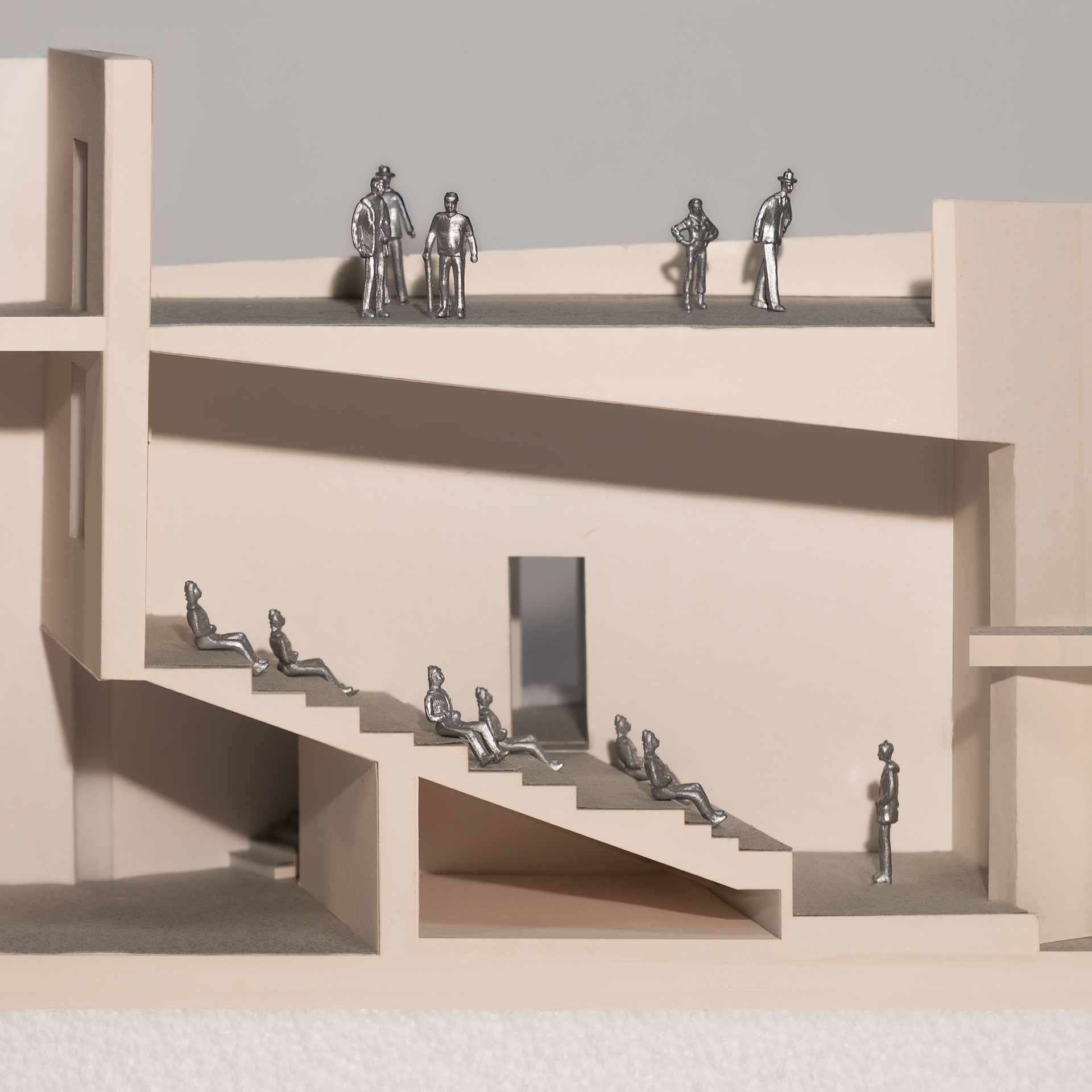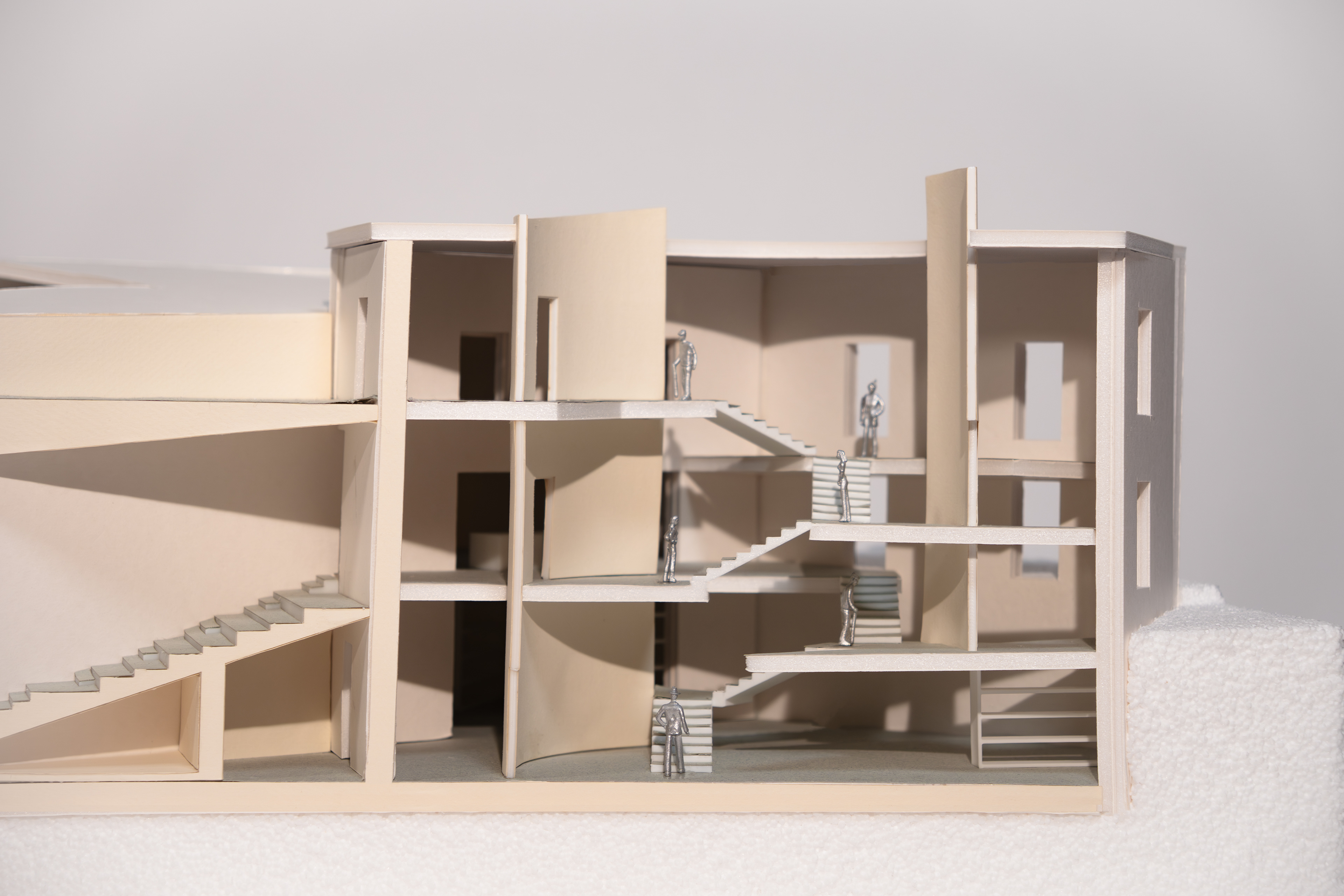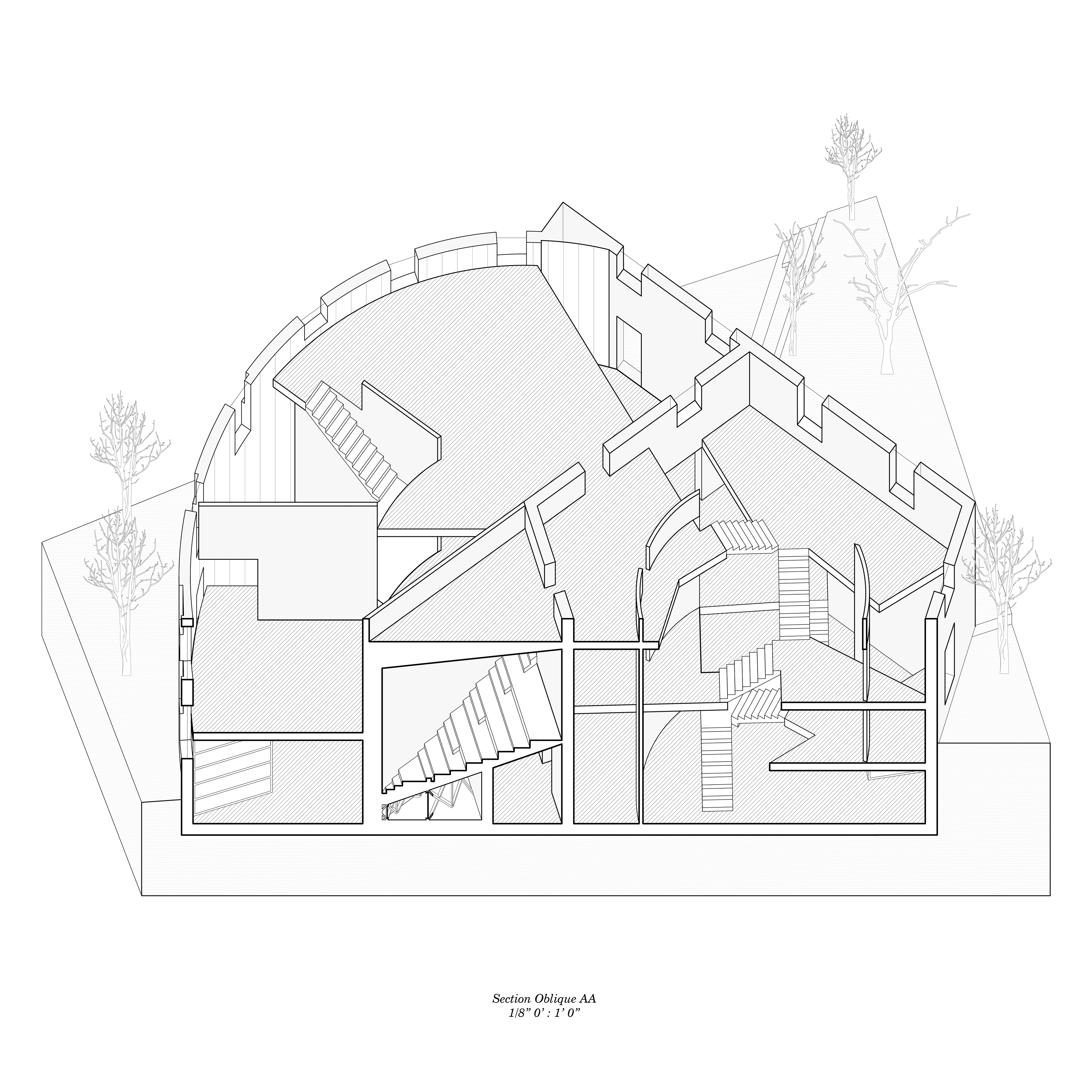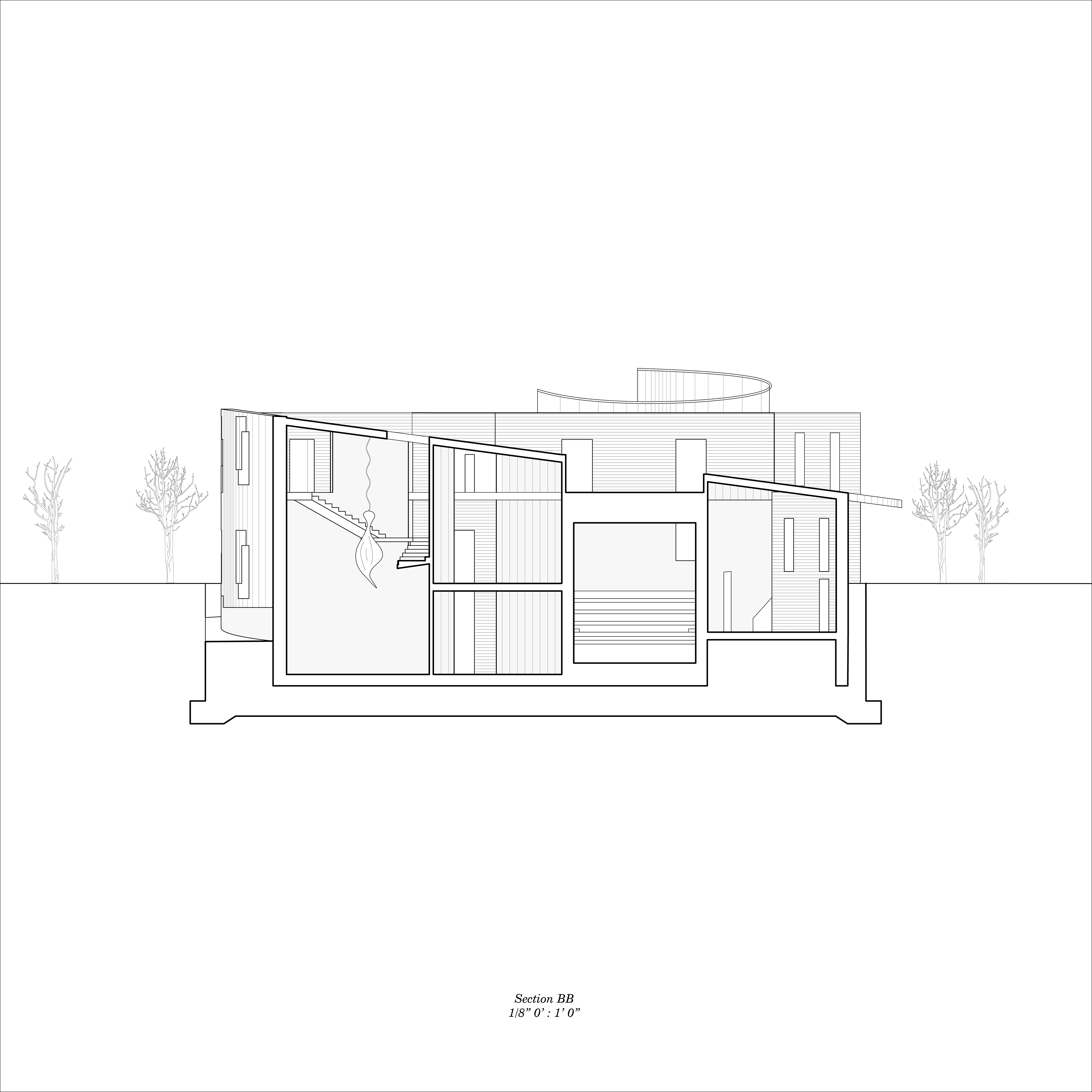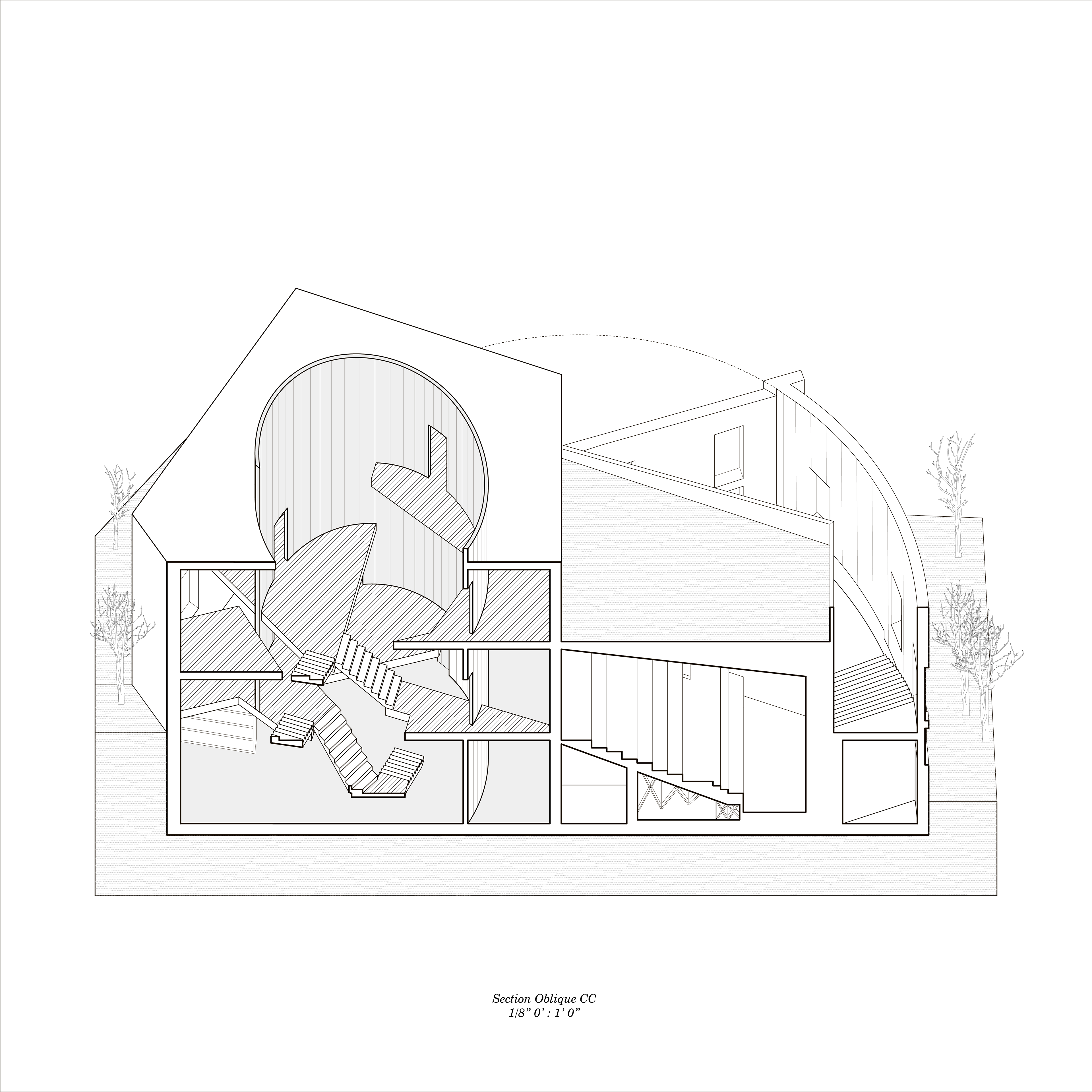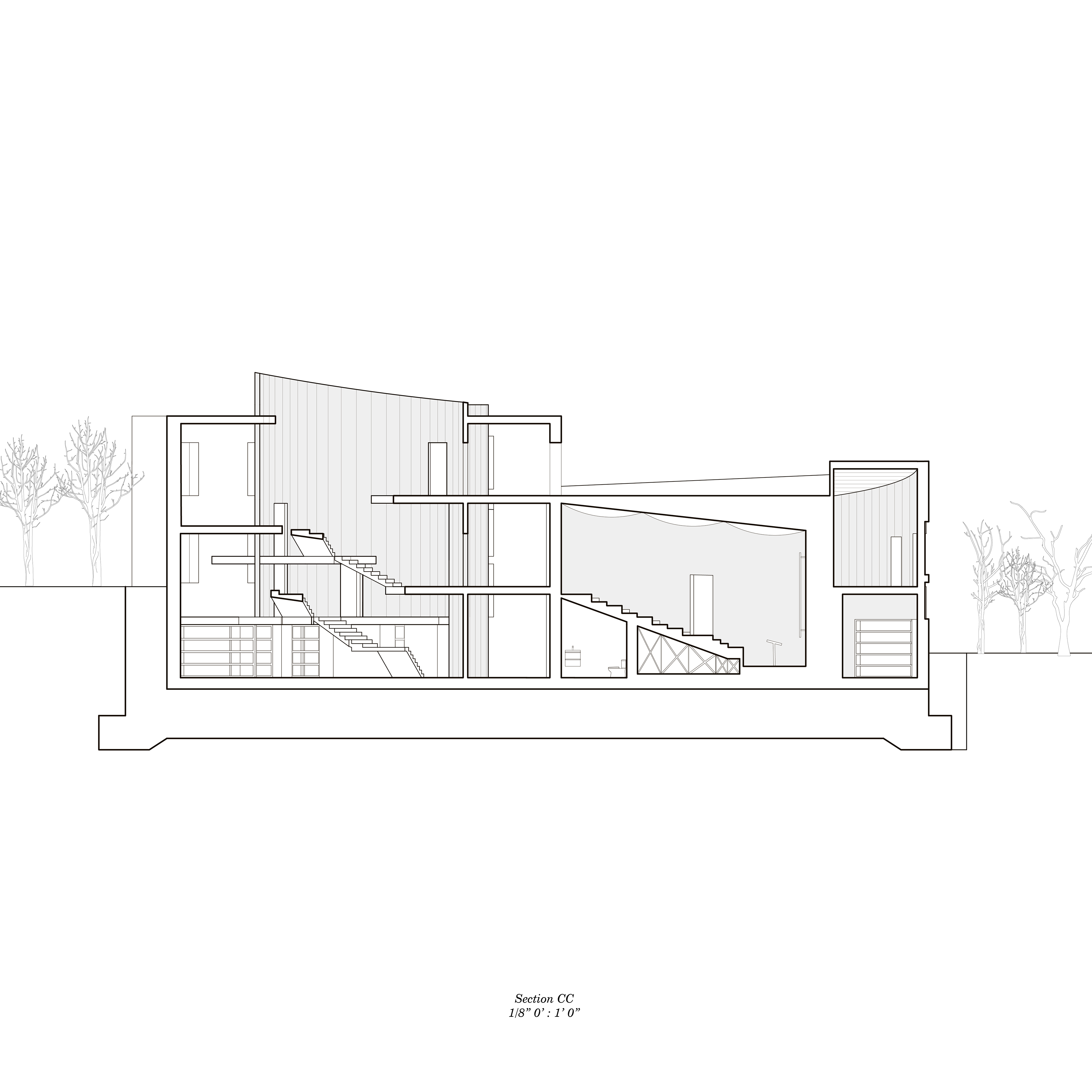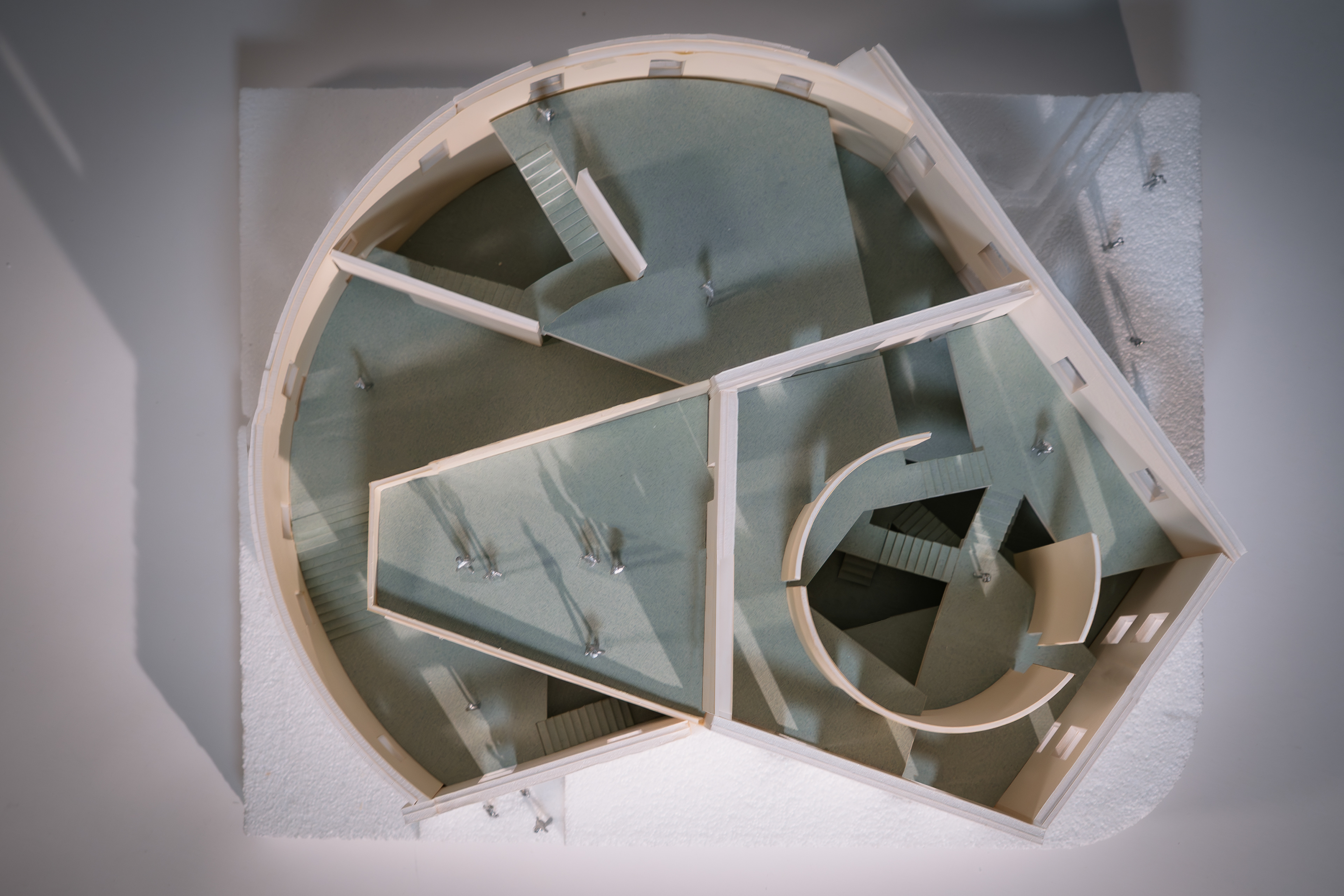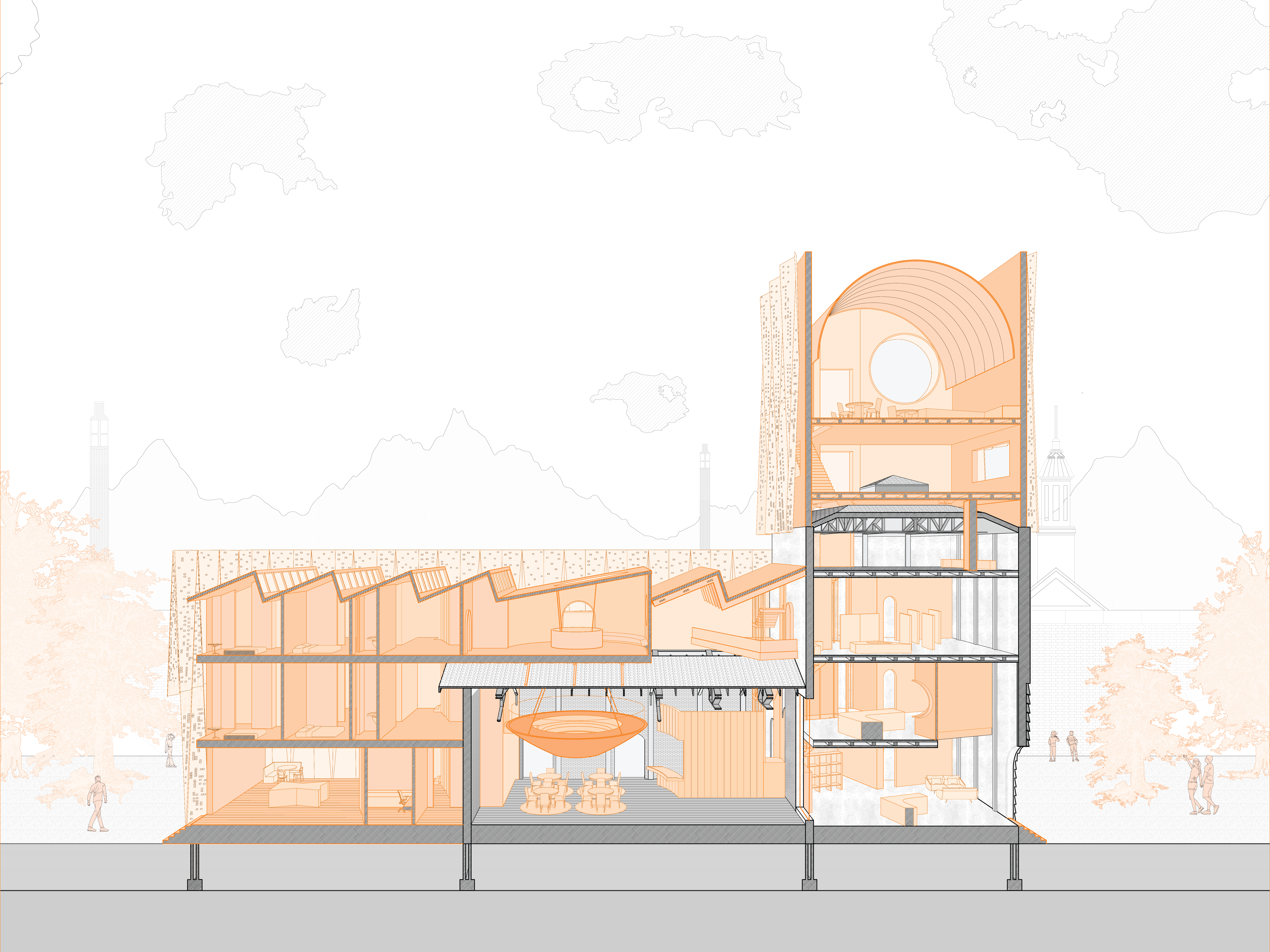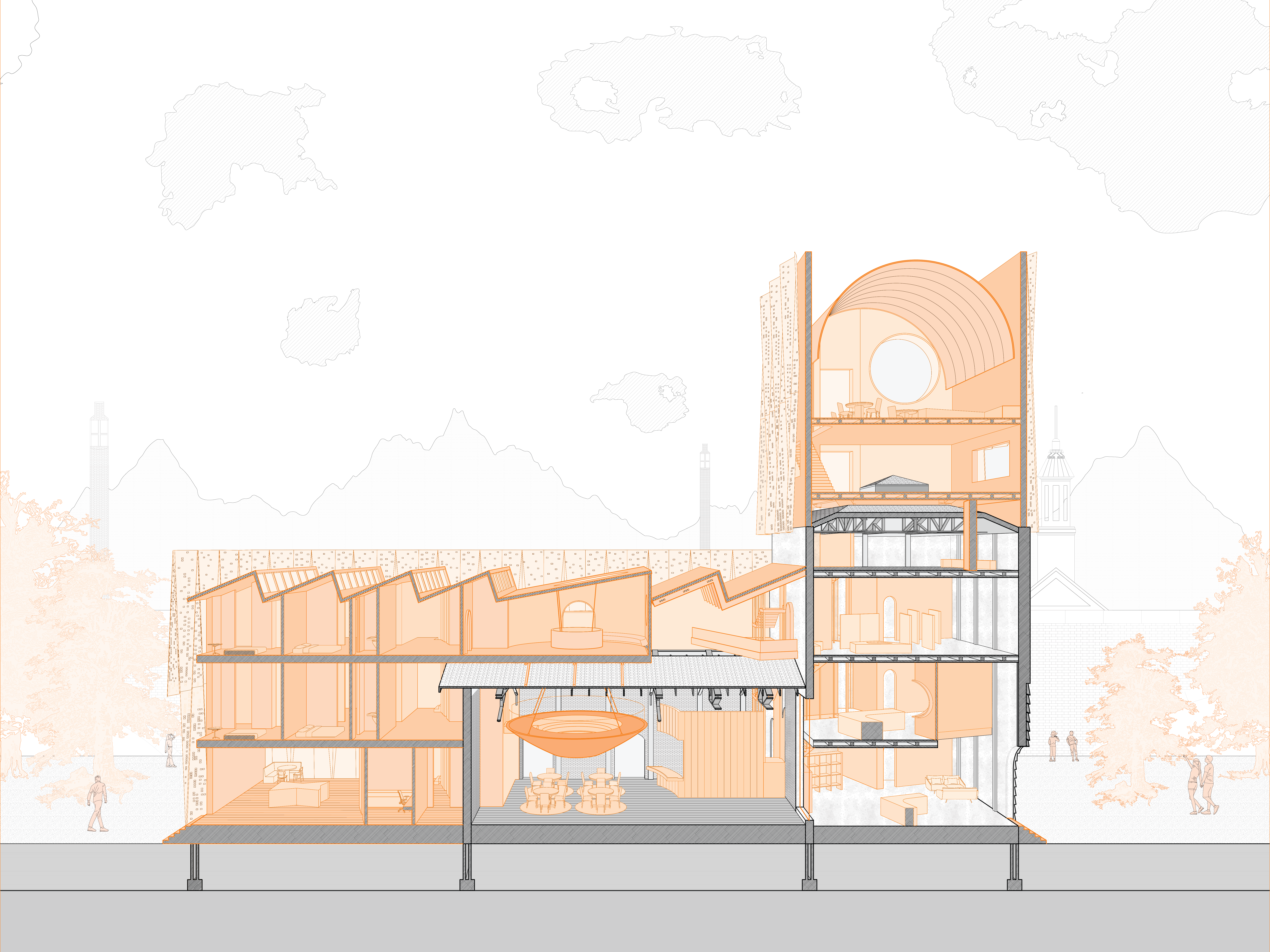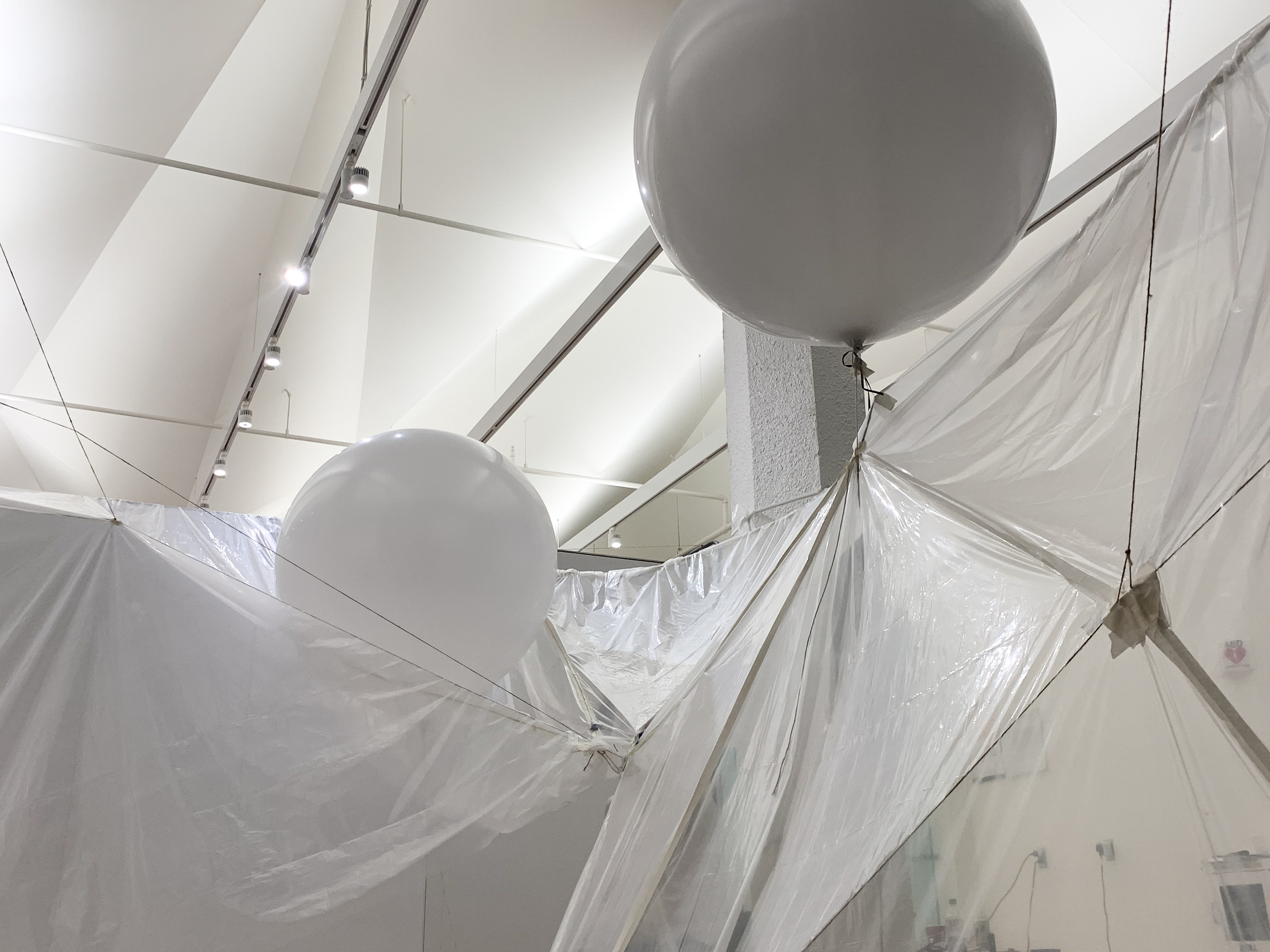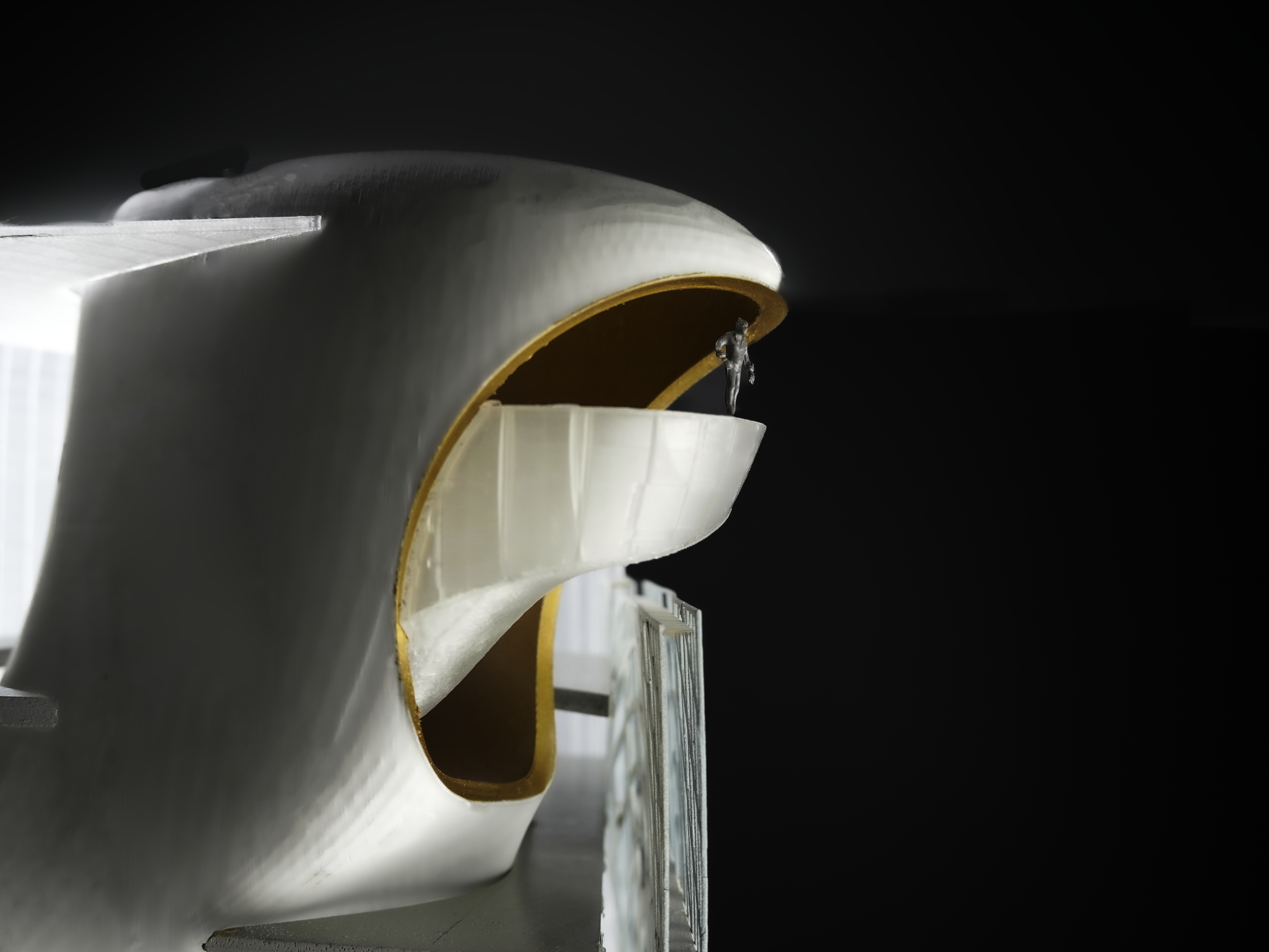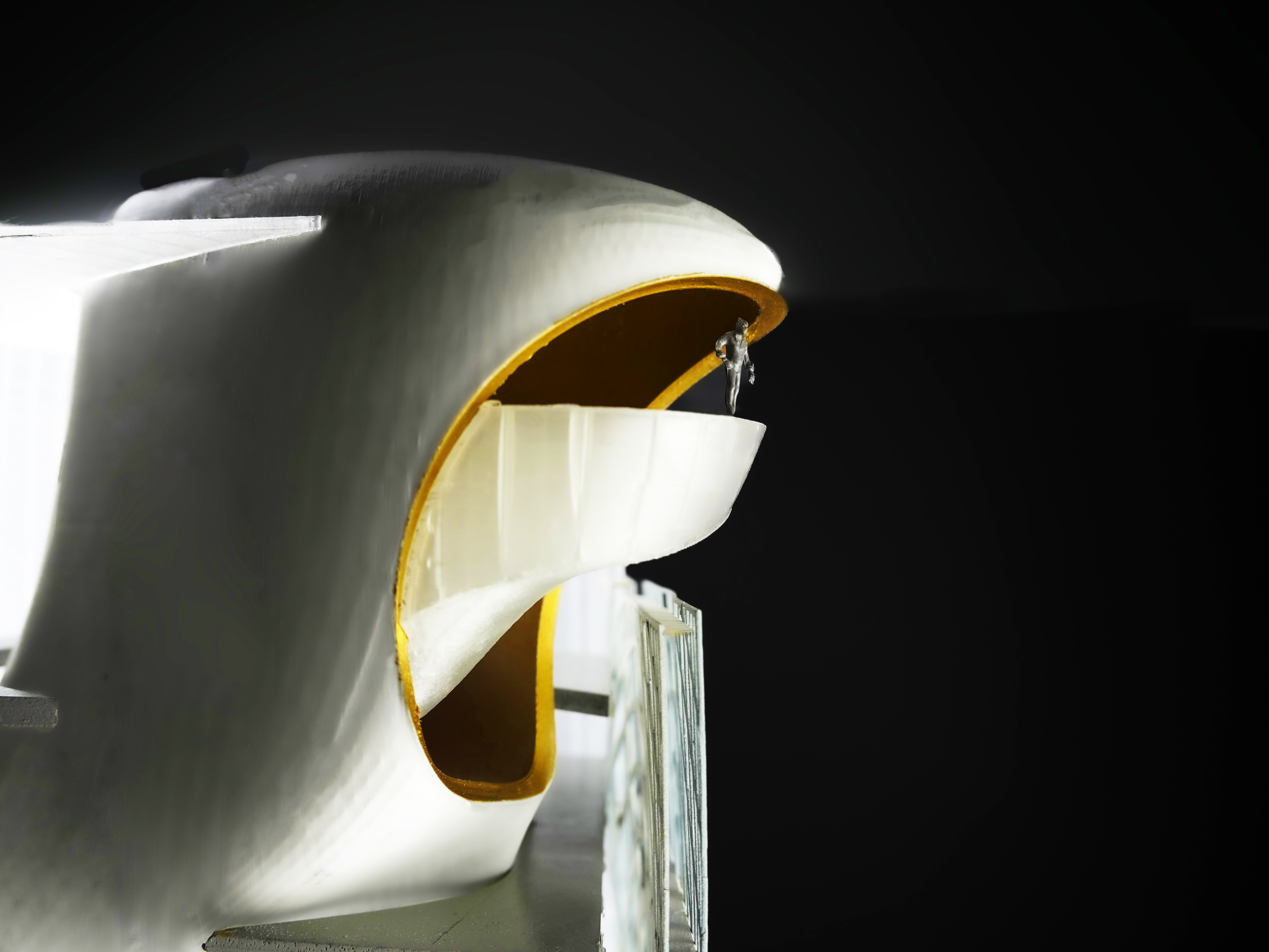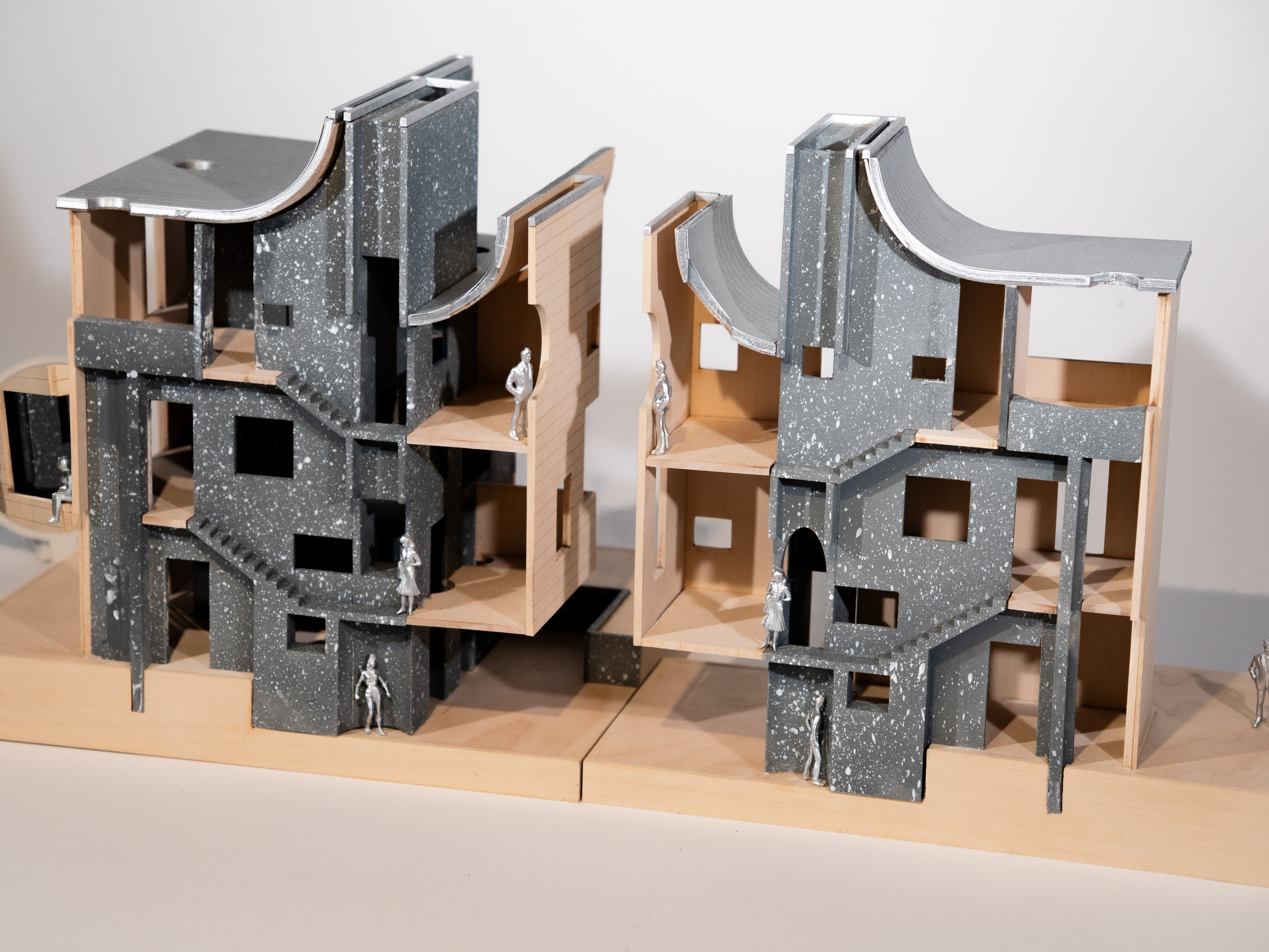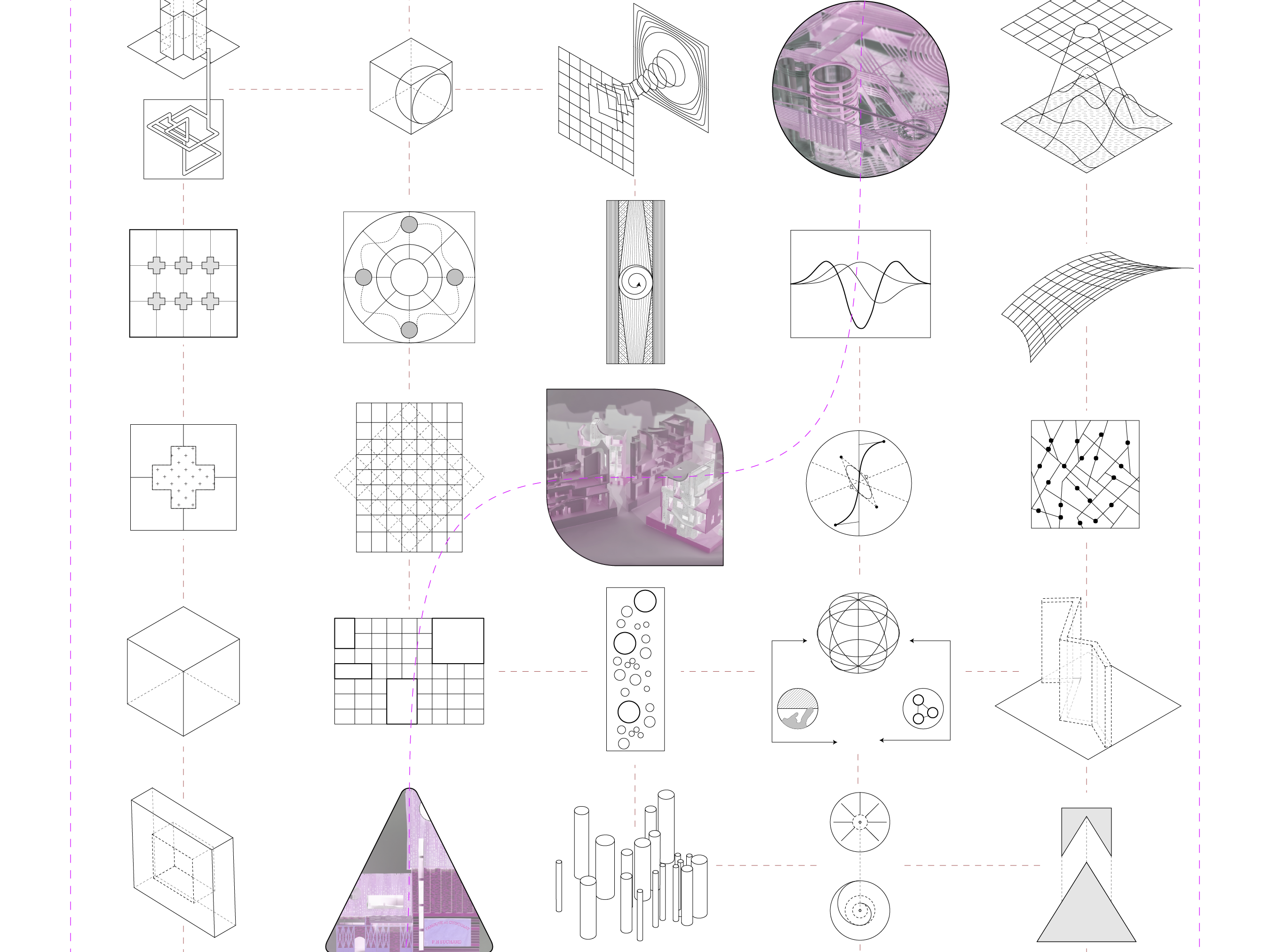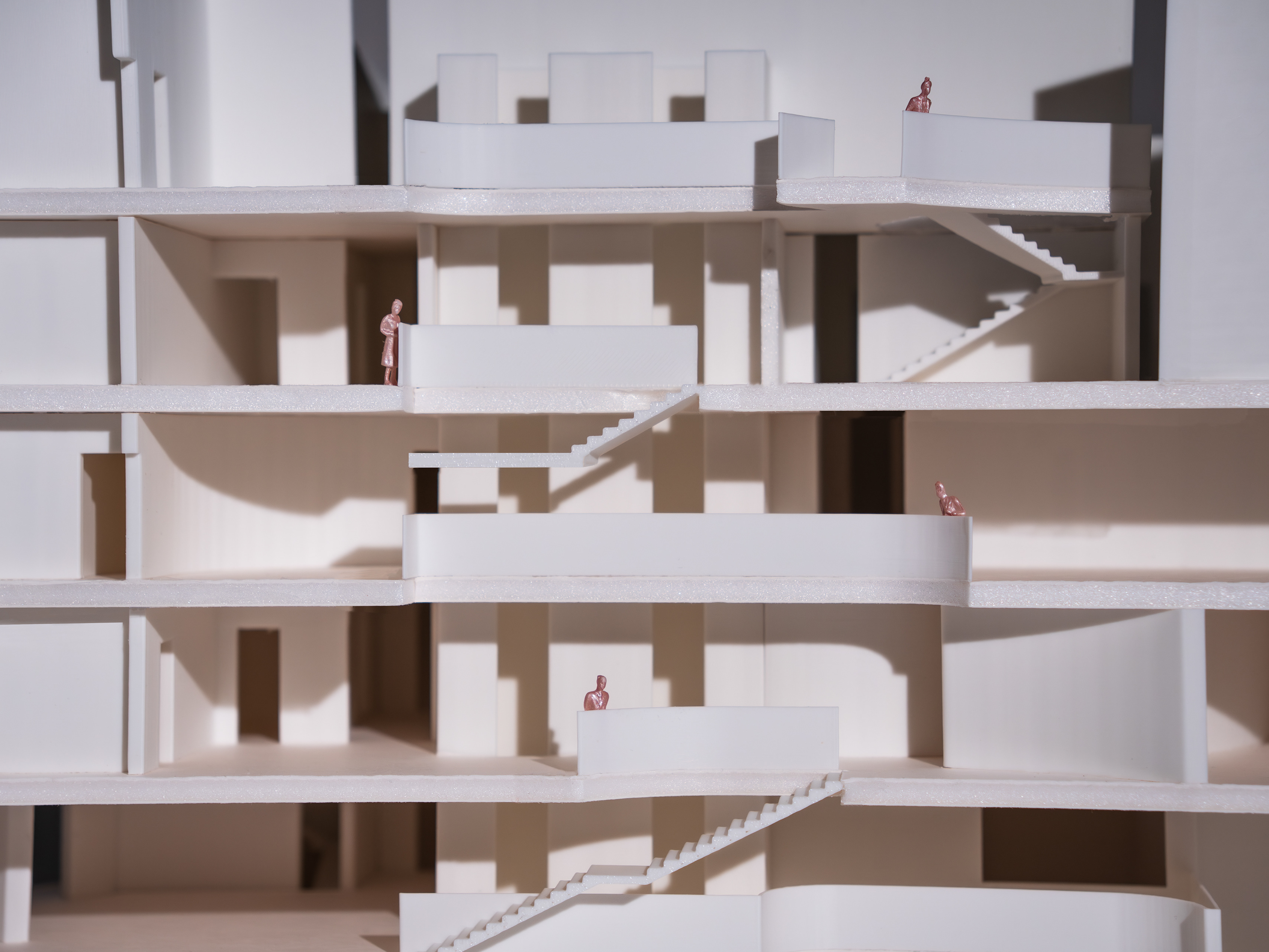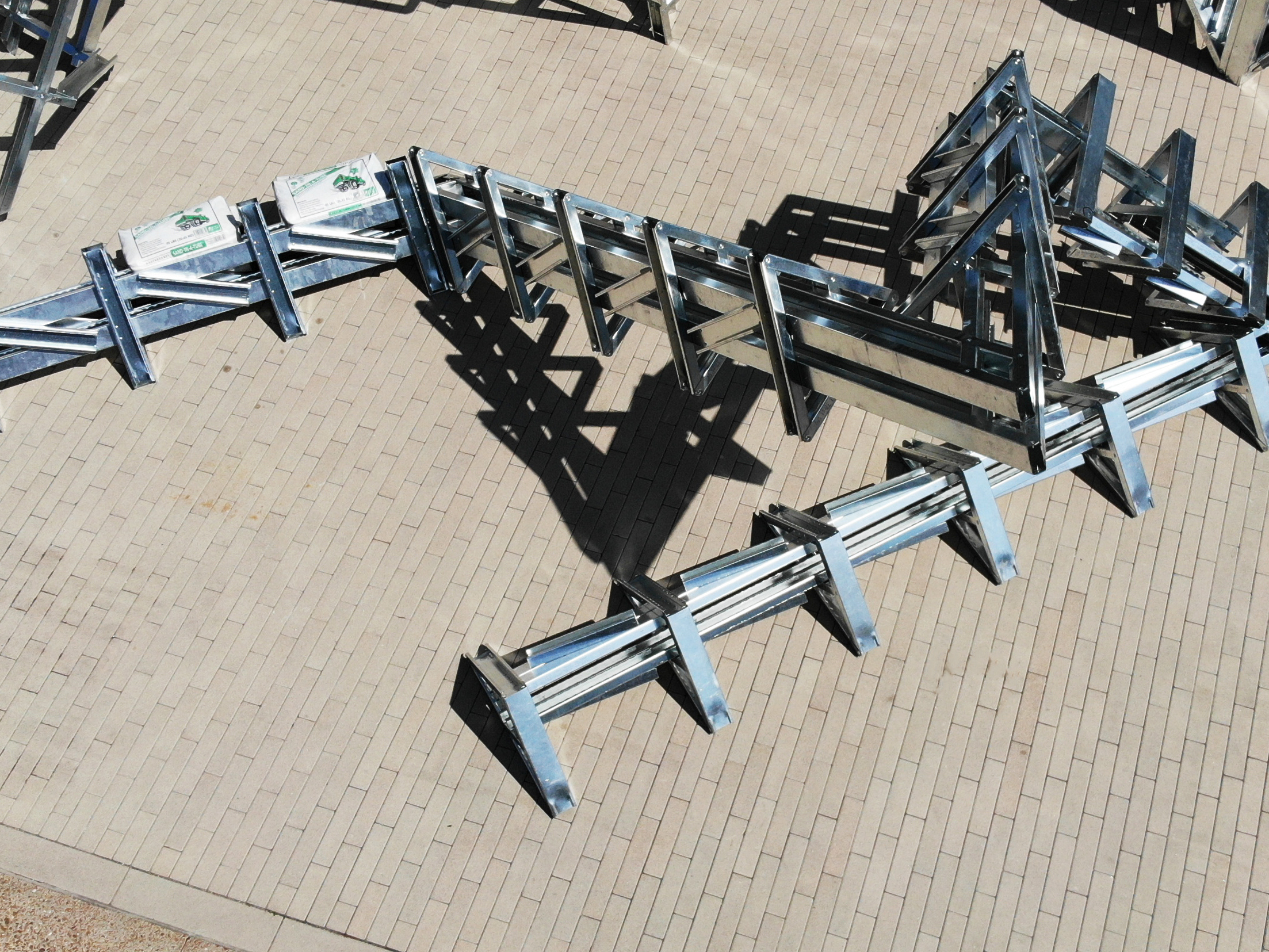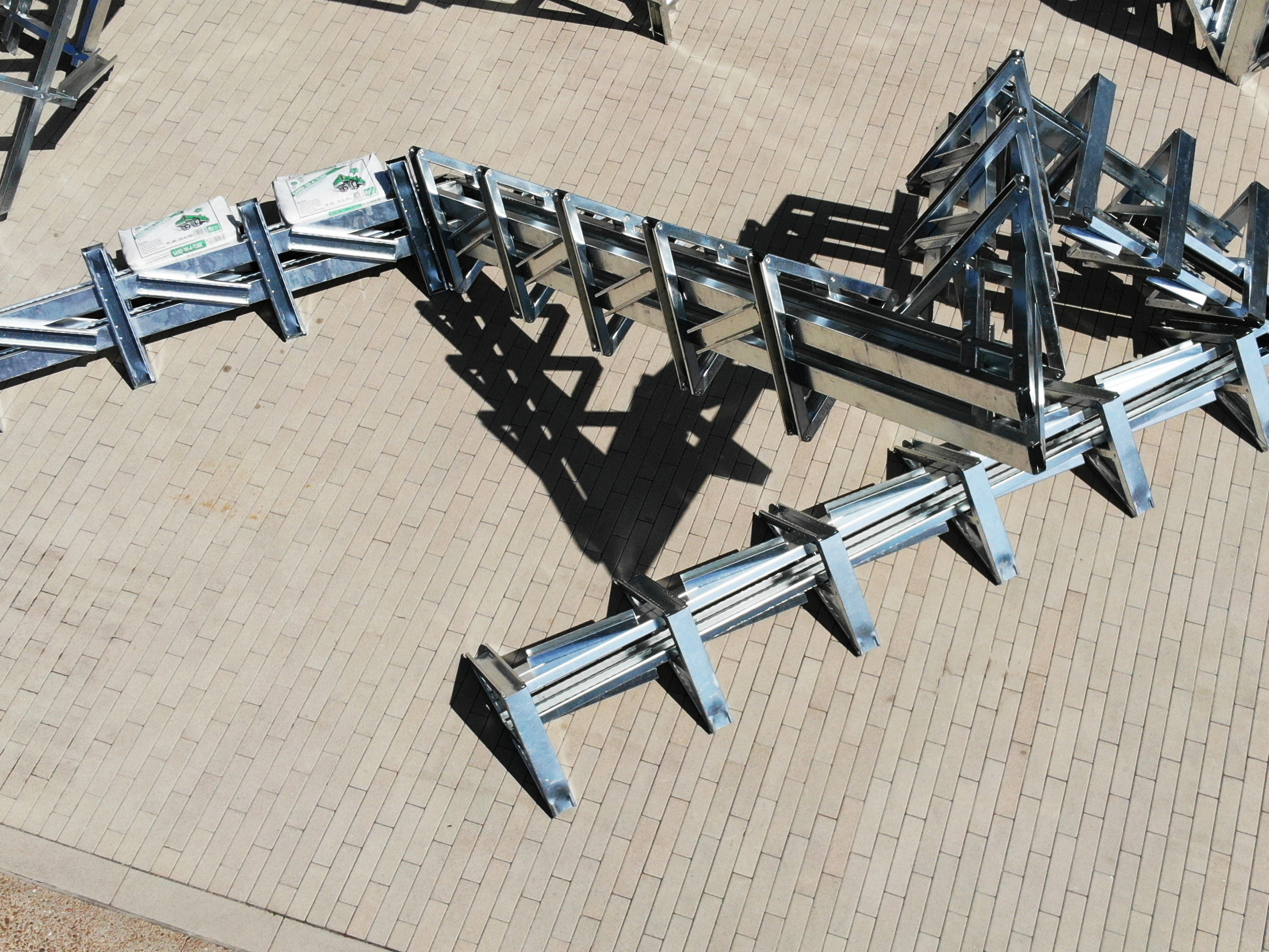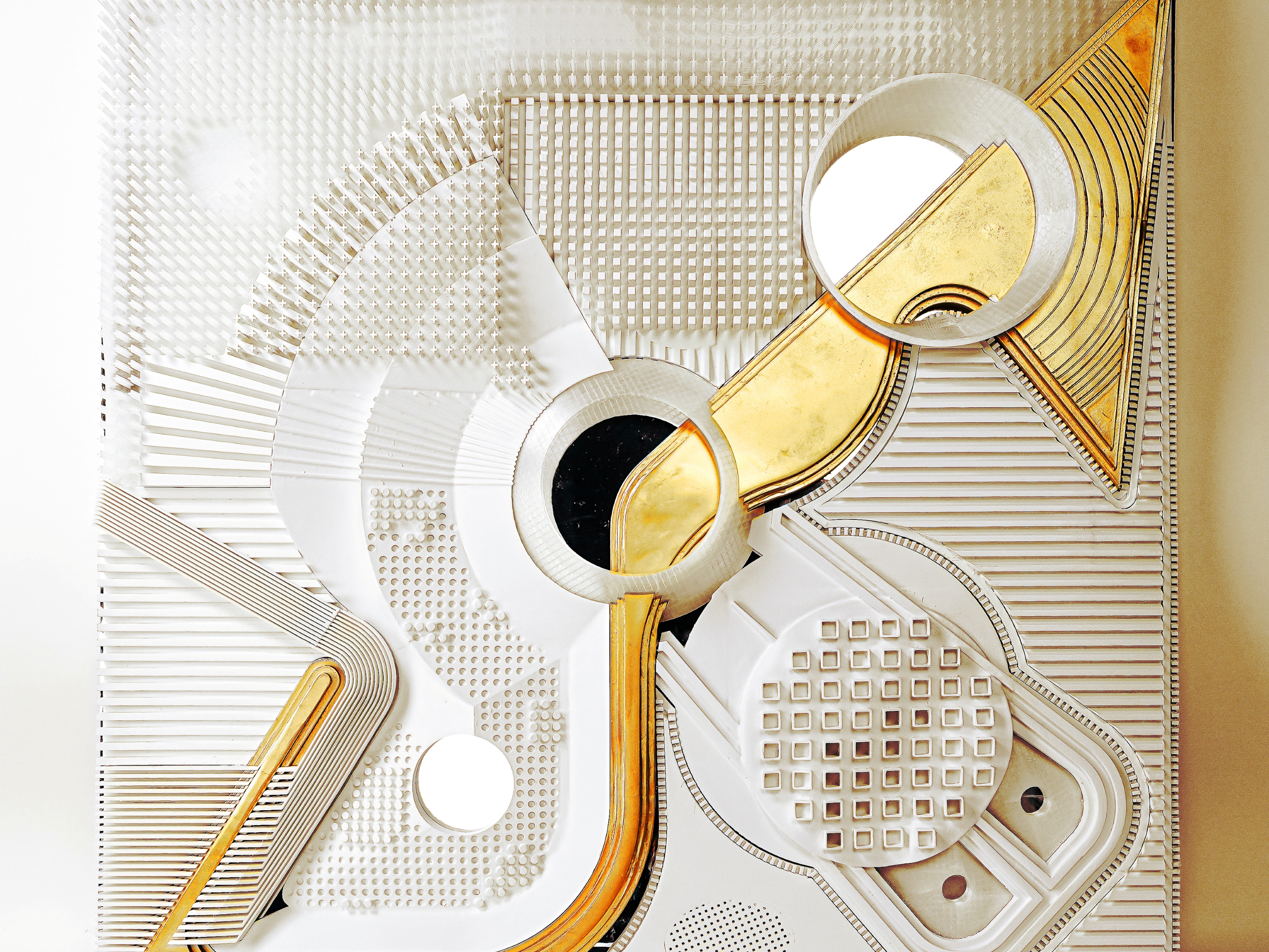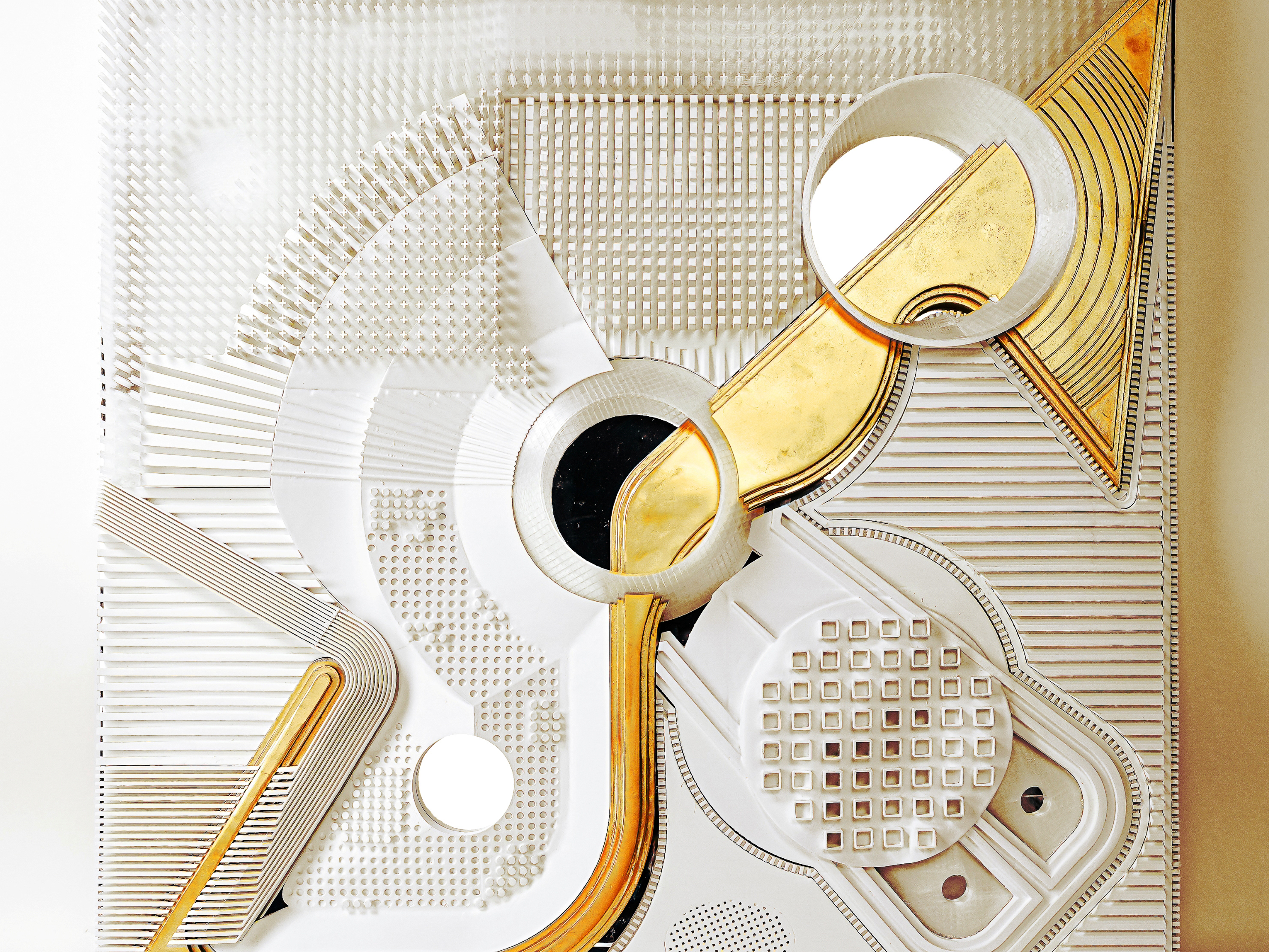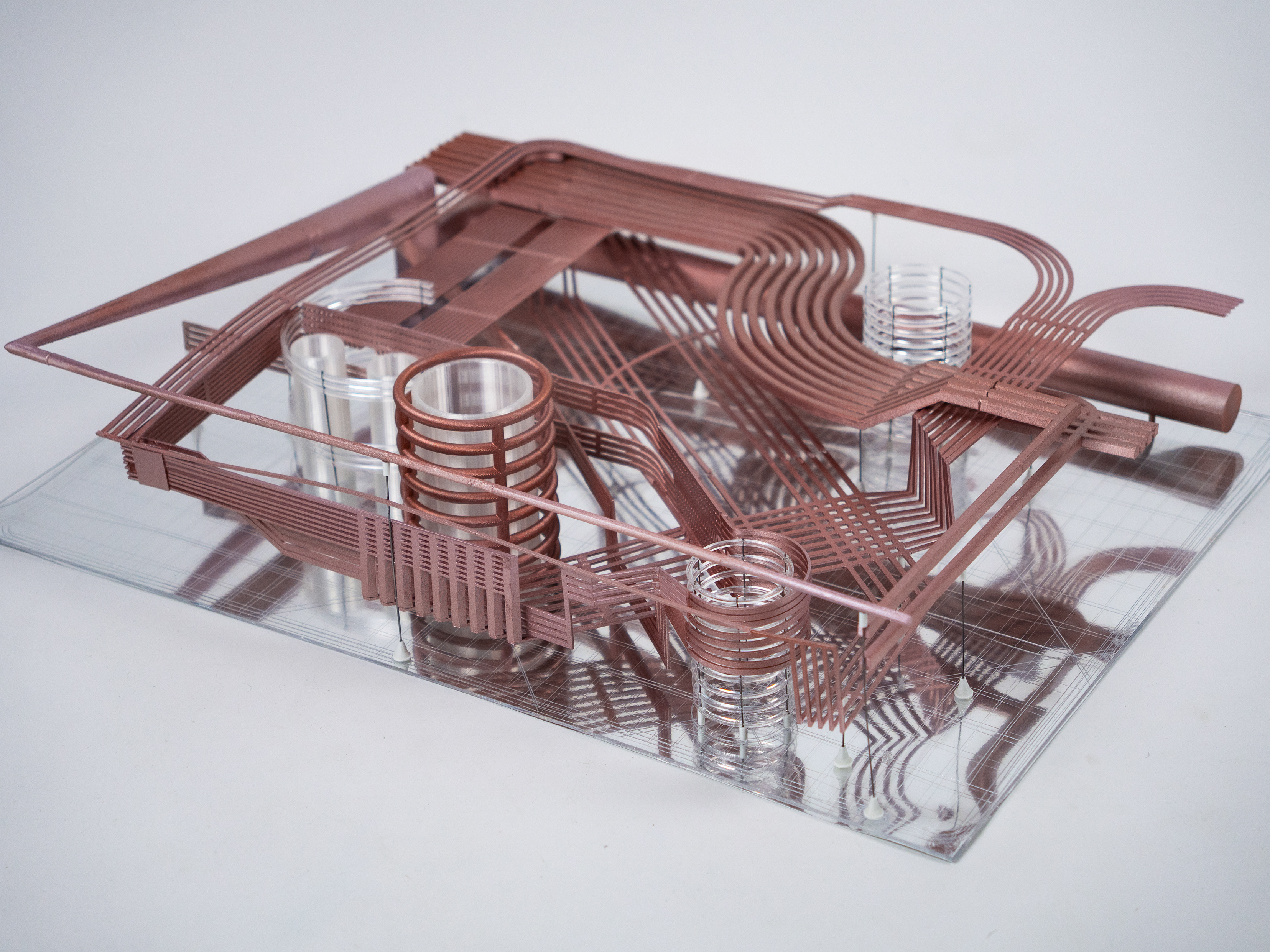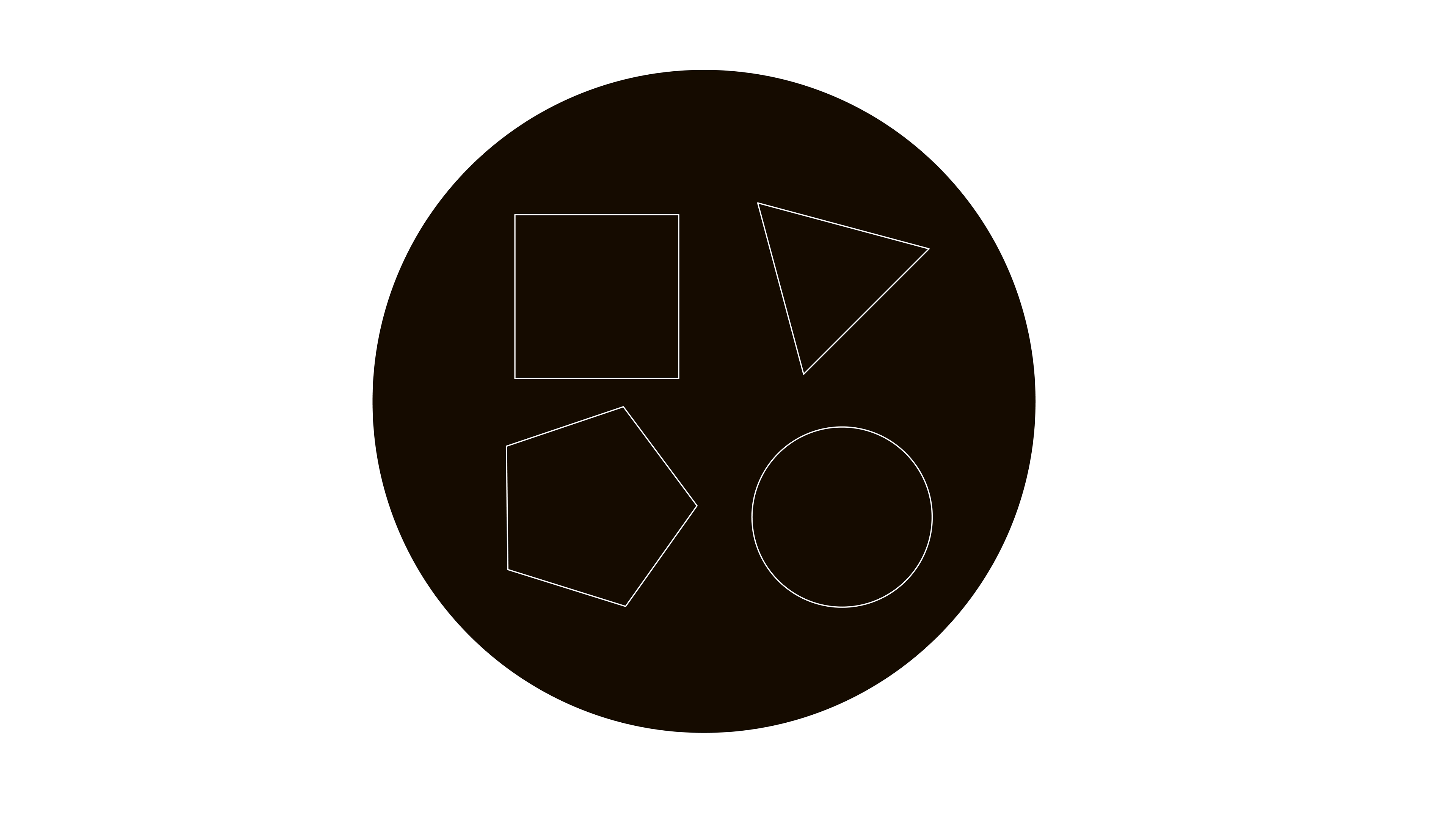
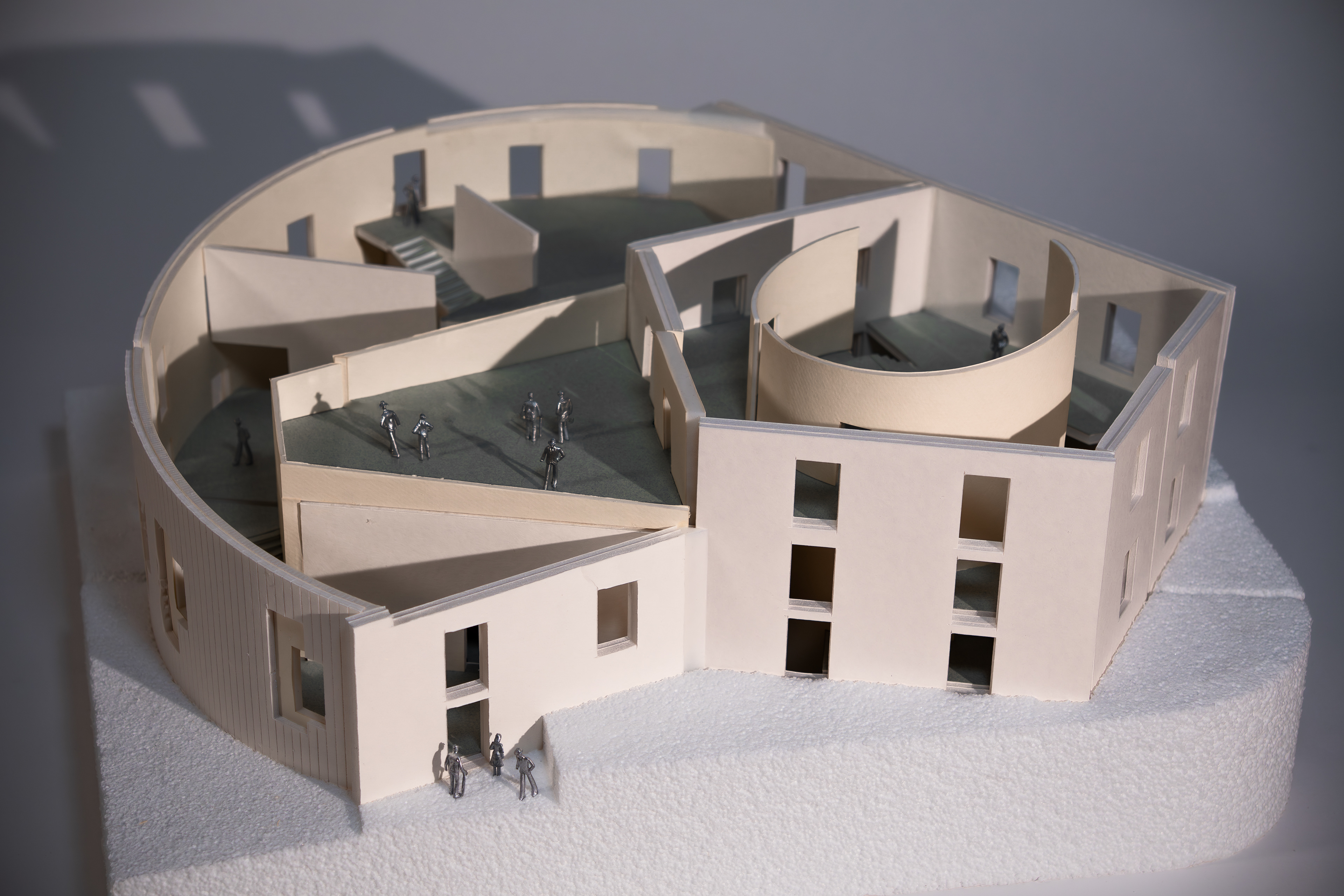
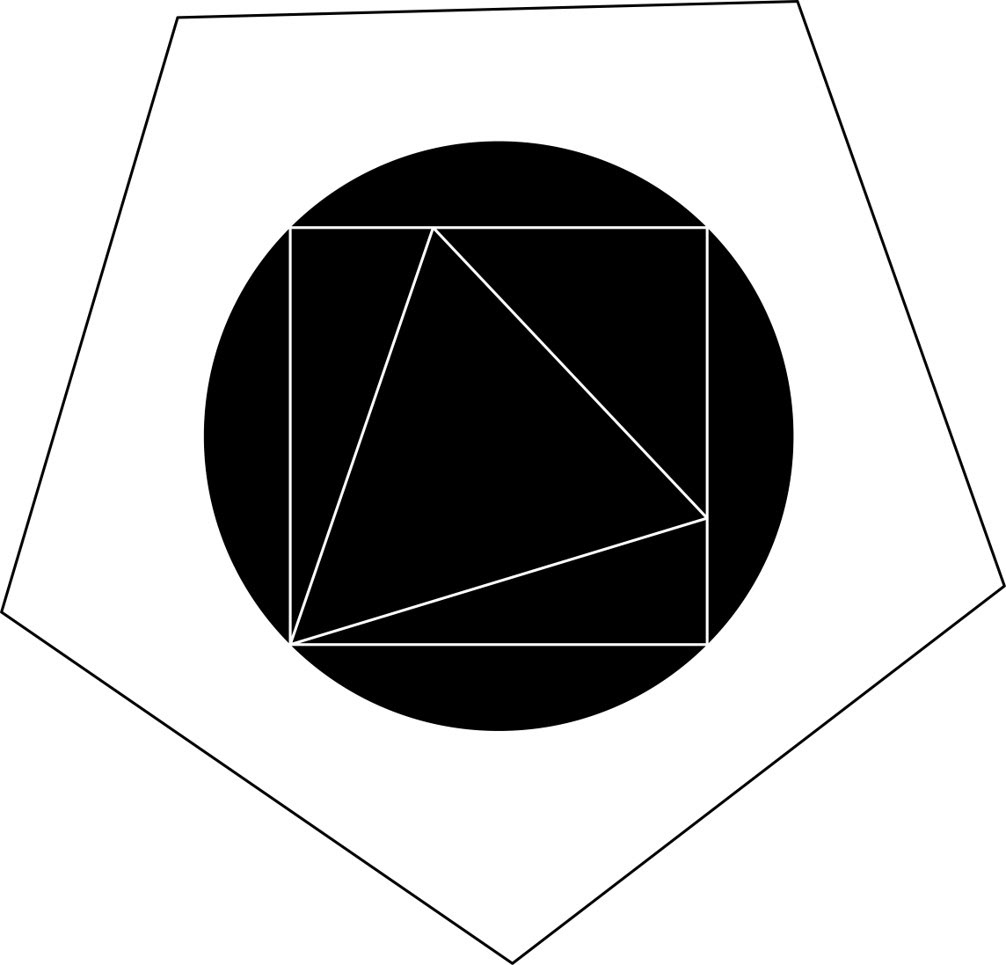
I experimented with this by establishing two pairs of geometric relationships rather than one: the first between a triangular stair and a square void, and the second between circular walls nested within a pentagonal figure. Yet all four shapes are united through an iterative process in which one form is inscribed into the next, generating a single composite figure. Importantly, this subjective composition of objective geometry does two things for me: first, it produces spaces of varying scales—small, medium, and large—each with its own spatial character.
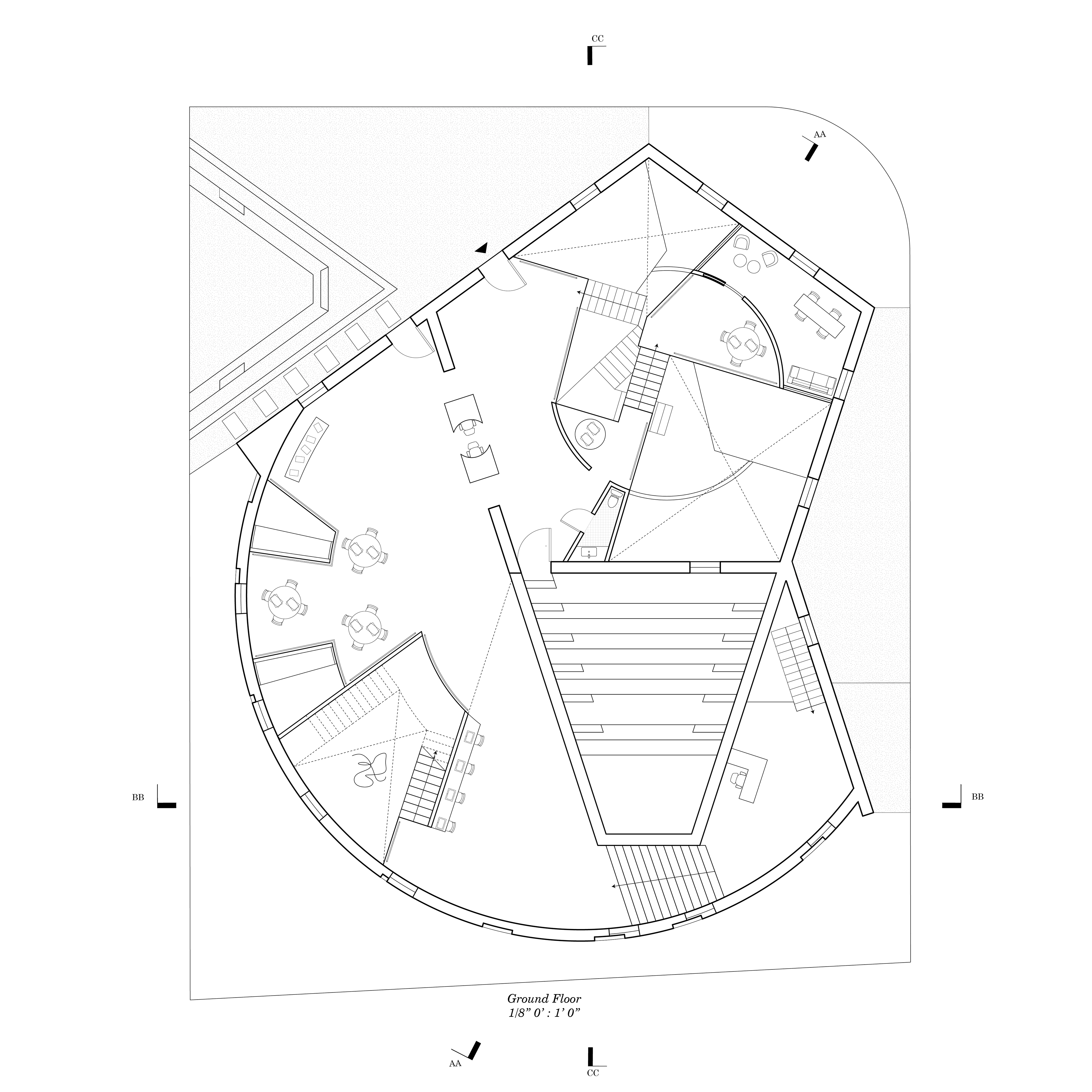
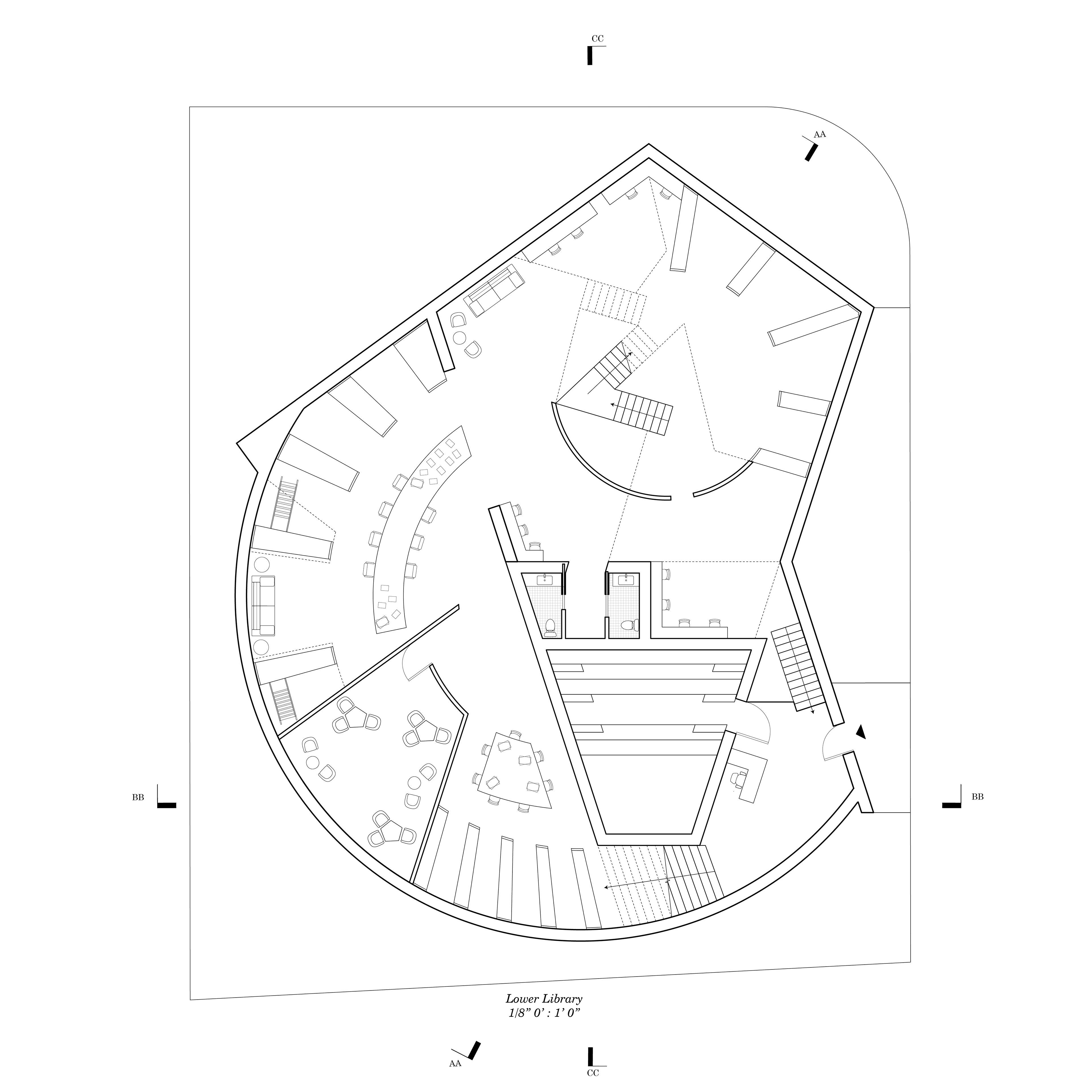
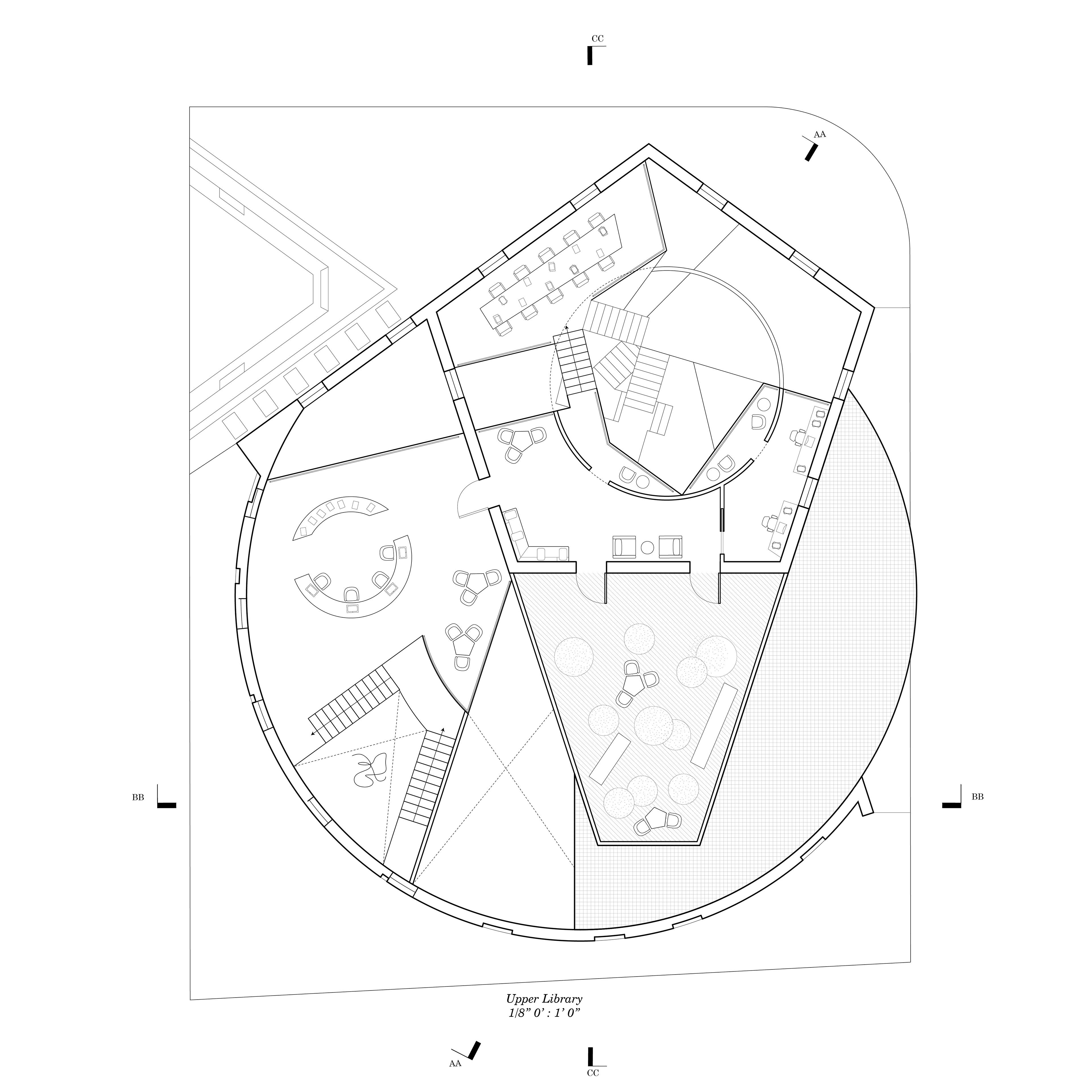
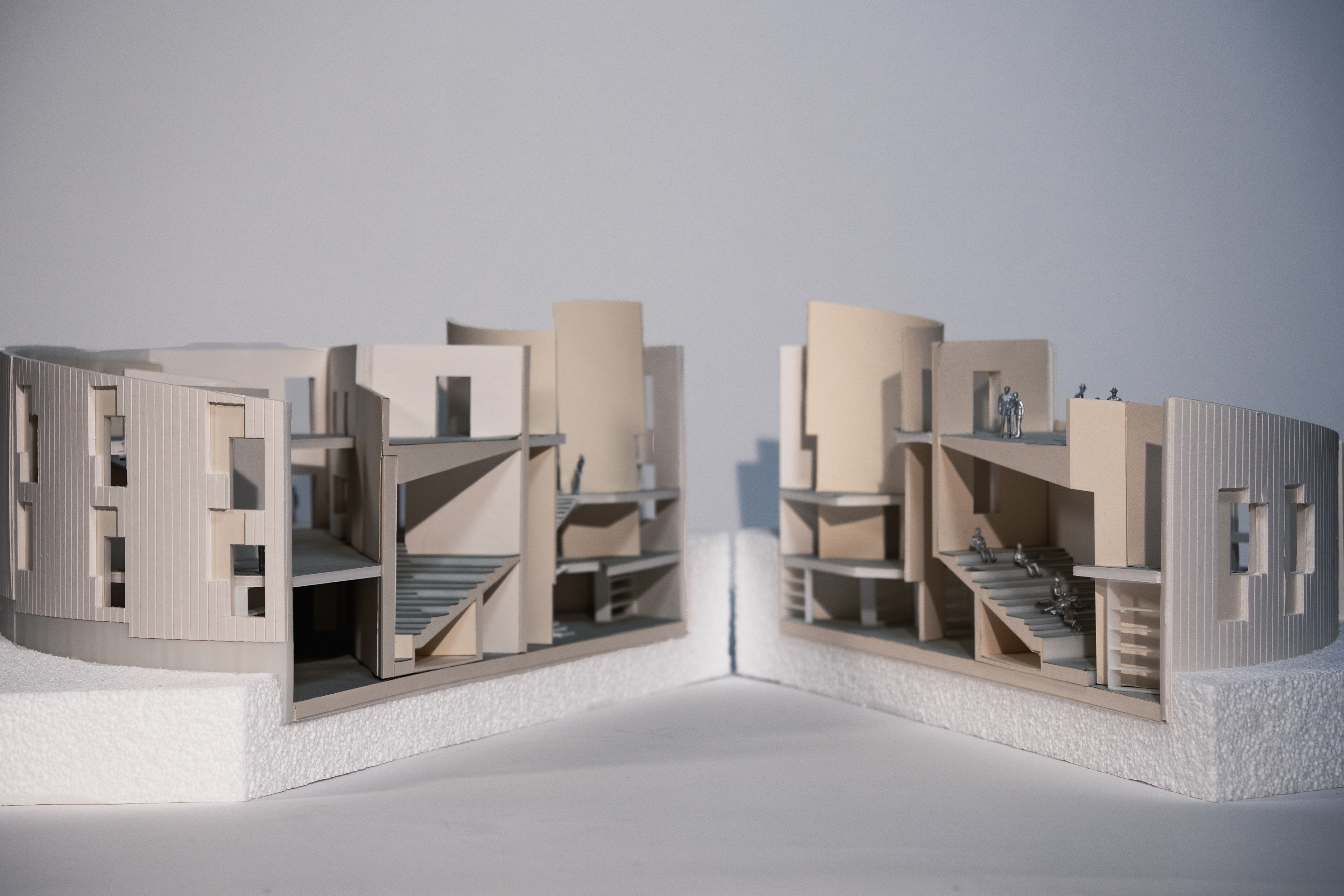
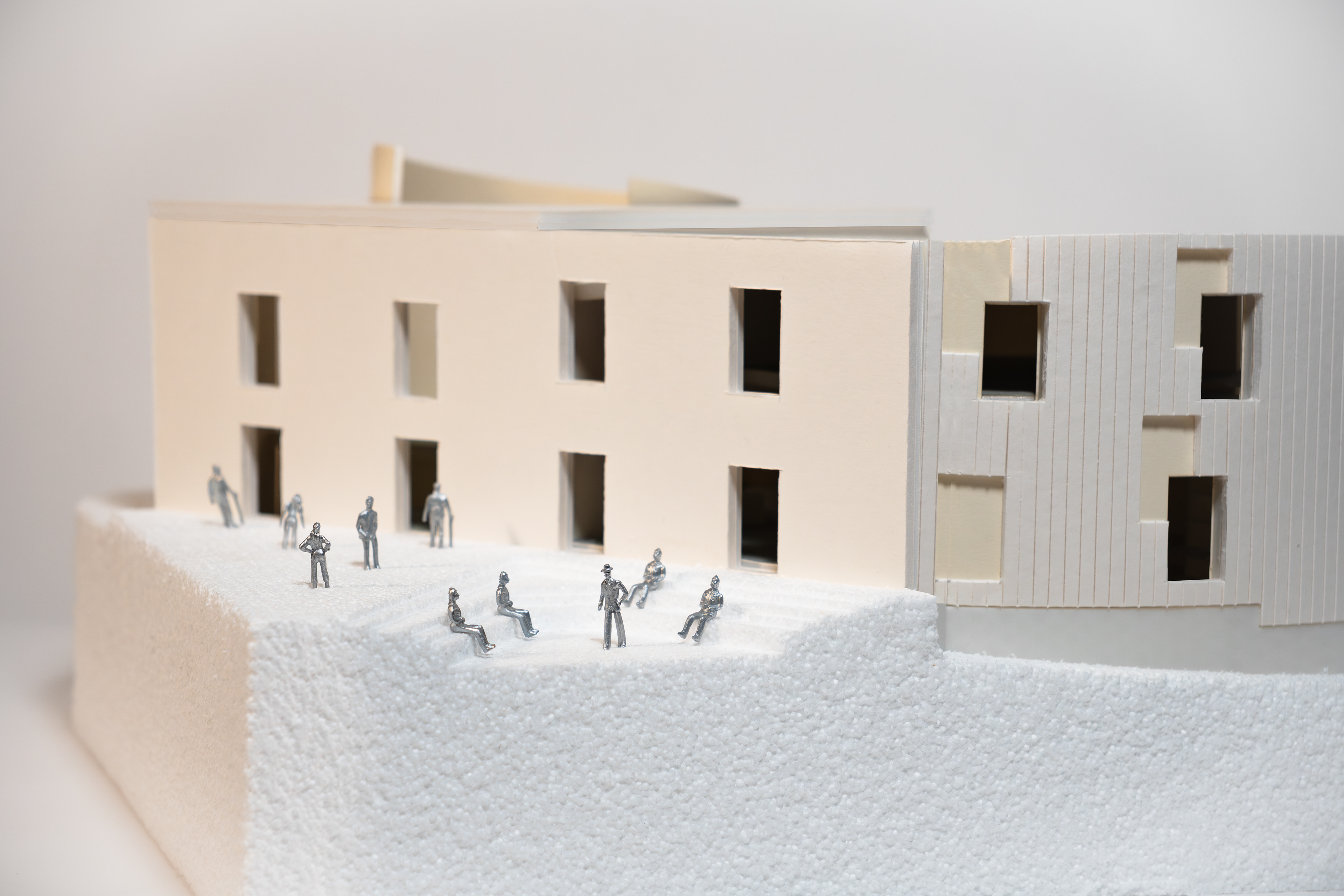
The extension is driven by three maneuvers that operate through shape in a less immediately perceptible way than before, primarily tessellation, hinging, and tangency, which together yield a more sectionally driven figure. The result is a composition of varied forms that are not necessarily legible as discrete shapes, yet appear relatively flat from the exterior, a condition that has become increasingly interesting to me.