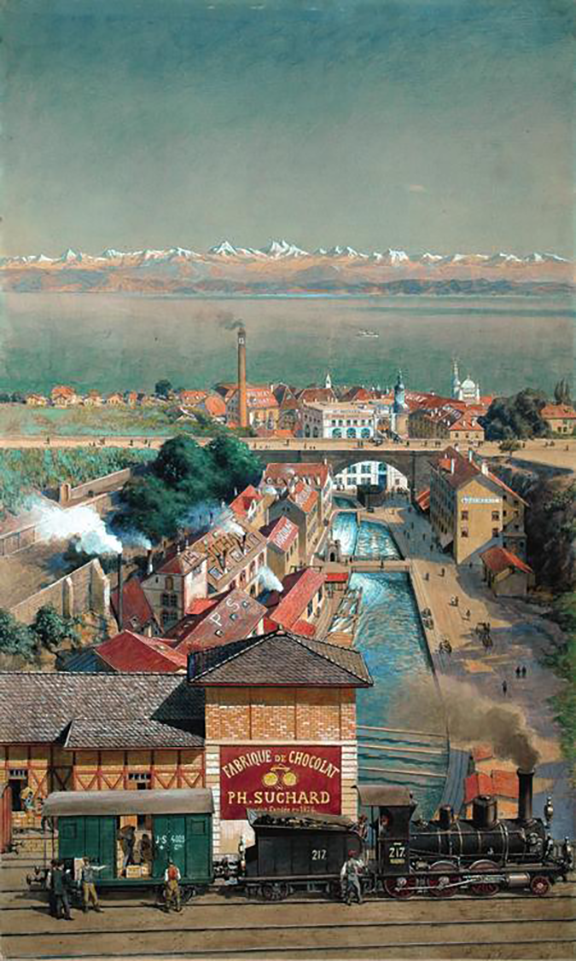
Precedent Image: Gouache by Johannes Weber (1890)
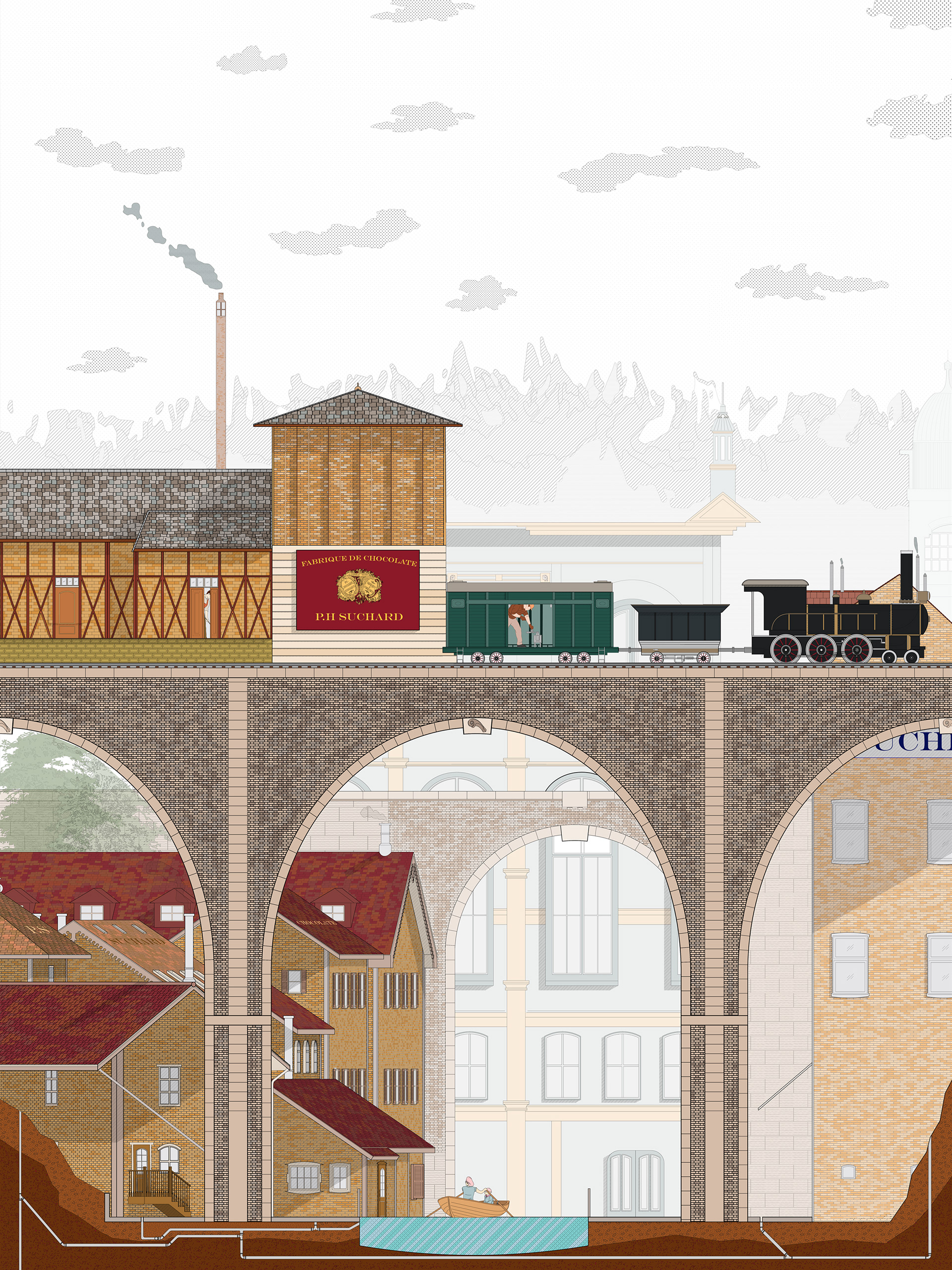
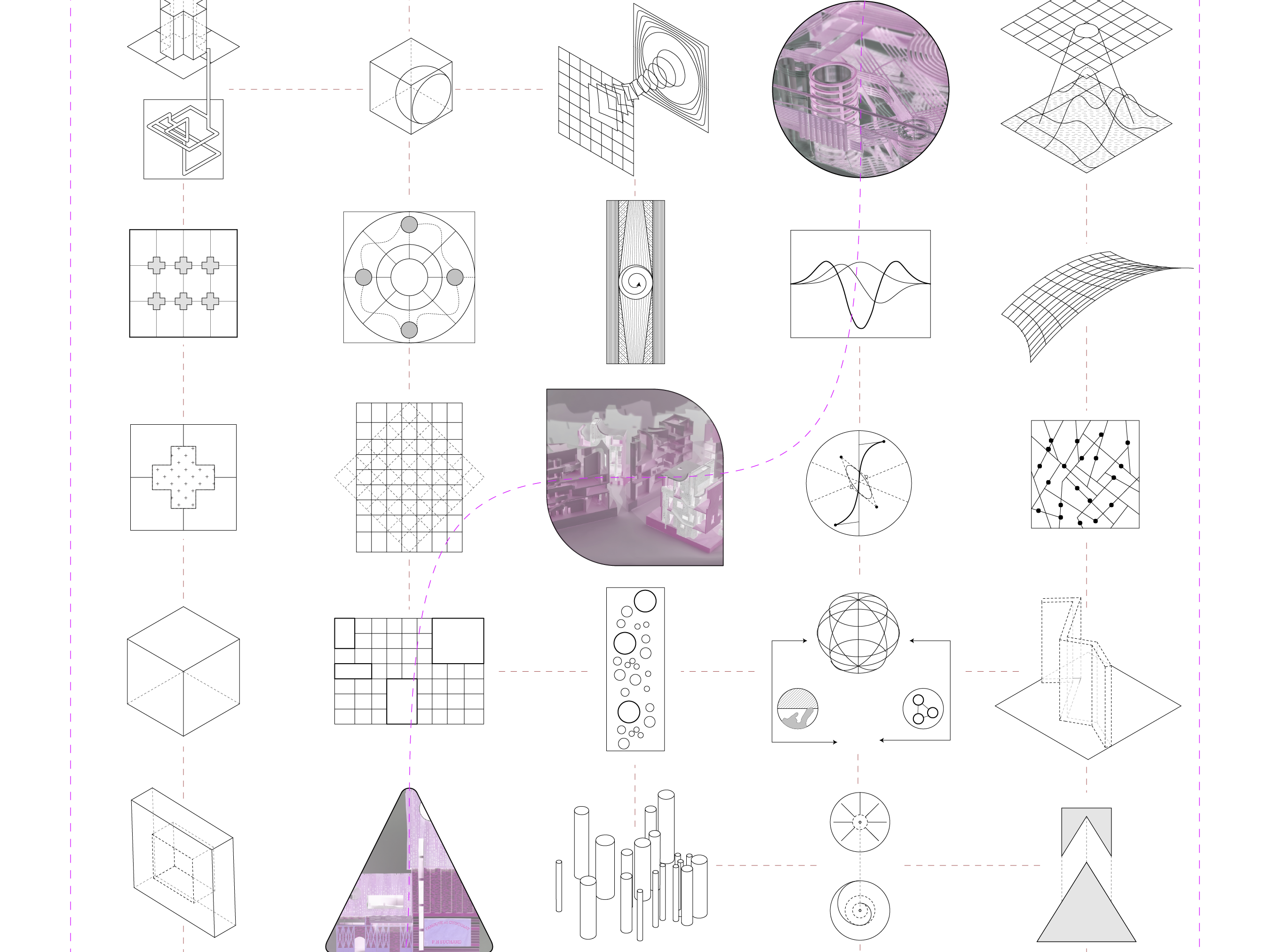
Elevation drawing, flattening space and time embedded in Weber's painting. The representation of the Suchard Campus and Serrières Valley captures Swiss playfulness and the material and spatial qualities of the region and numerous buildings.
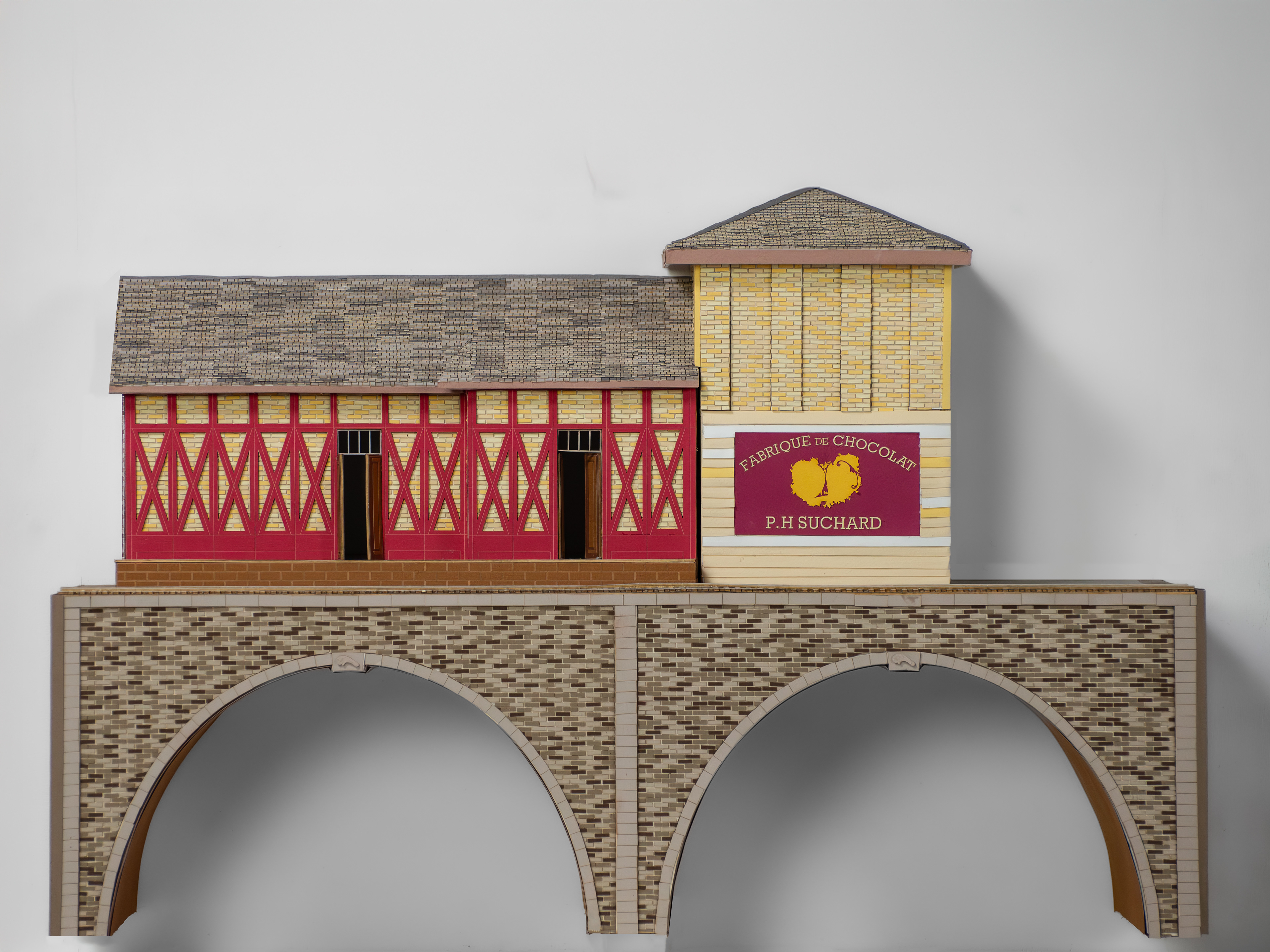
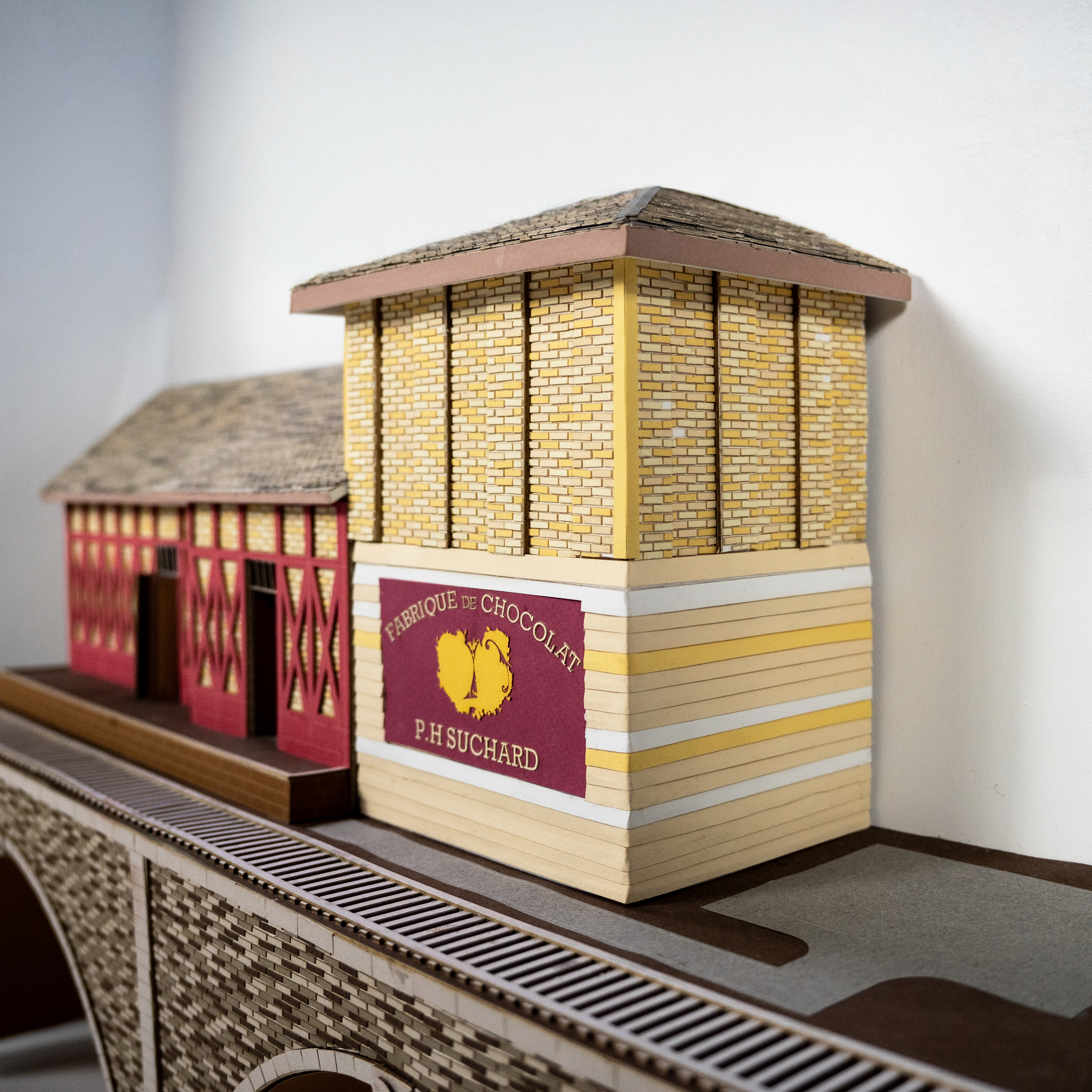
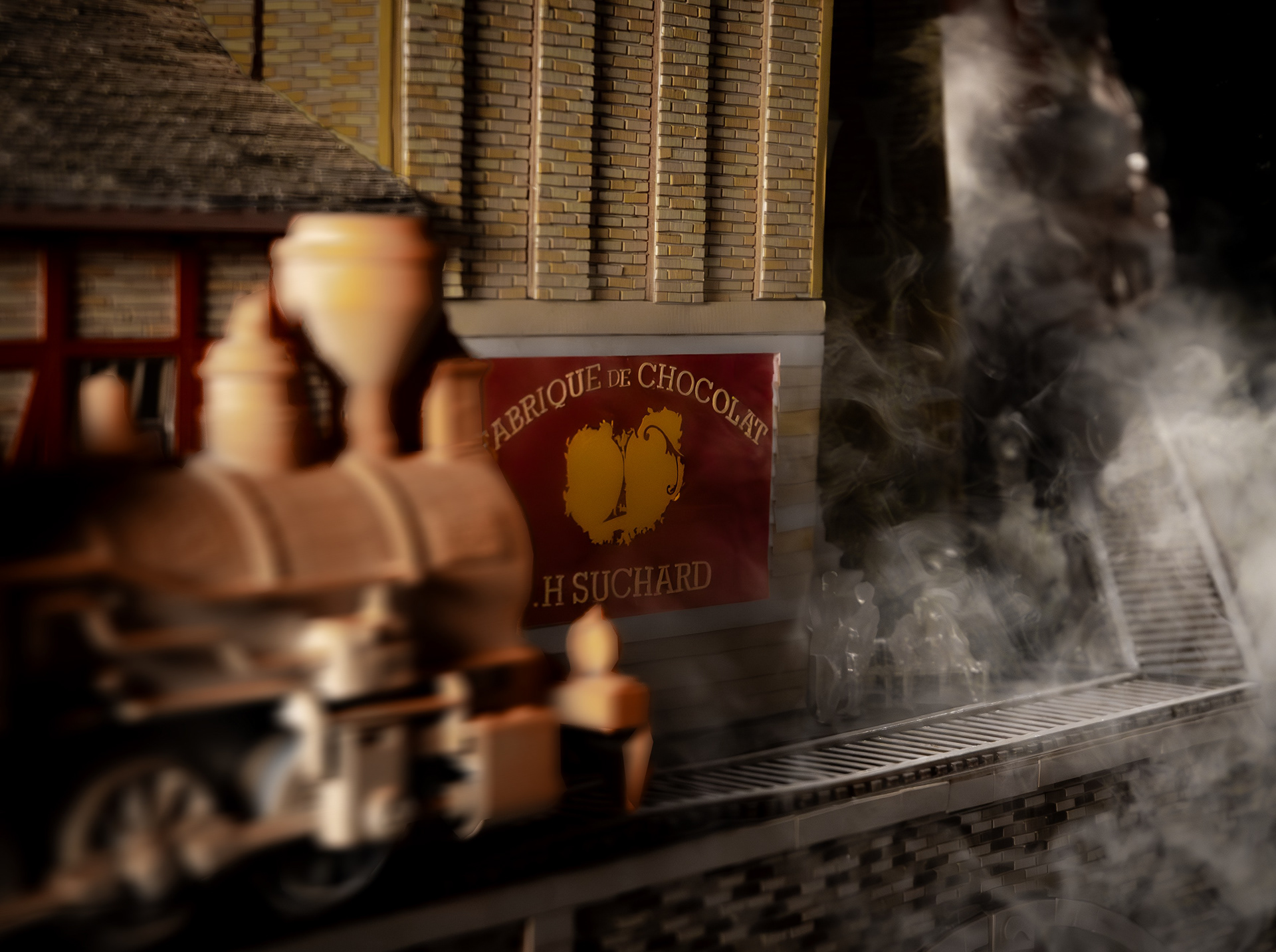
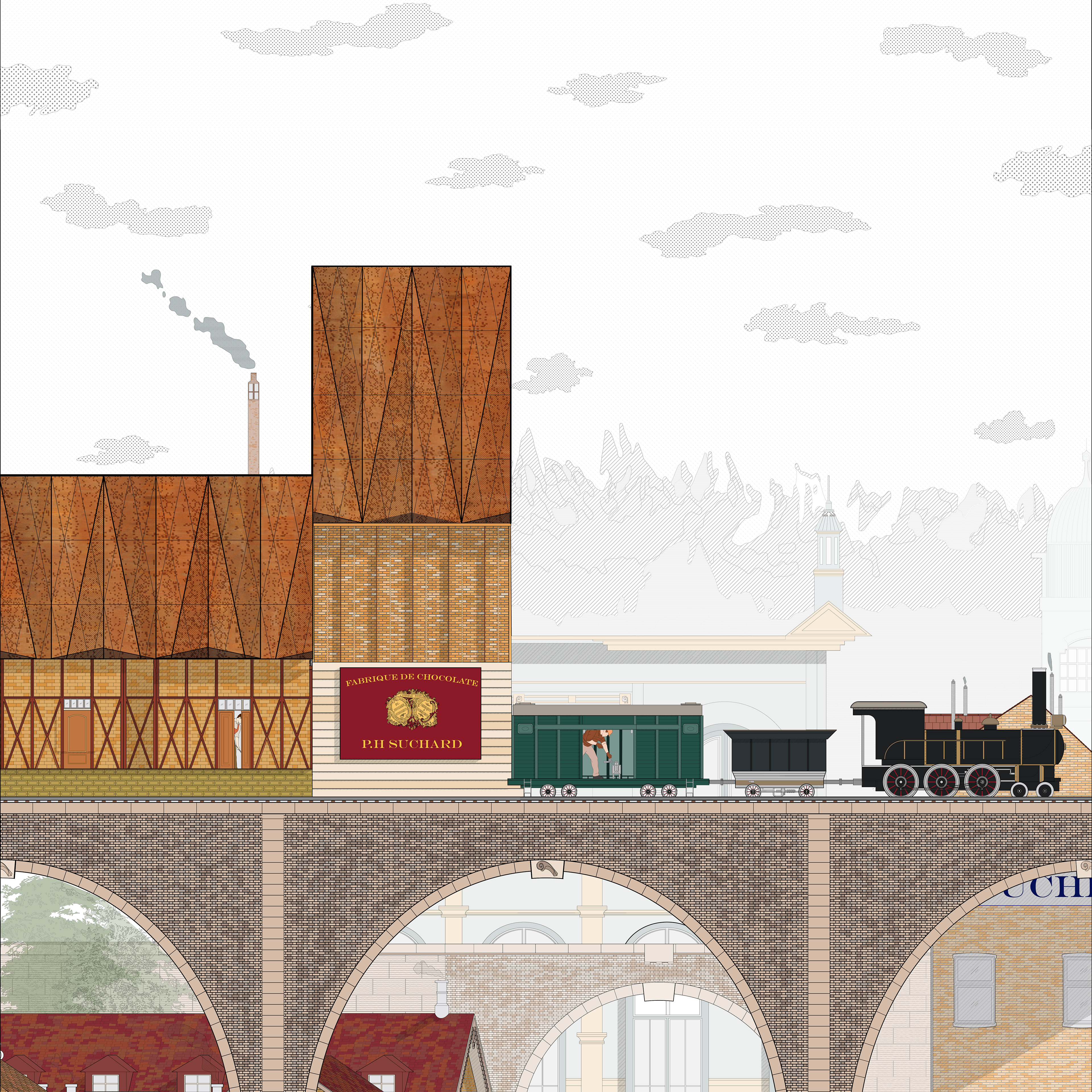
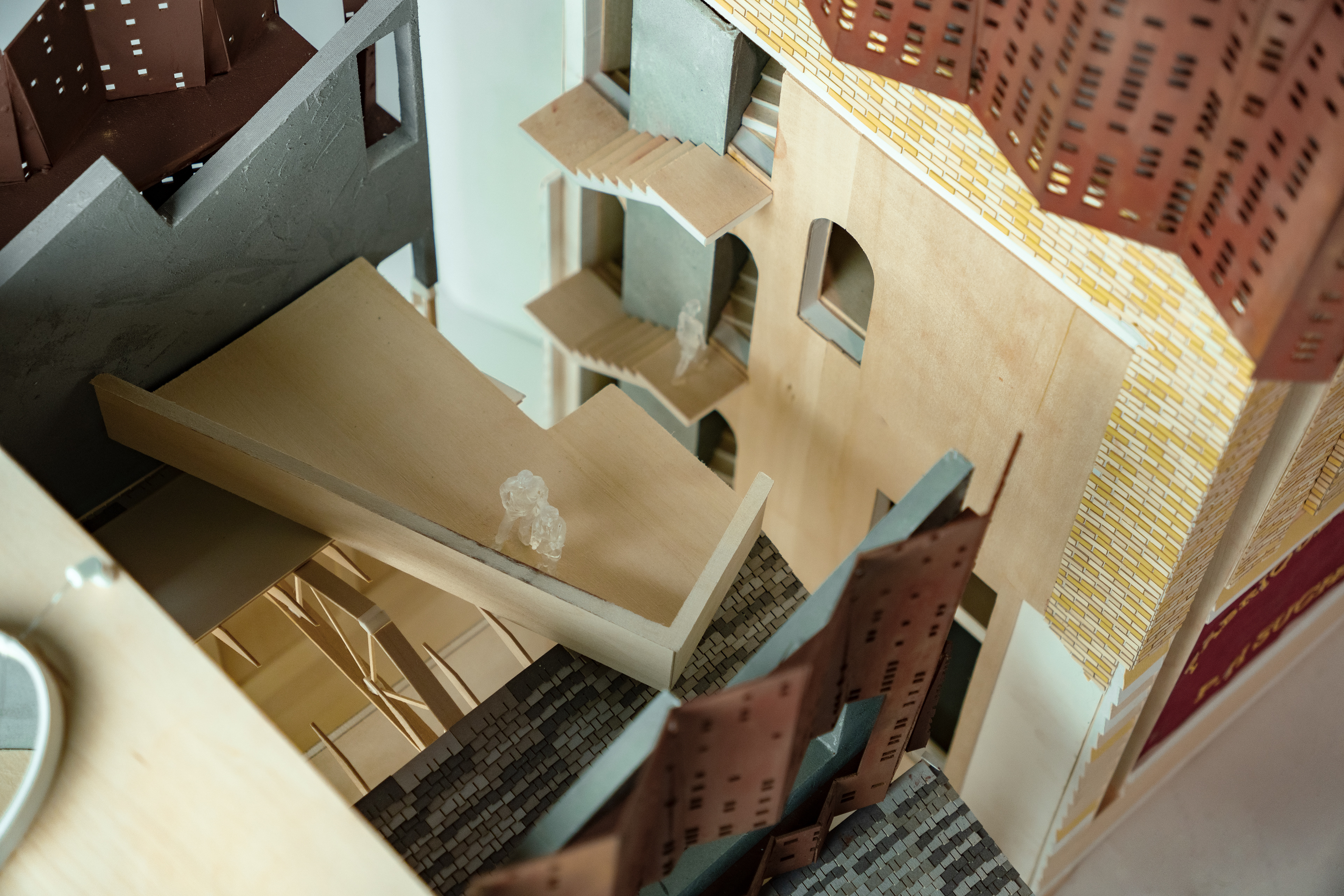
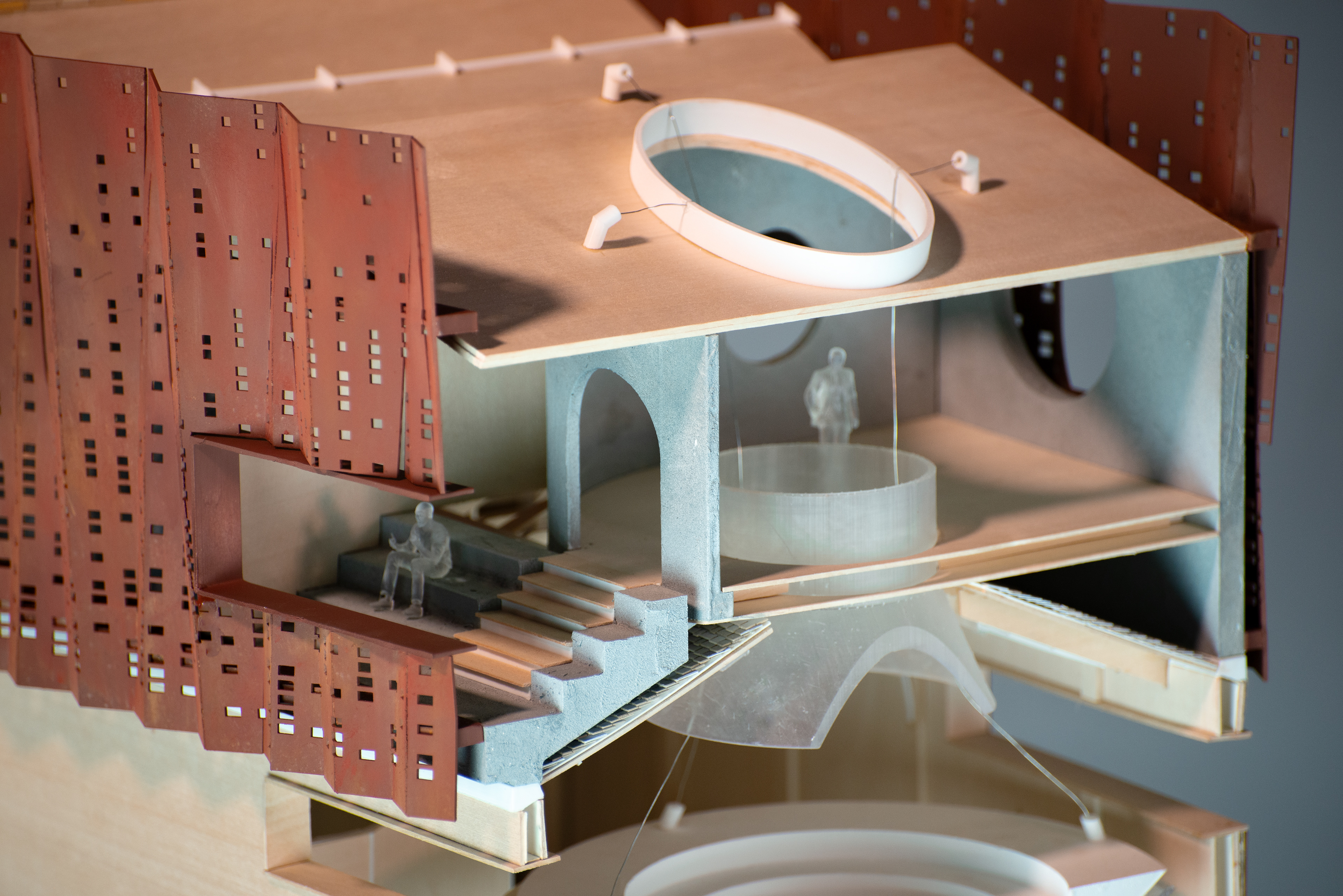
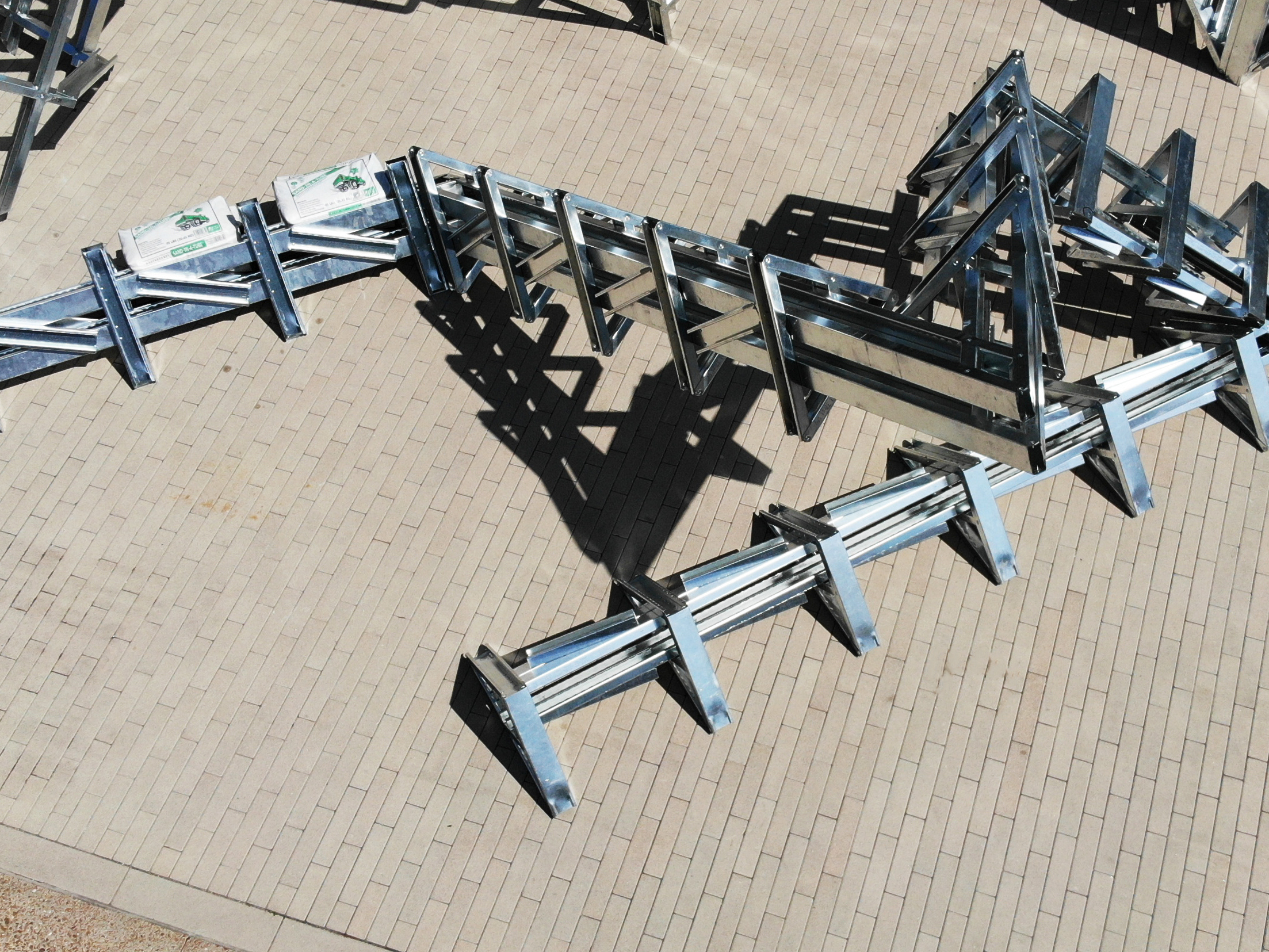
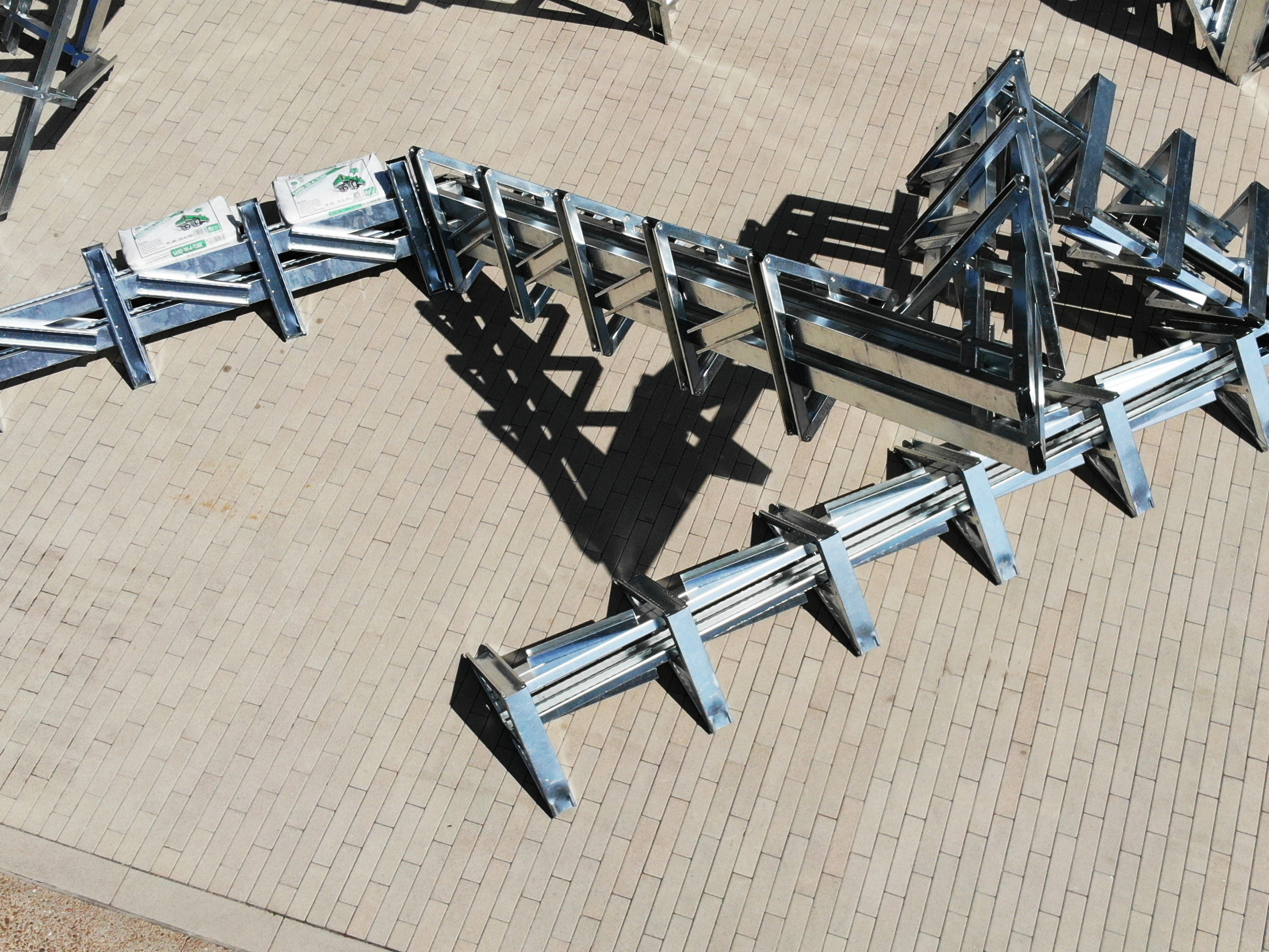
The facade is a series of undulating, fastened, triangular metal panels, perforated with openings that react to the programmatic choices on the interior and the geometry of the existing brickwork.
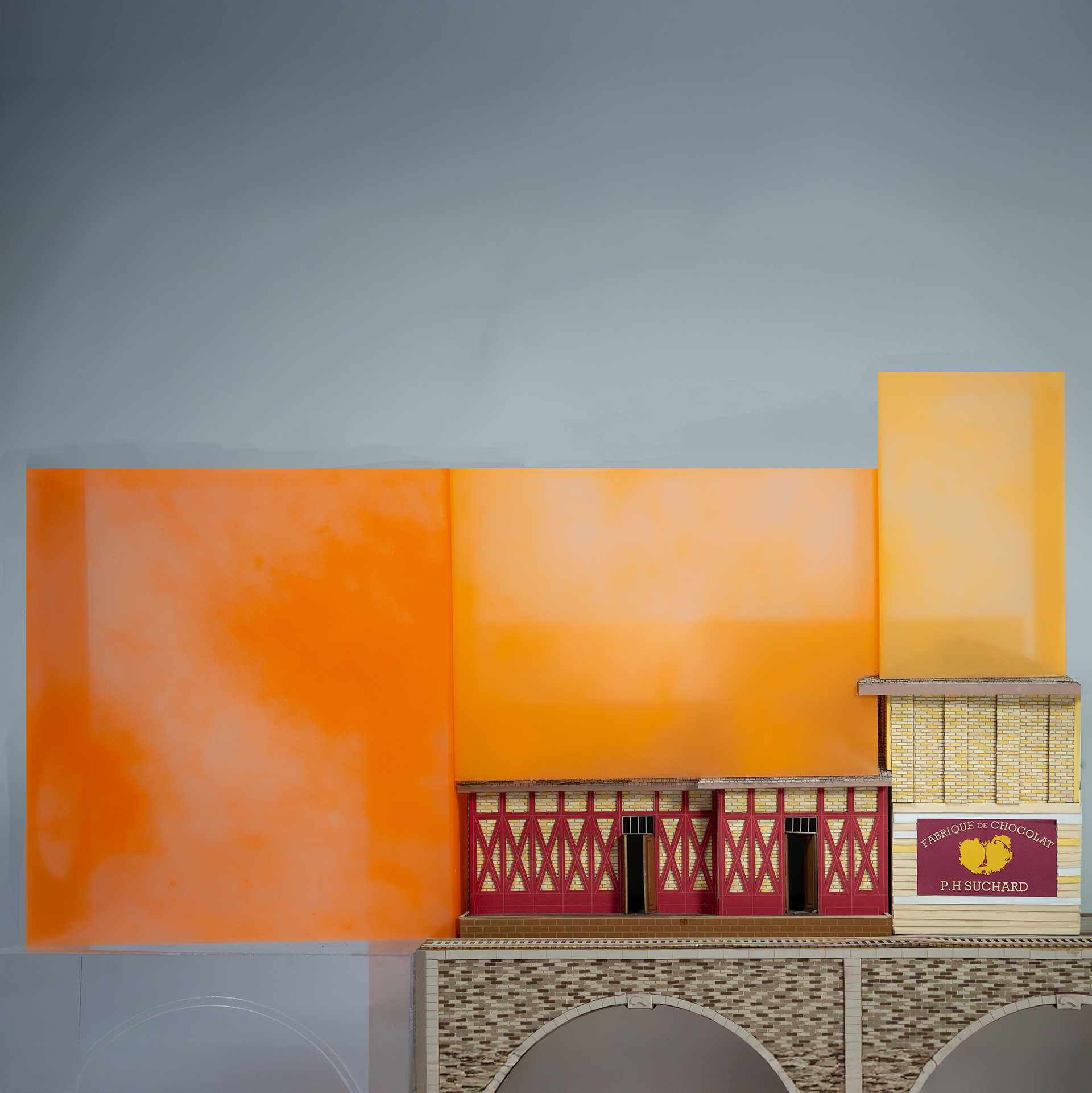
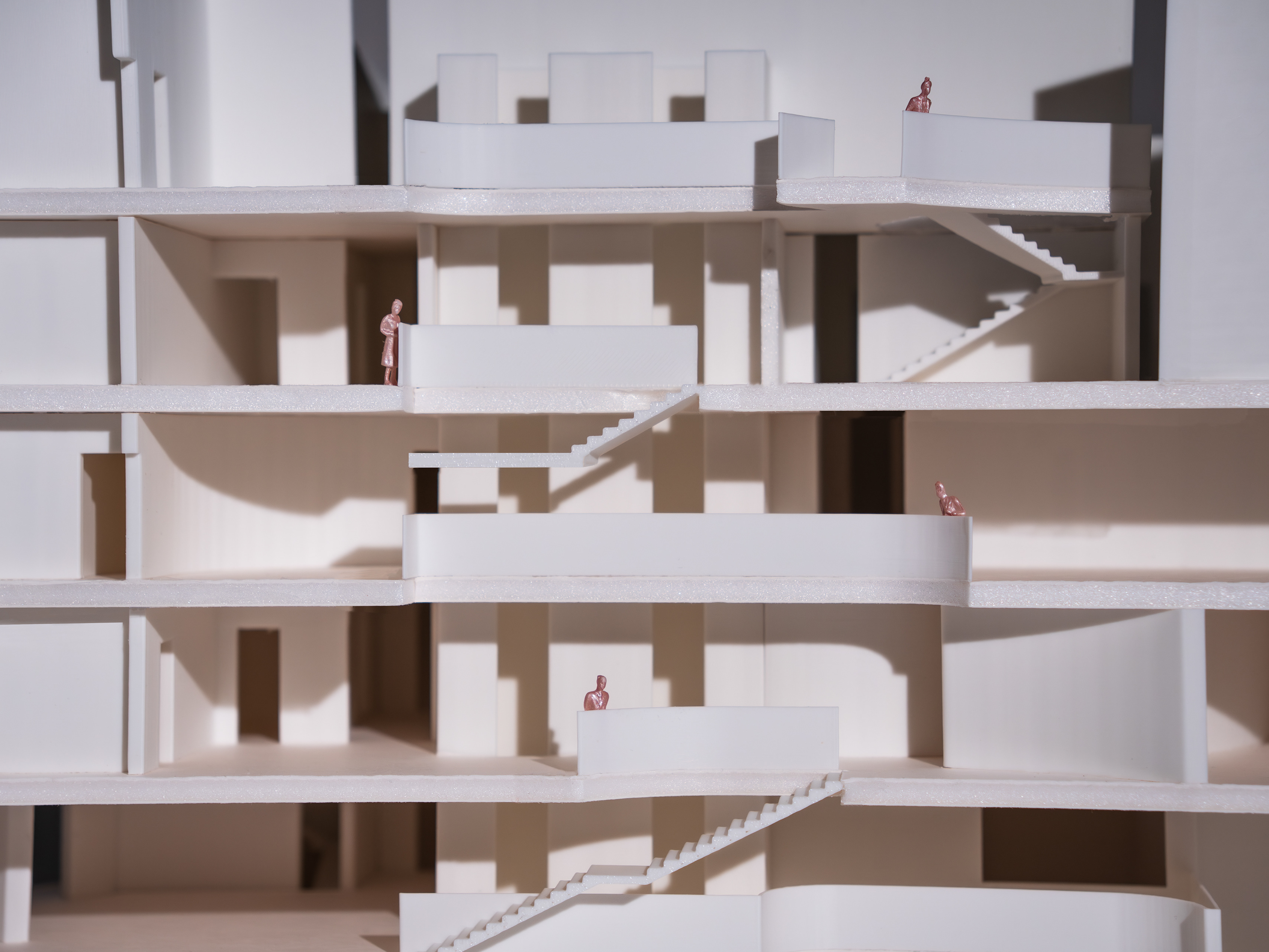
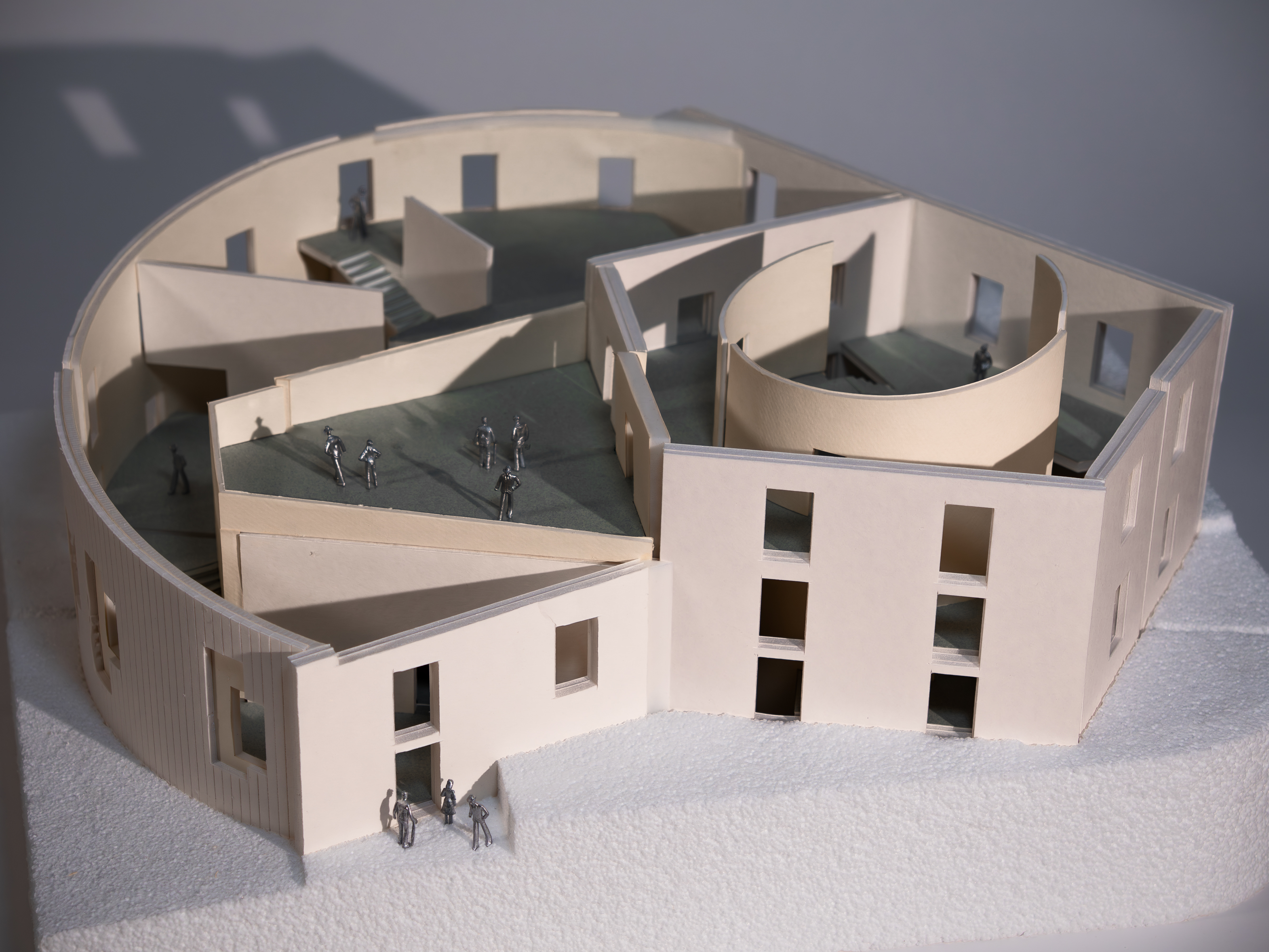
3 distinct, interconnected volumes jog around the existing train depot building. While appearing monolithic, the materiality insinuates masses floating above and the potential for lighter interior conditions. Due to the smaller footprint, volumes needed to be placed above the existing condition.
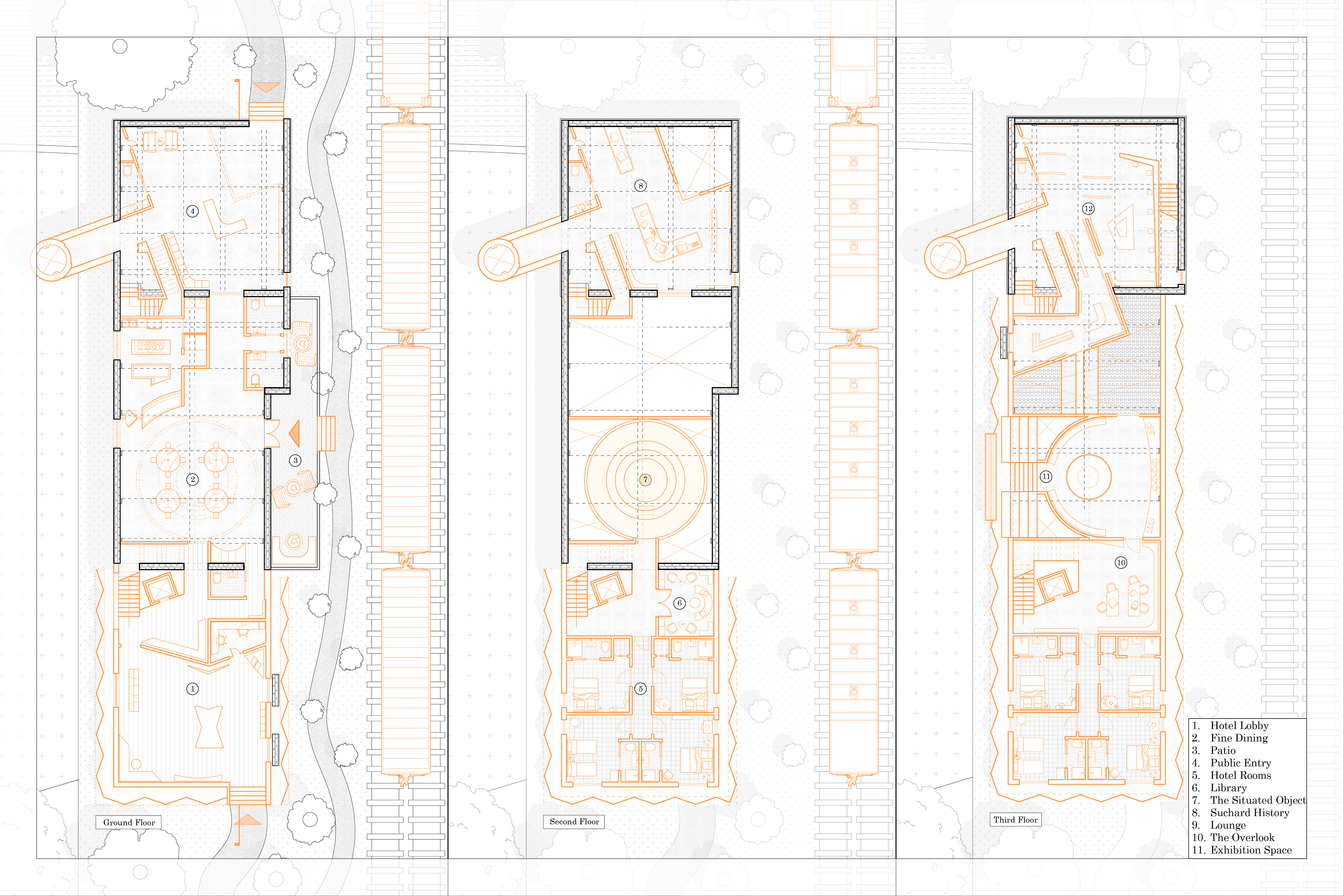
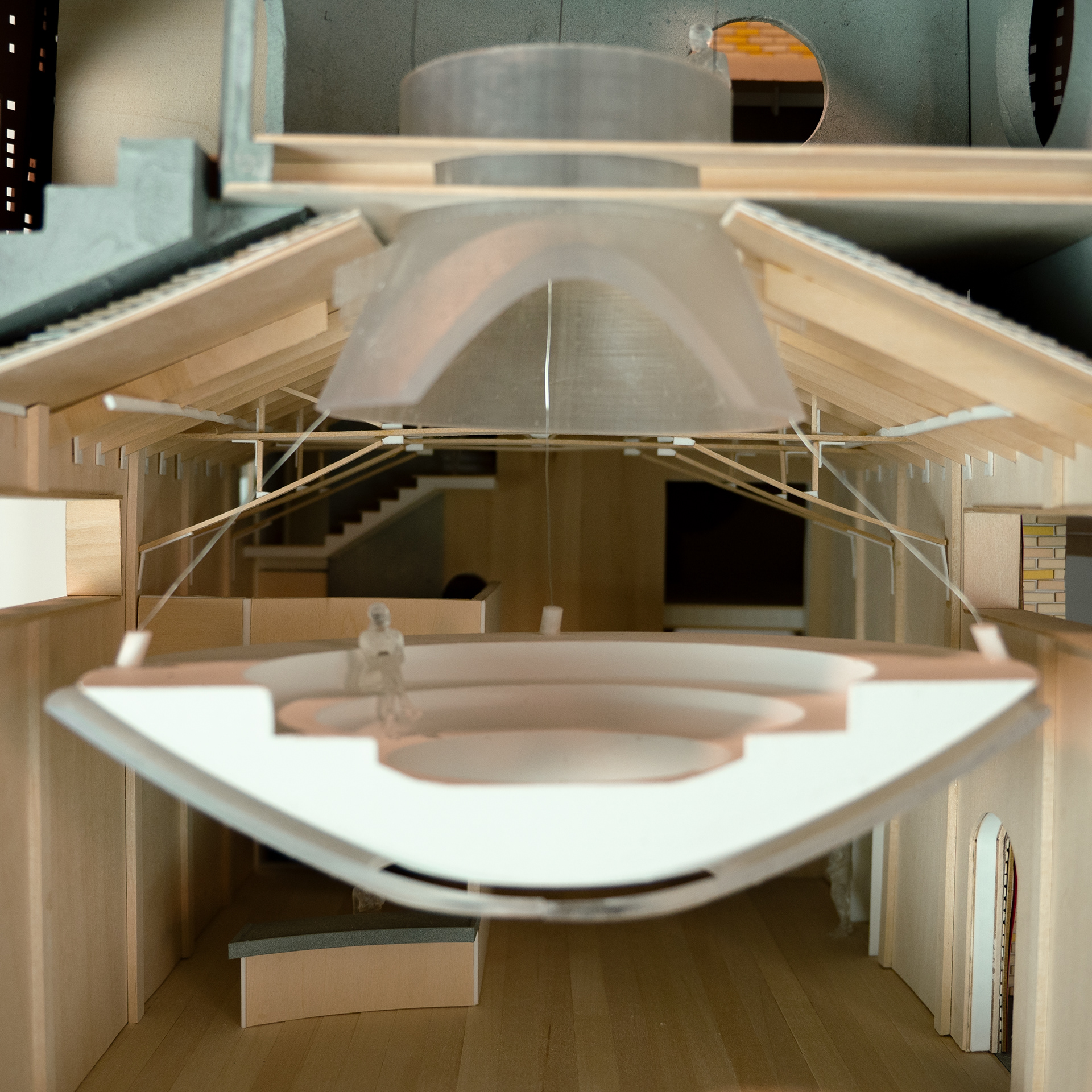
By remaining within a bar footprint and designing various small scale elements for each space, the project frames the Güterschuppen as a significant building typology for Swiss chocolate factories, and as such, for the collective cultural memory of Switzerland – its Swissness.
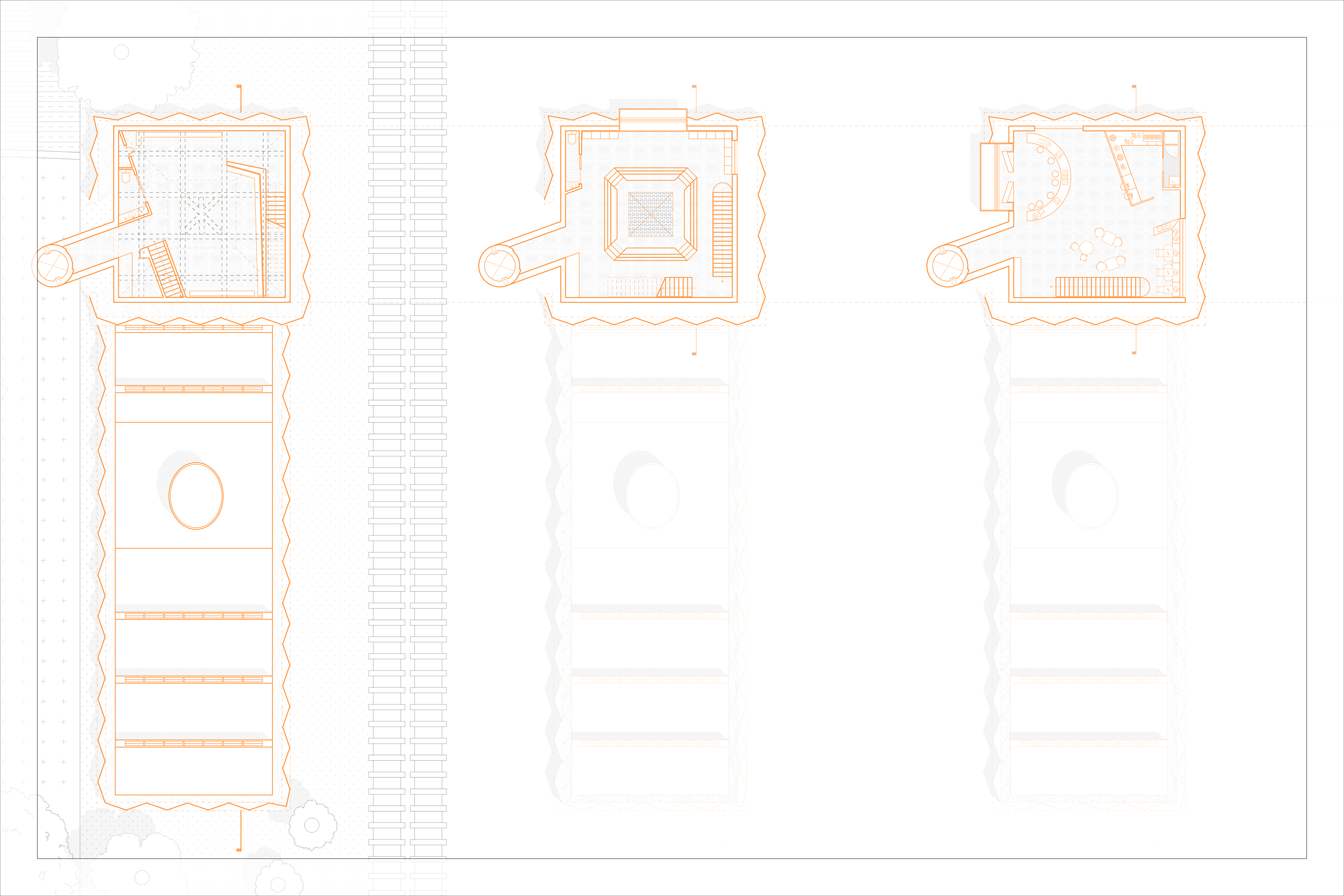
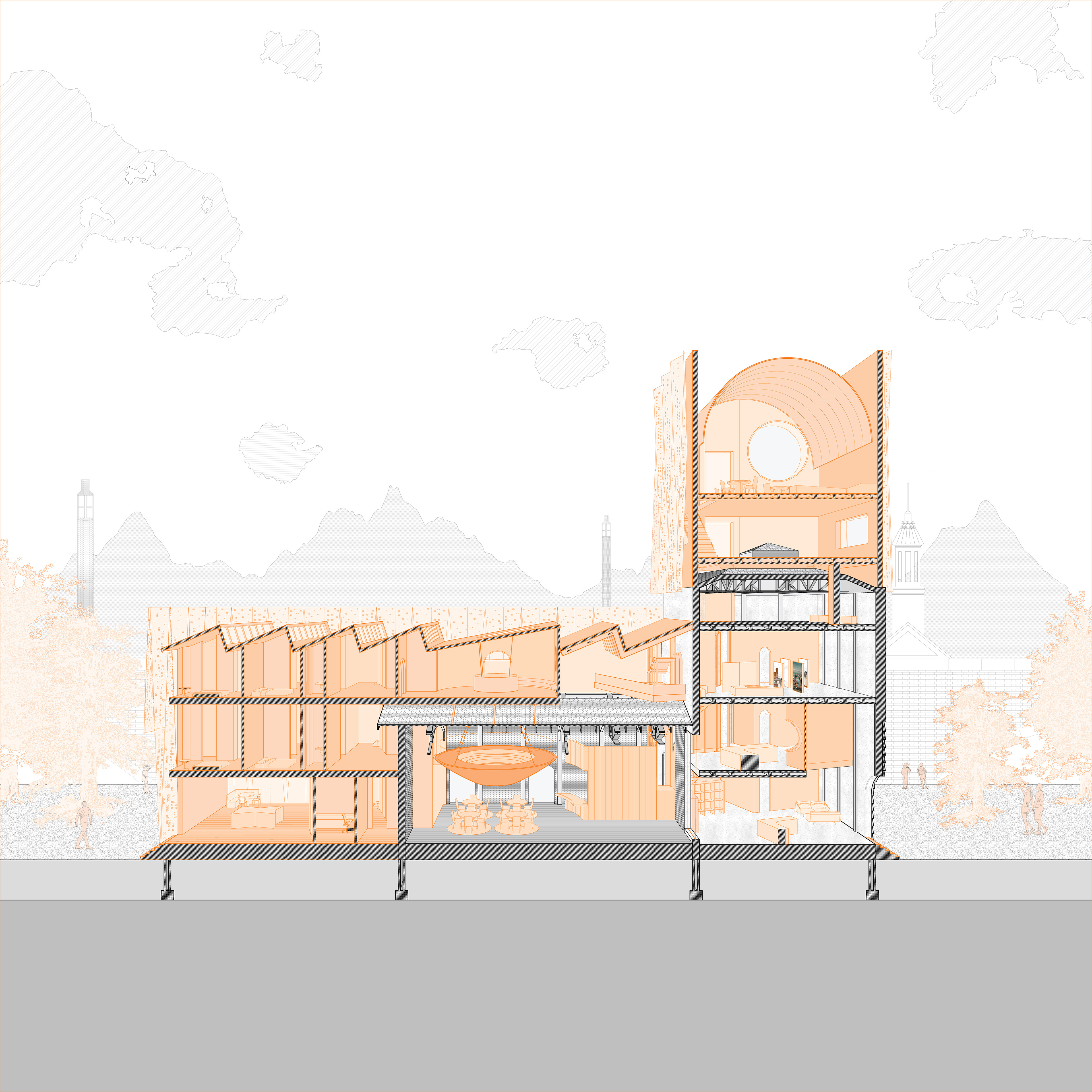
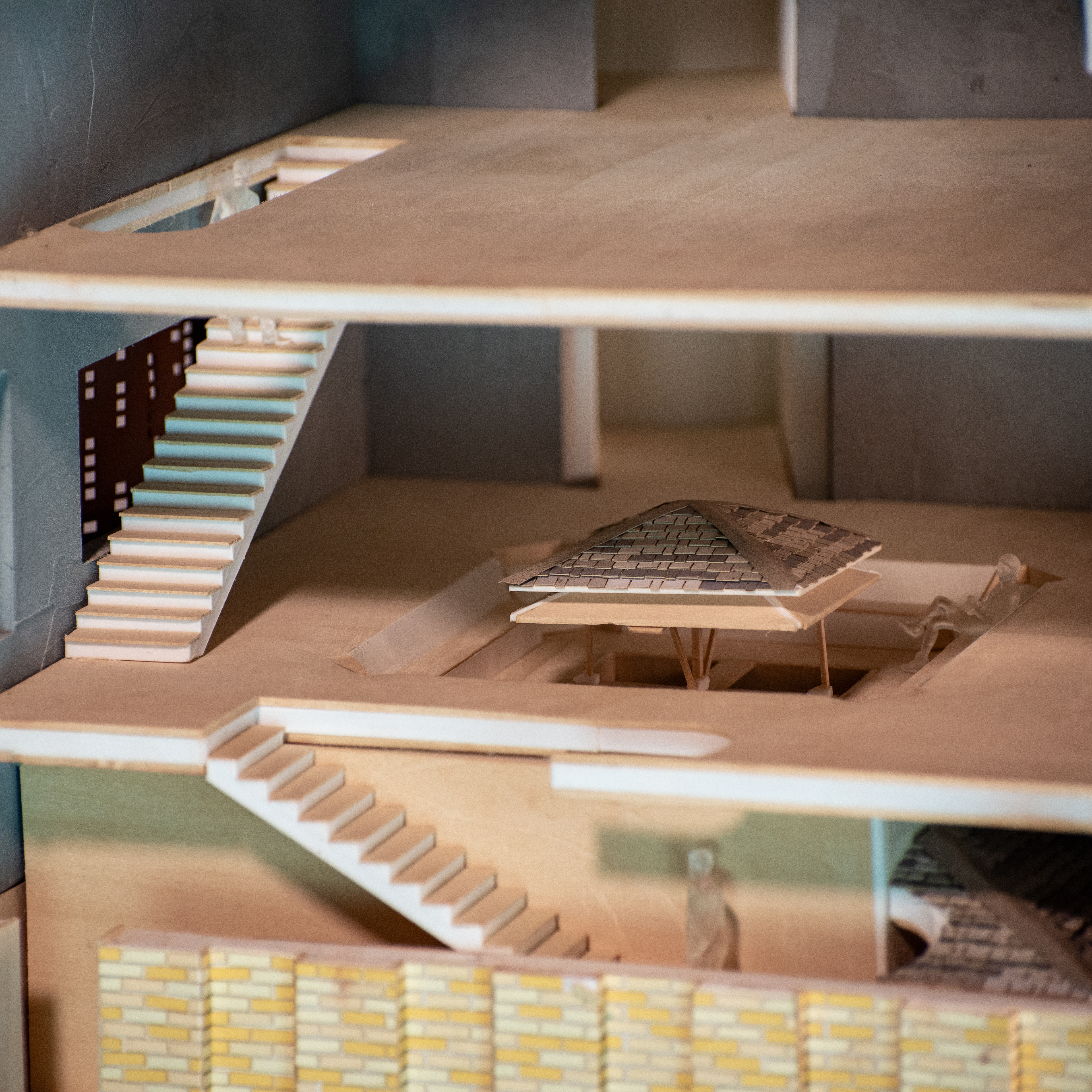
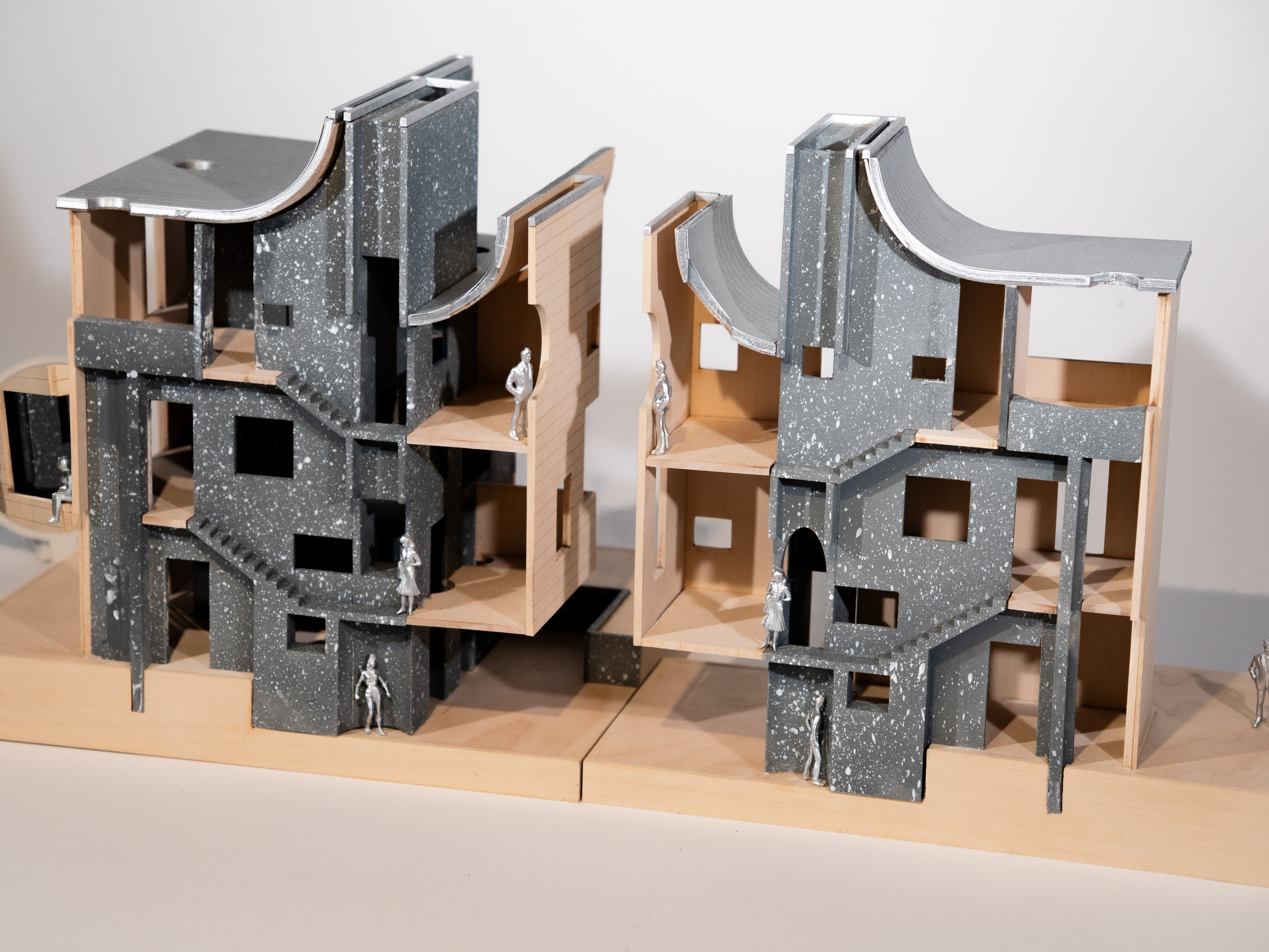
The left volume houses the more private, chic, hotel arrangements while the right-most volume is driven by small-scale public programs such as a café and gallery. The middle volume and the ground floor act as a mediator between public and private and old and new.
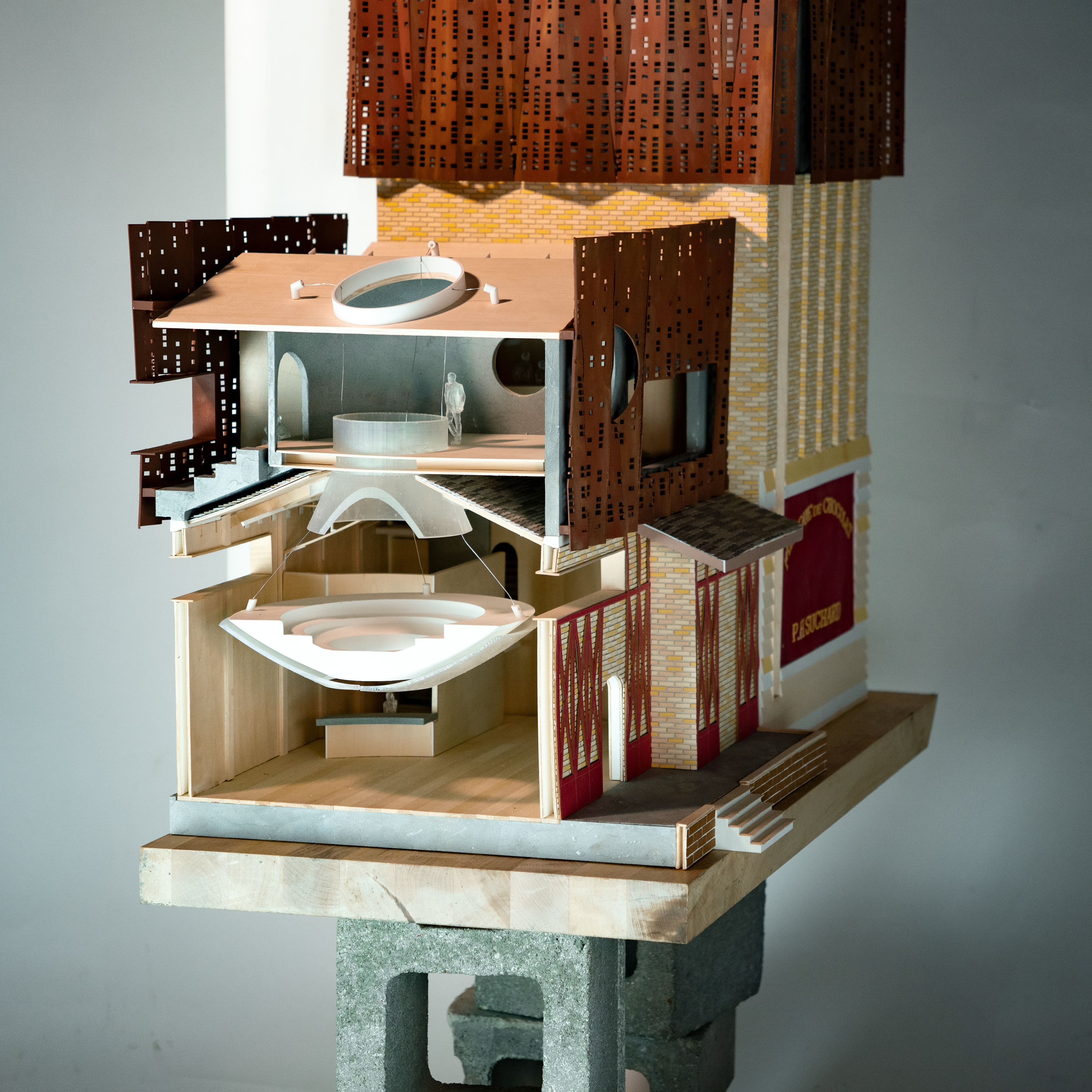
The design proposal places three contemporary, elevated volumes atop the existing condition, for P.H. Suchard Chocolate in Neuchâtel, which transforms the storage shed into a hotel and entry gateway for the Suchard visitor experience by casting the Swiss café, “chocolate experience”, and boutique hotel programs into contemporary architectural milieu. Through simple yet intricate spatial and material maneuvers, distinctly private, public, and mixed-use spaces emerge as a tactful reaction to “the old” while apertures and objects begin to hint at something out of the ordinary.
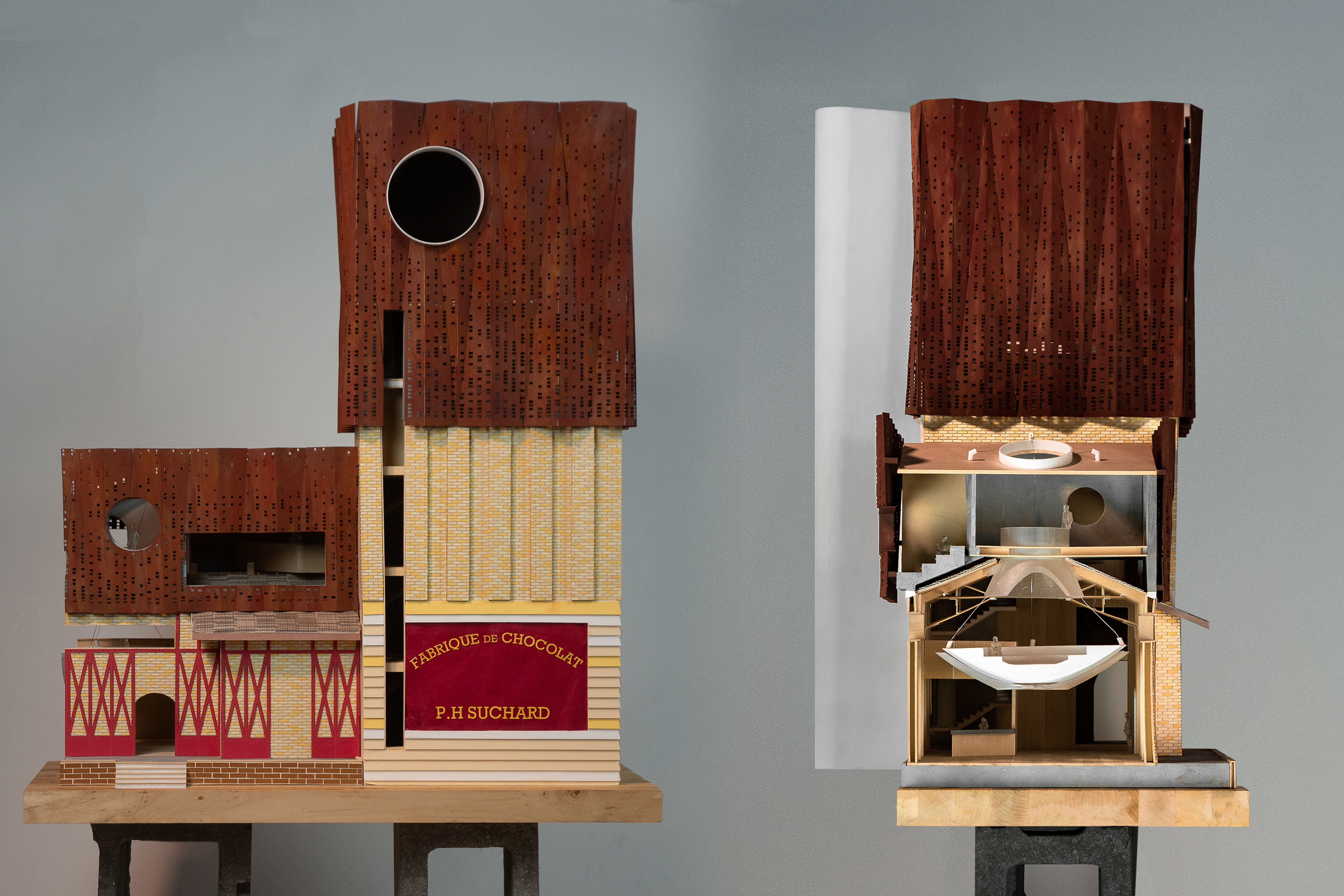
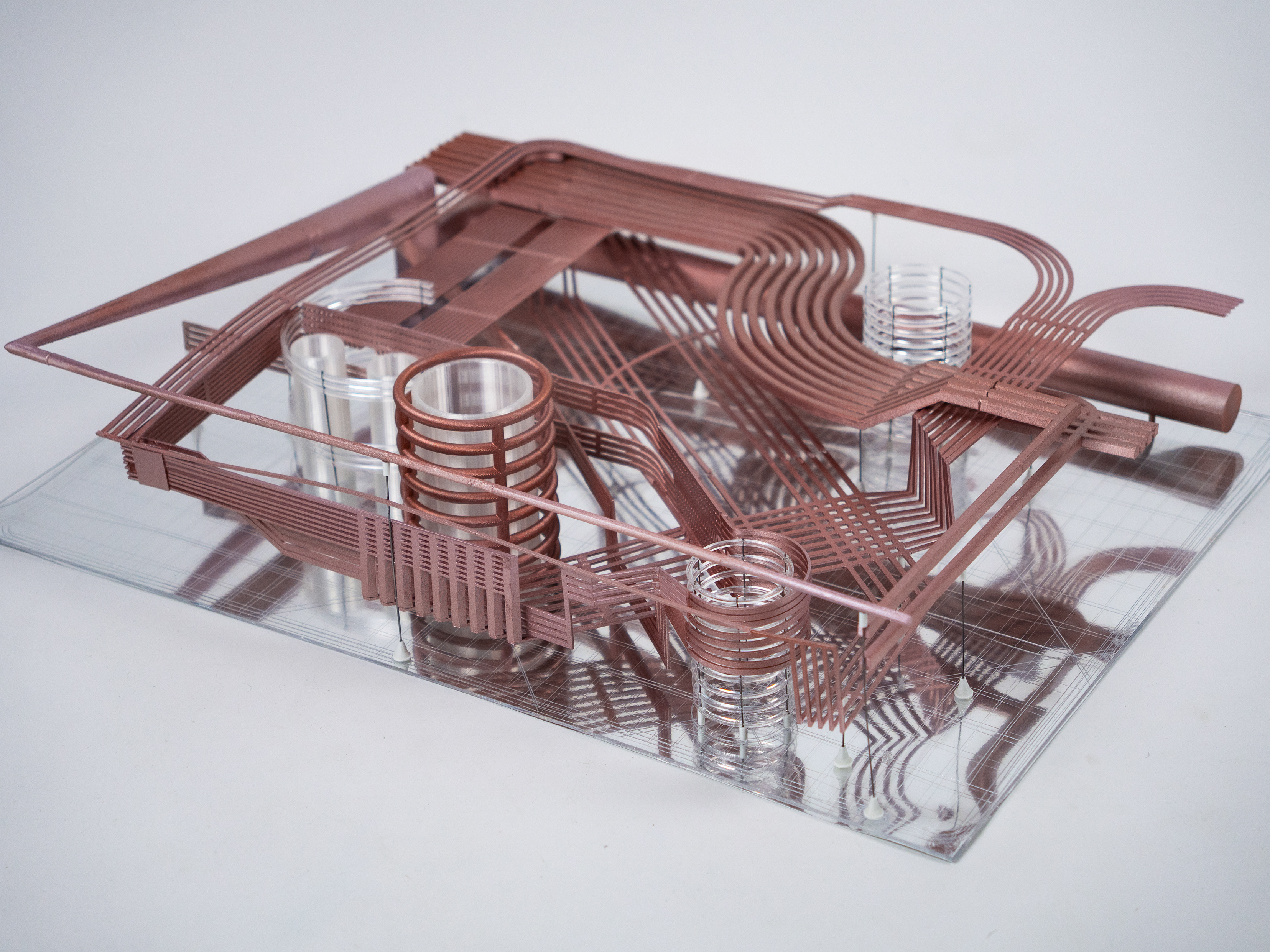
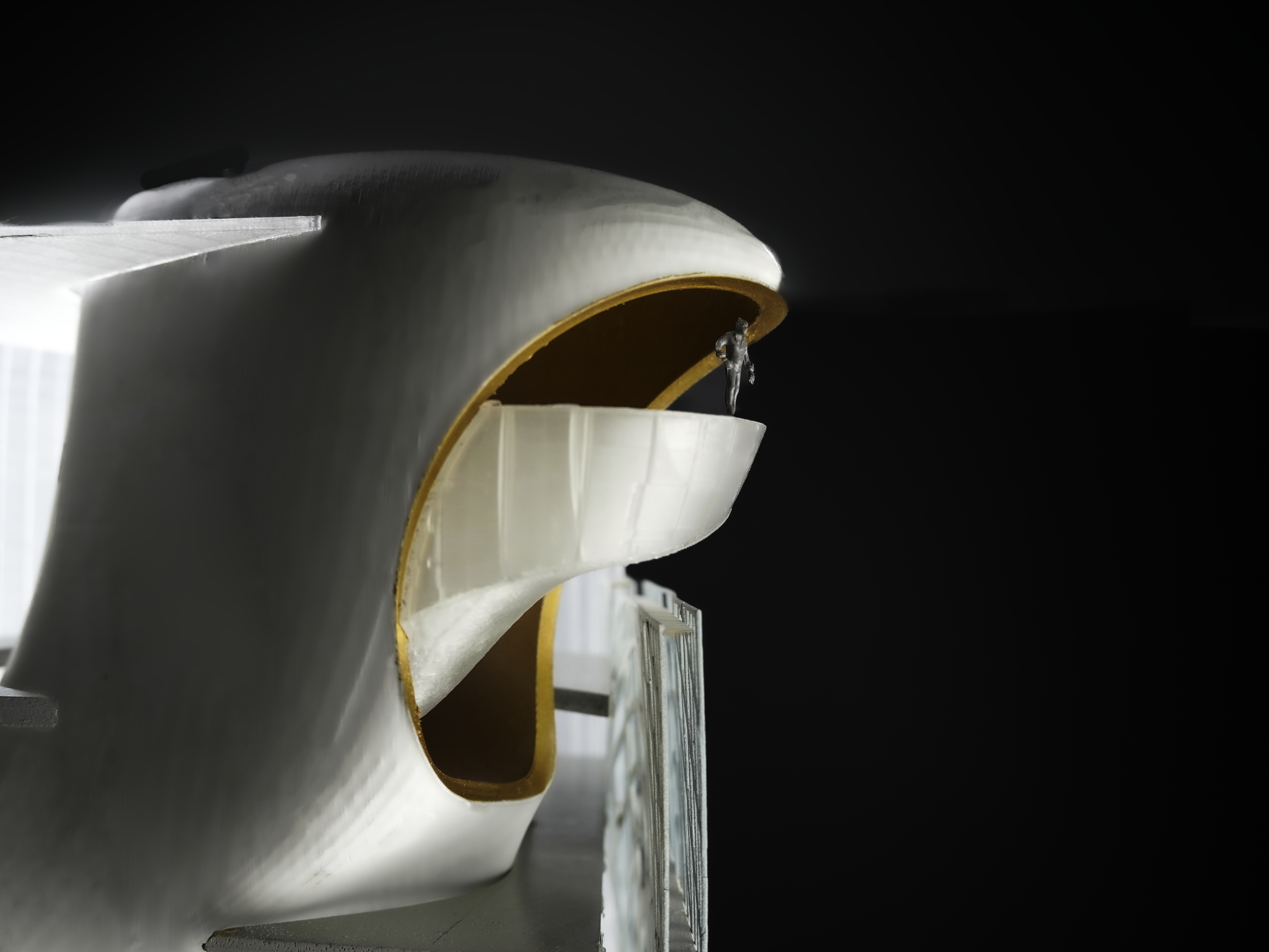
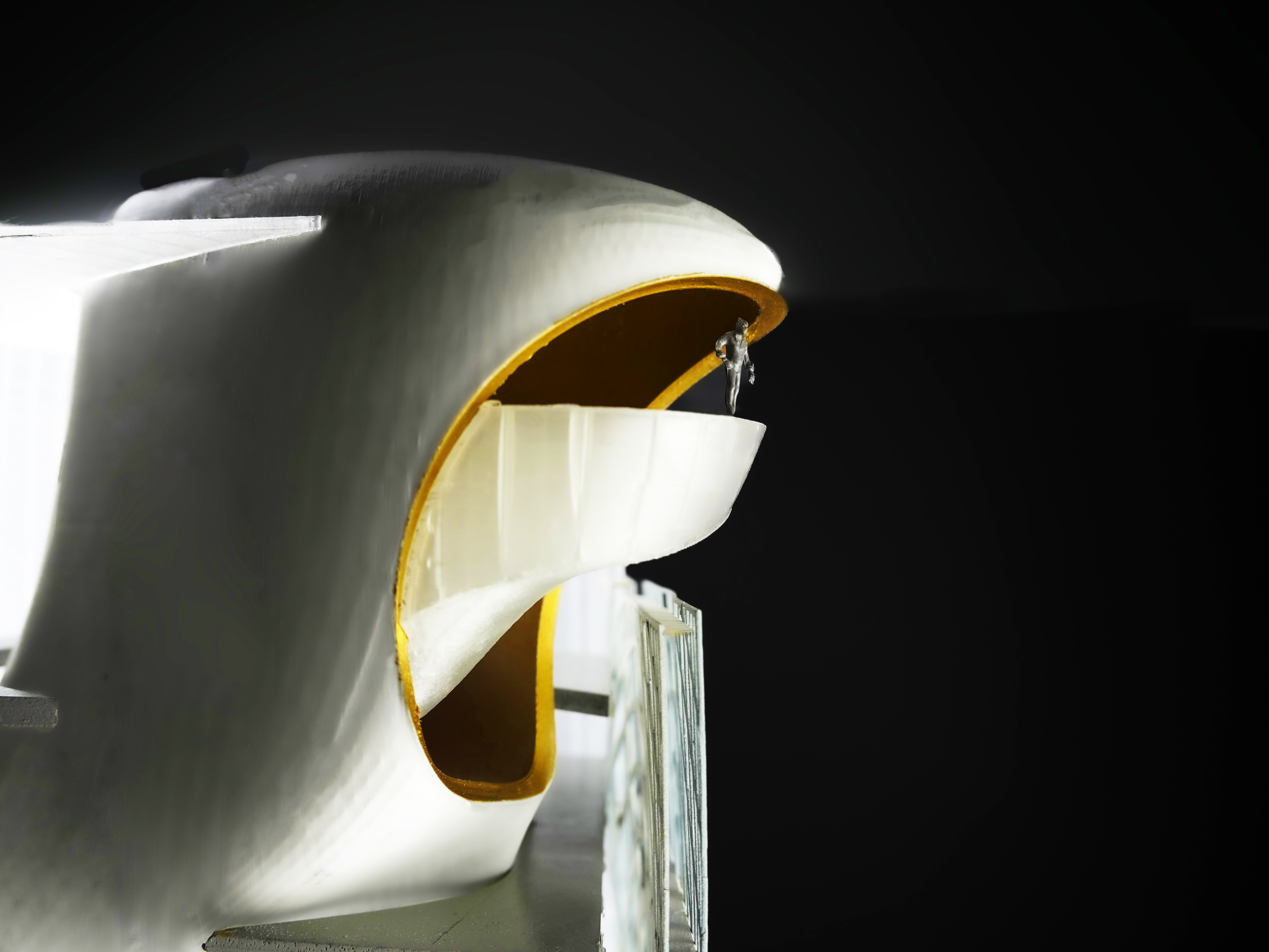
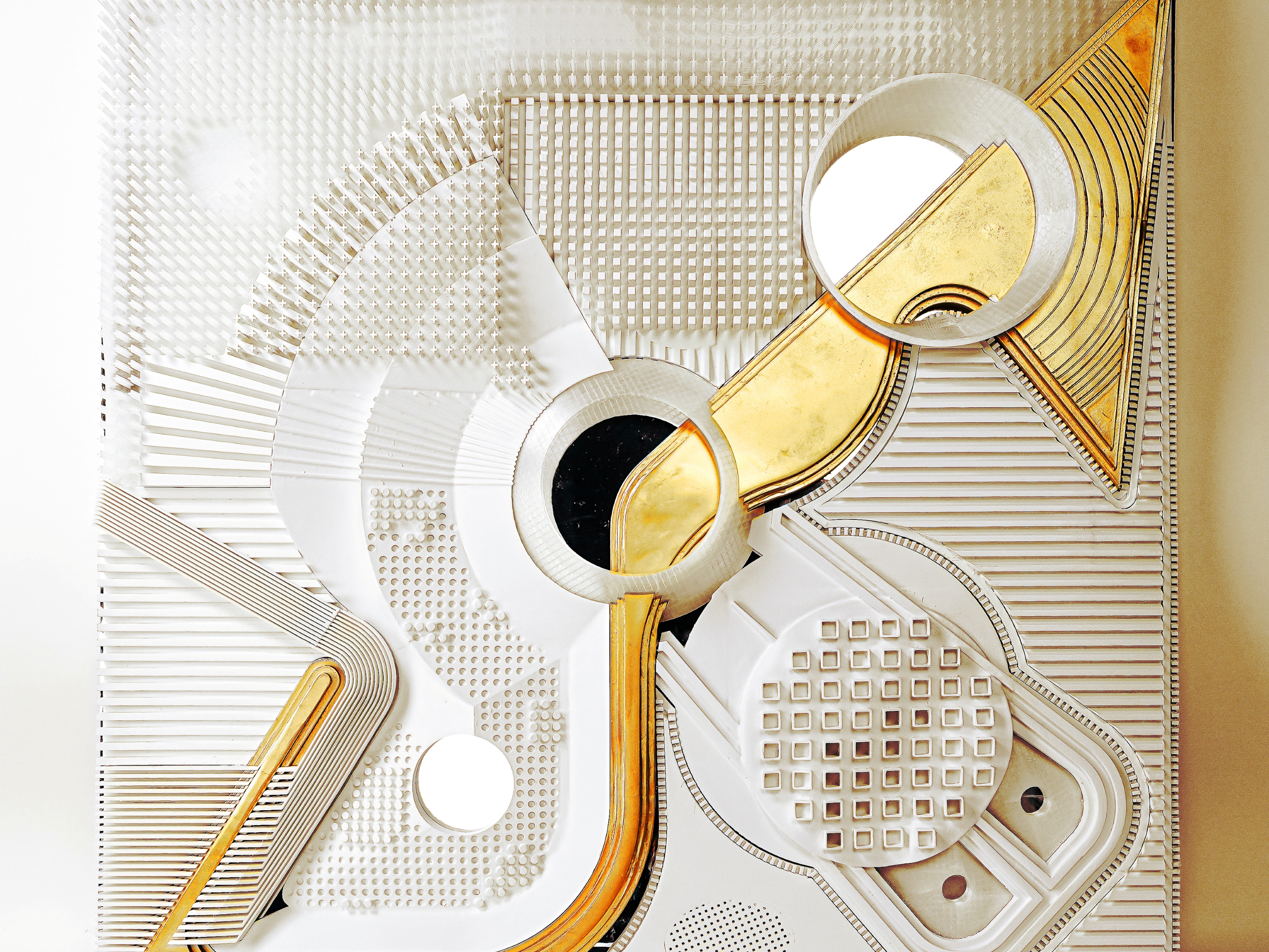
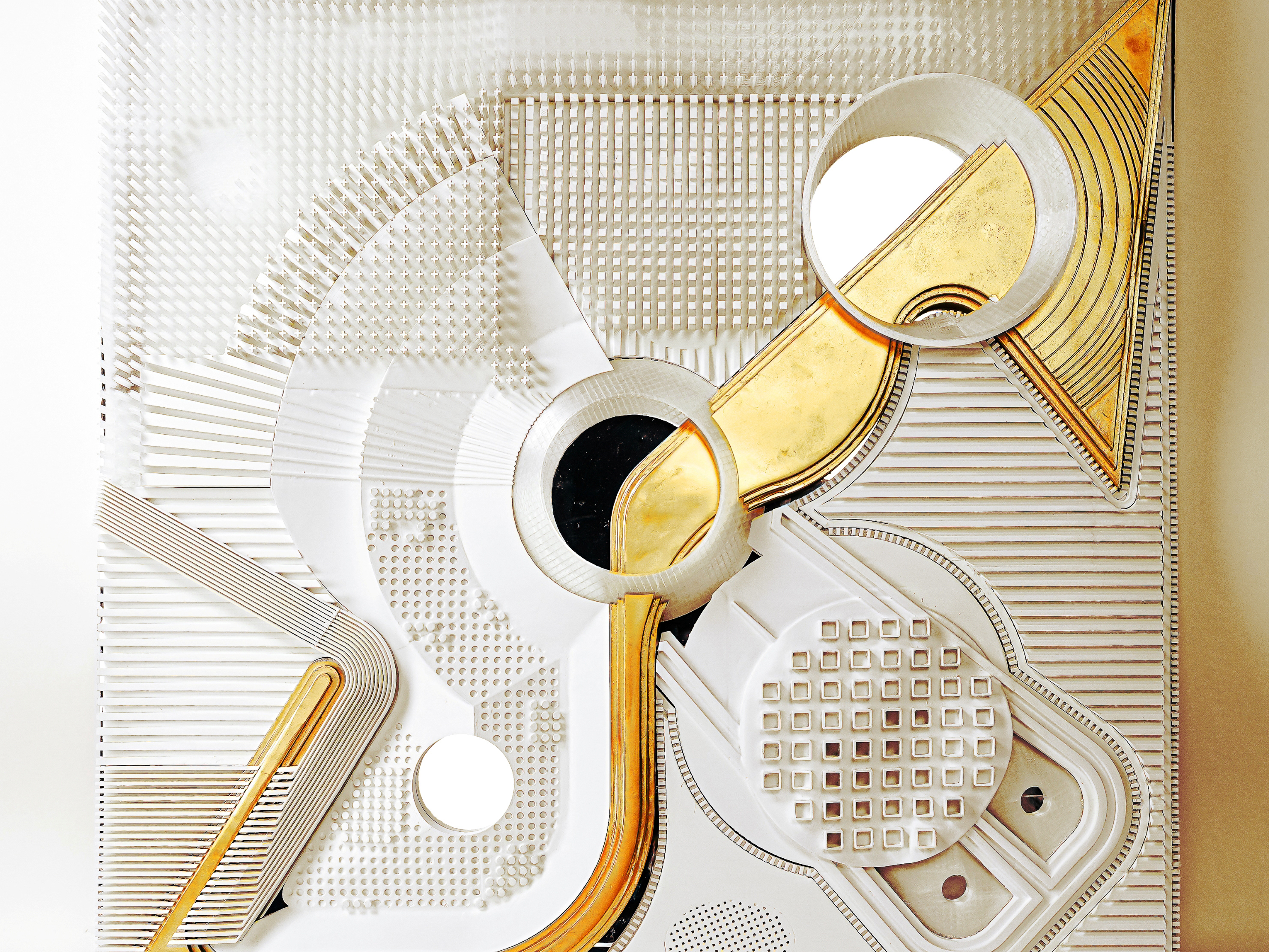
As the spaces build upon each other, they begin to form moments of close proximity and openness; in this case, outlooks, apertures and objects act as the mediator between people inhabiting the space and sometimes manipulate your perception of your proximity to the existing condition. The model itself juxtaposes the thinness of the outside and constantly oscillates between old and new. Programmatic choices lead to the formation of spaces more complex and some more simple that provide organization to a typology categorized by a lack thereof