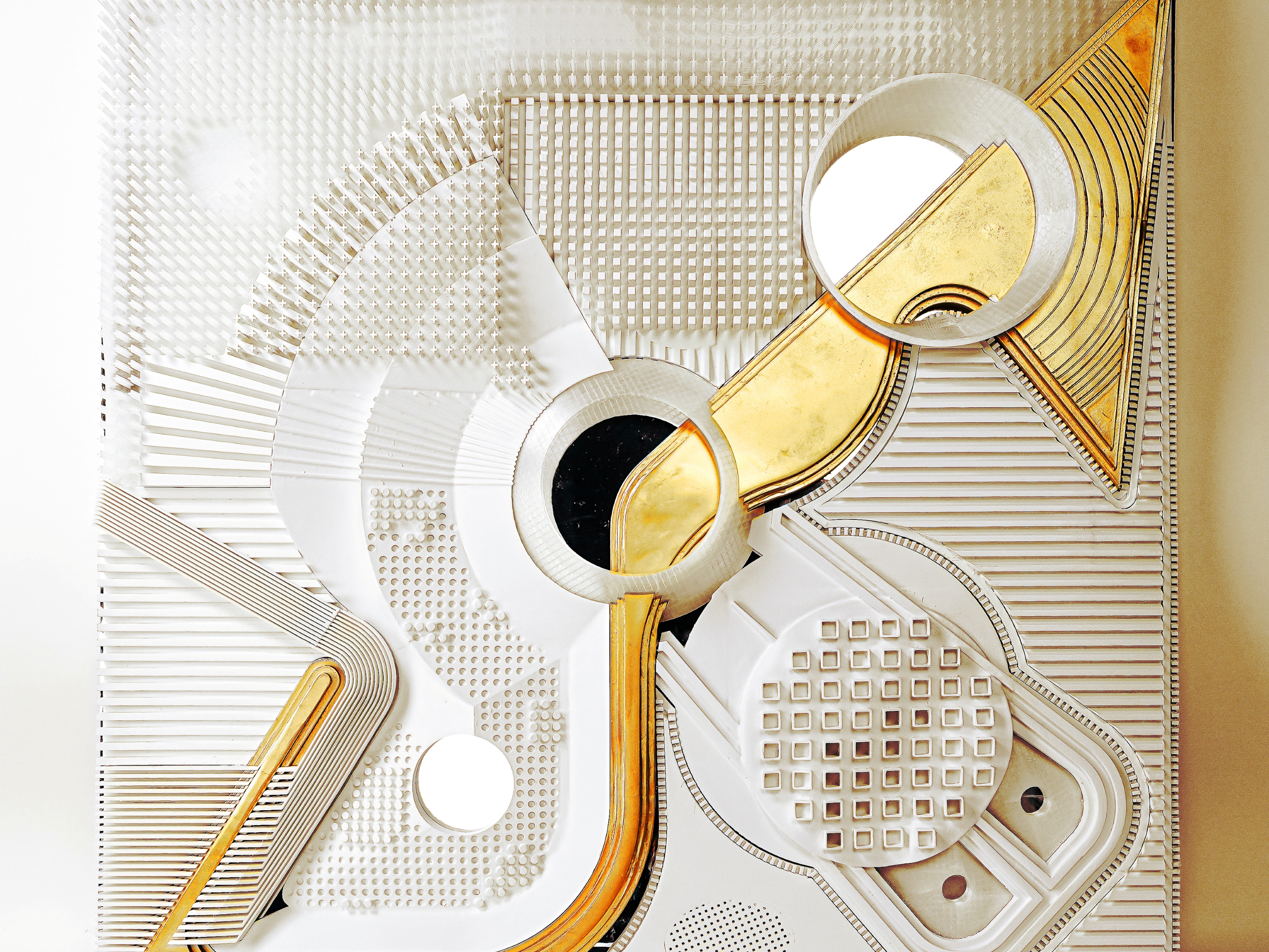
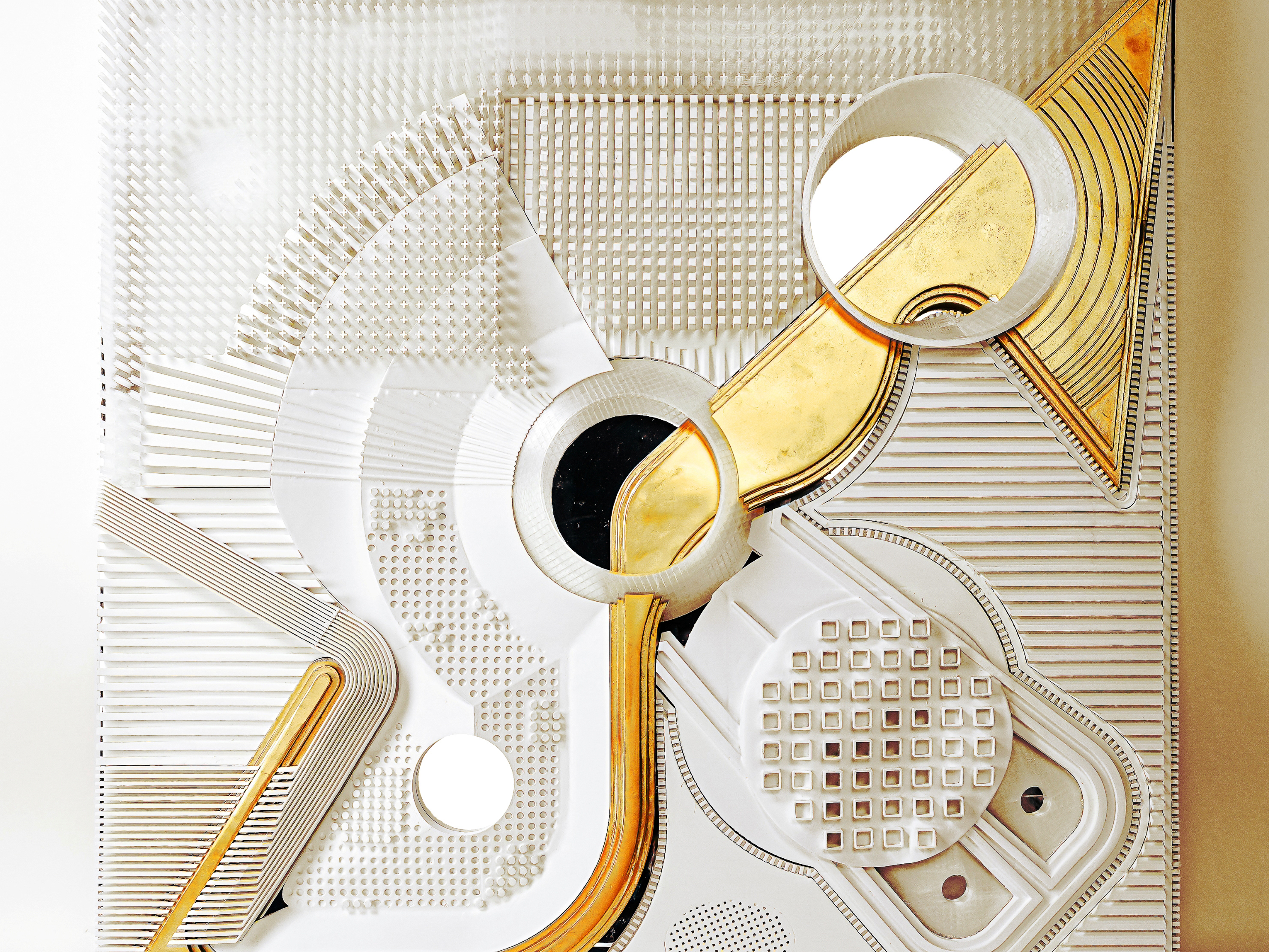
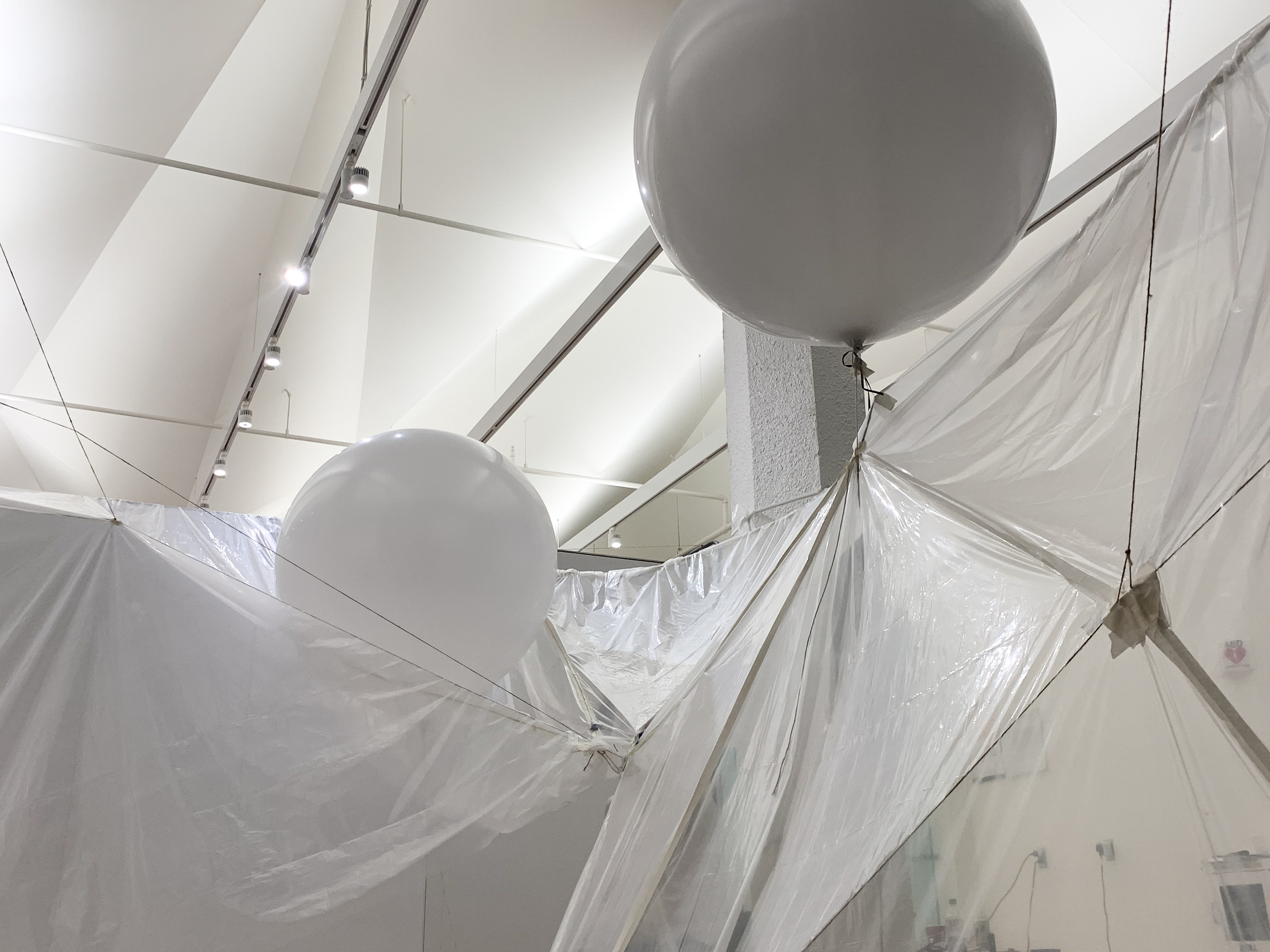
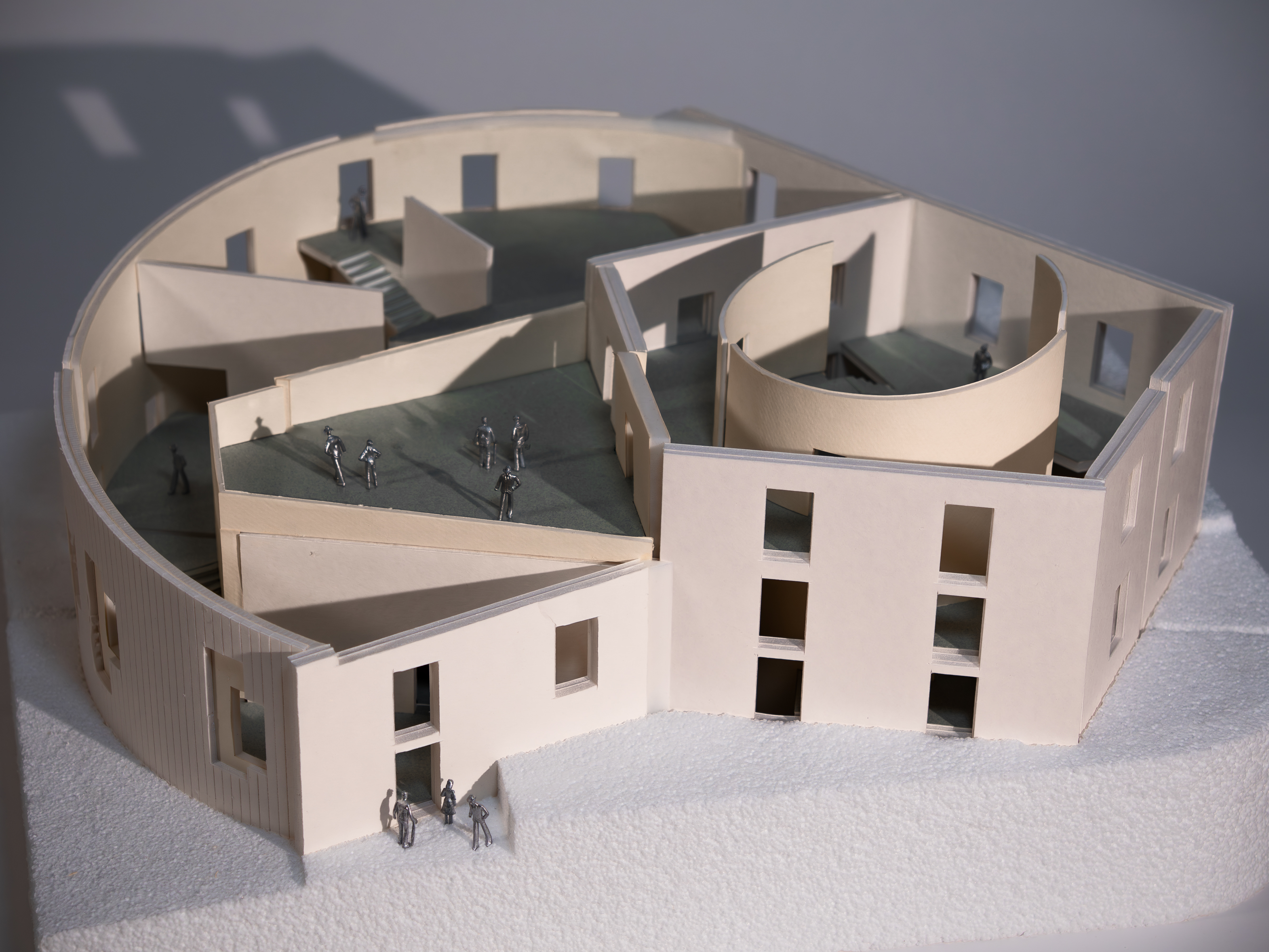
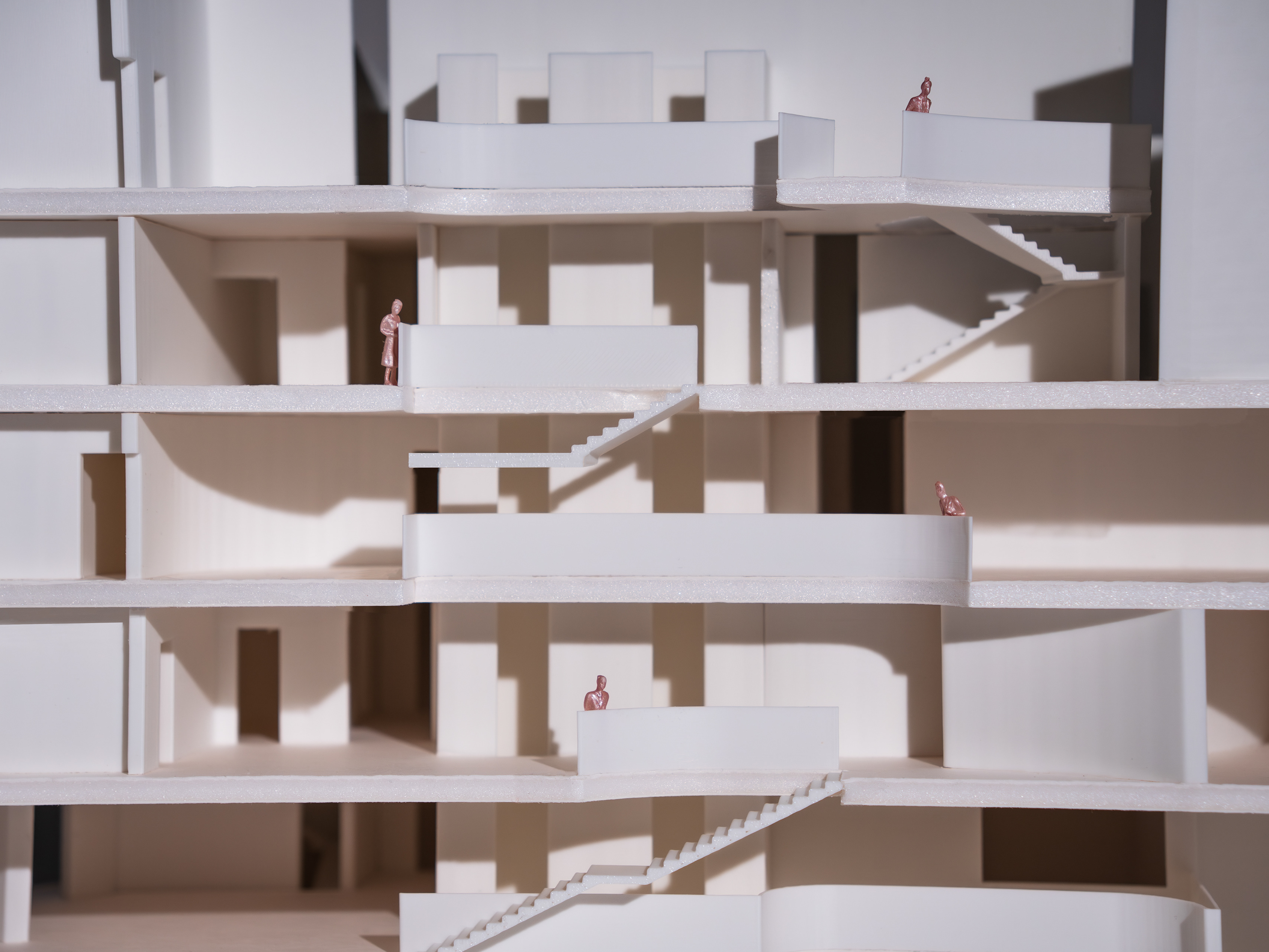
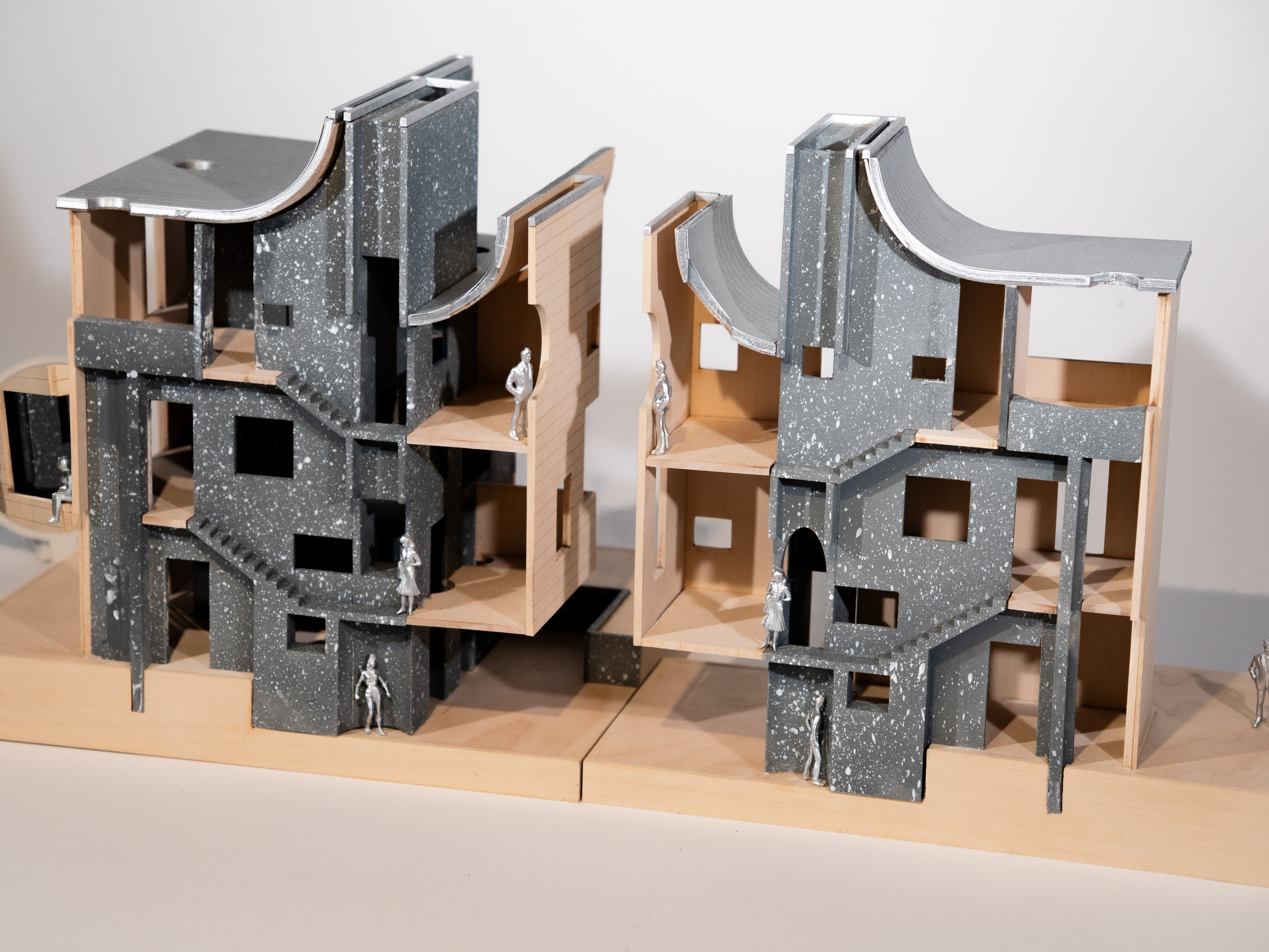
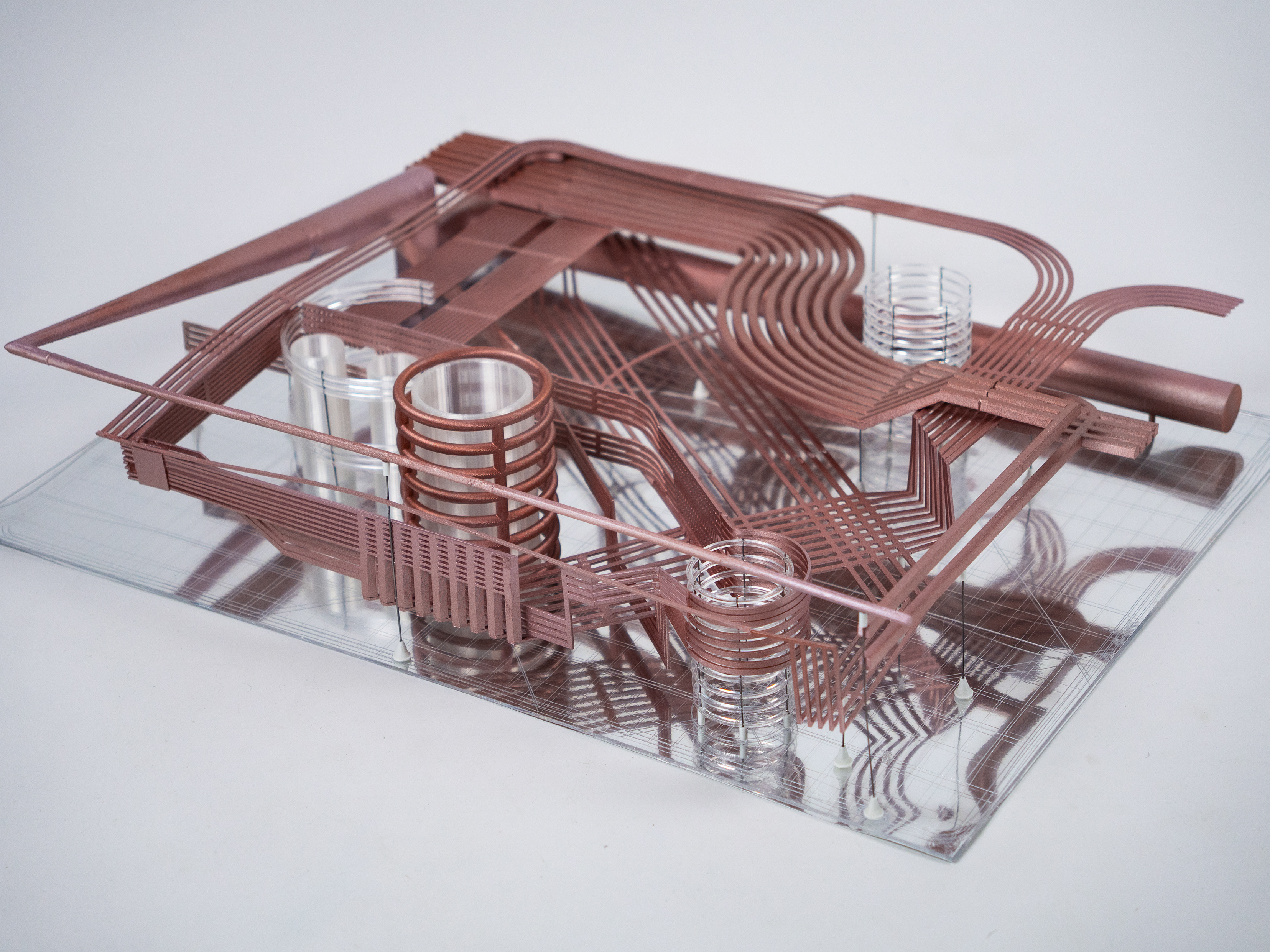
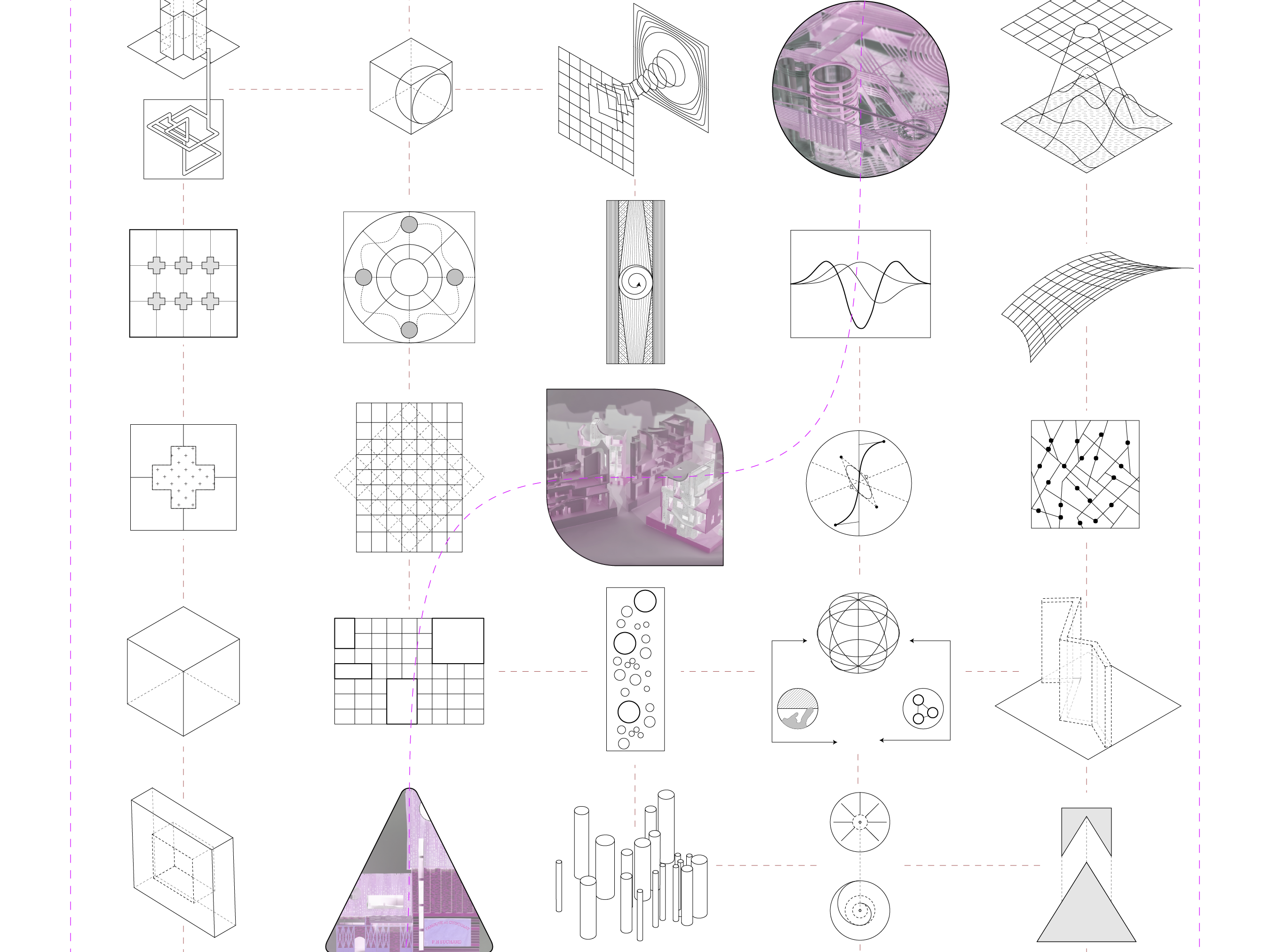
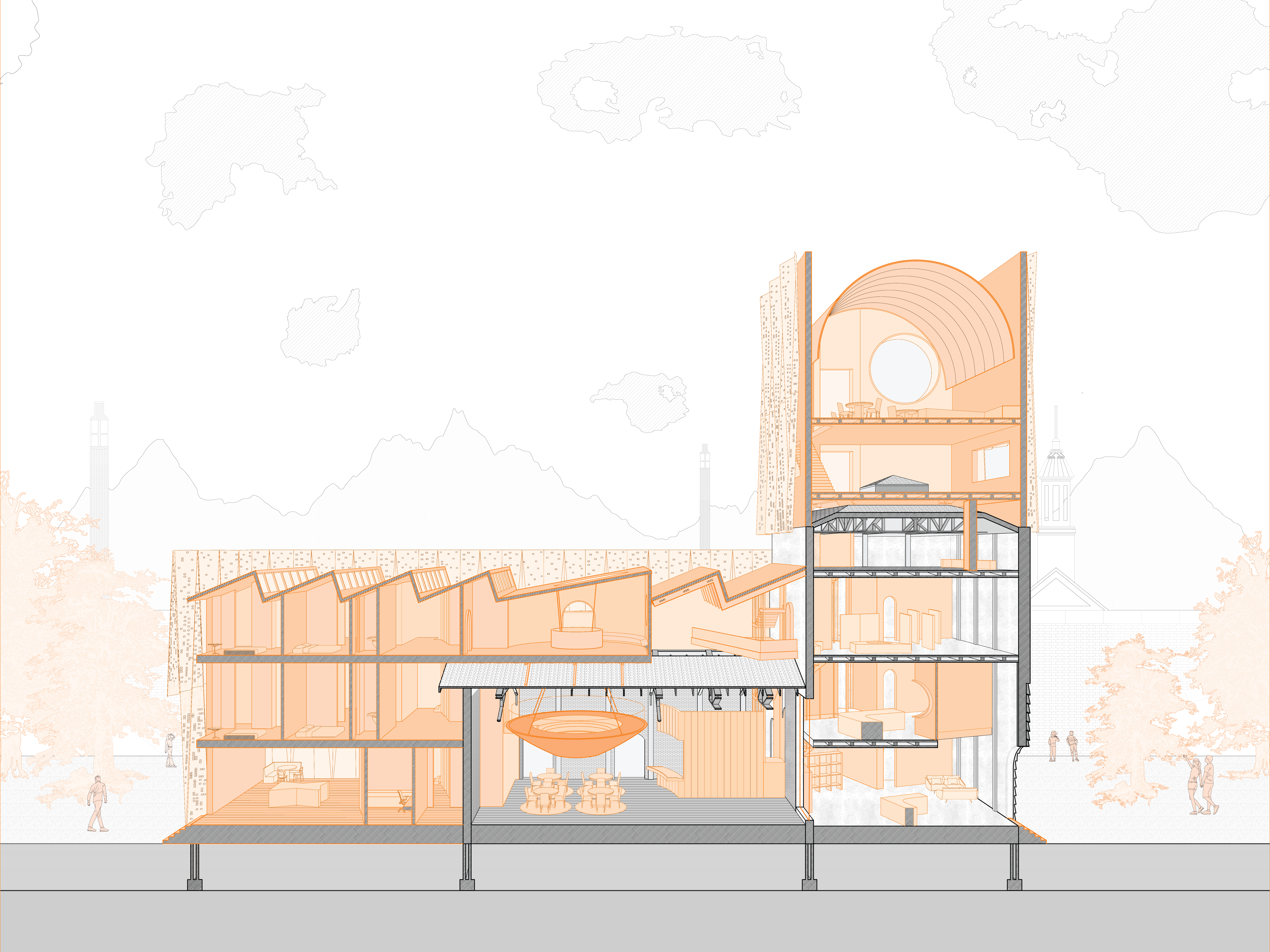
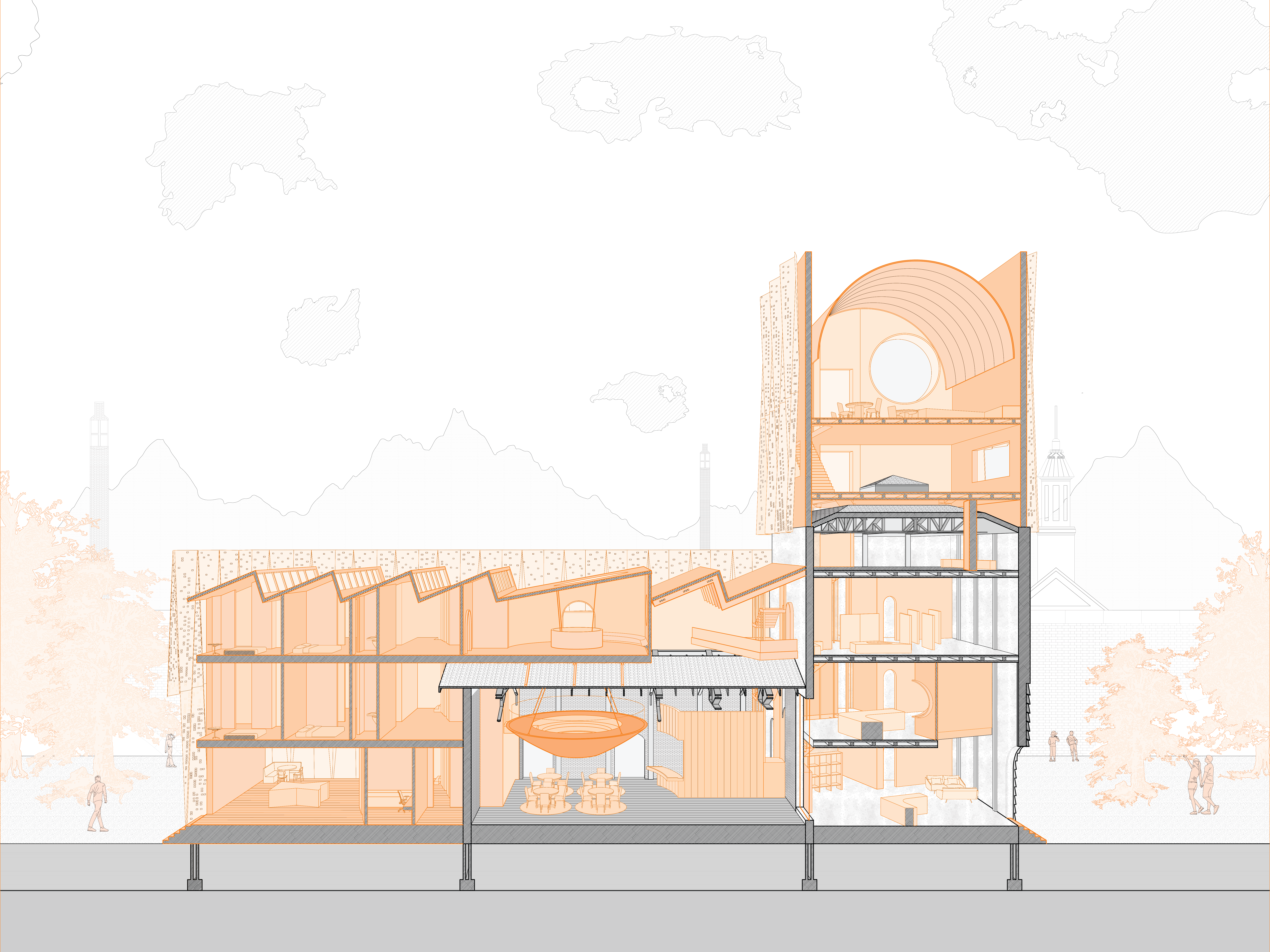
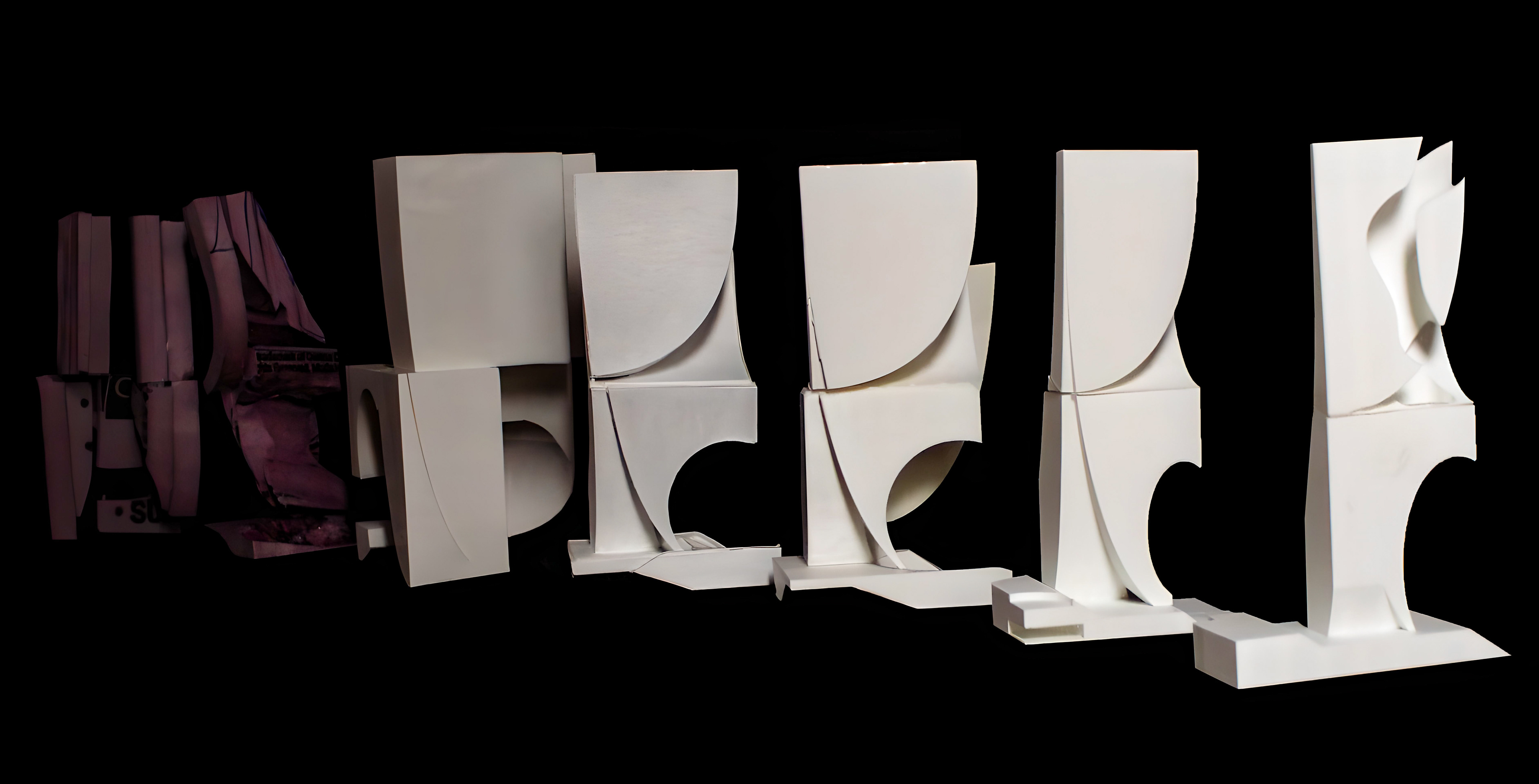
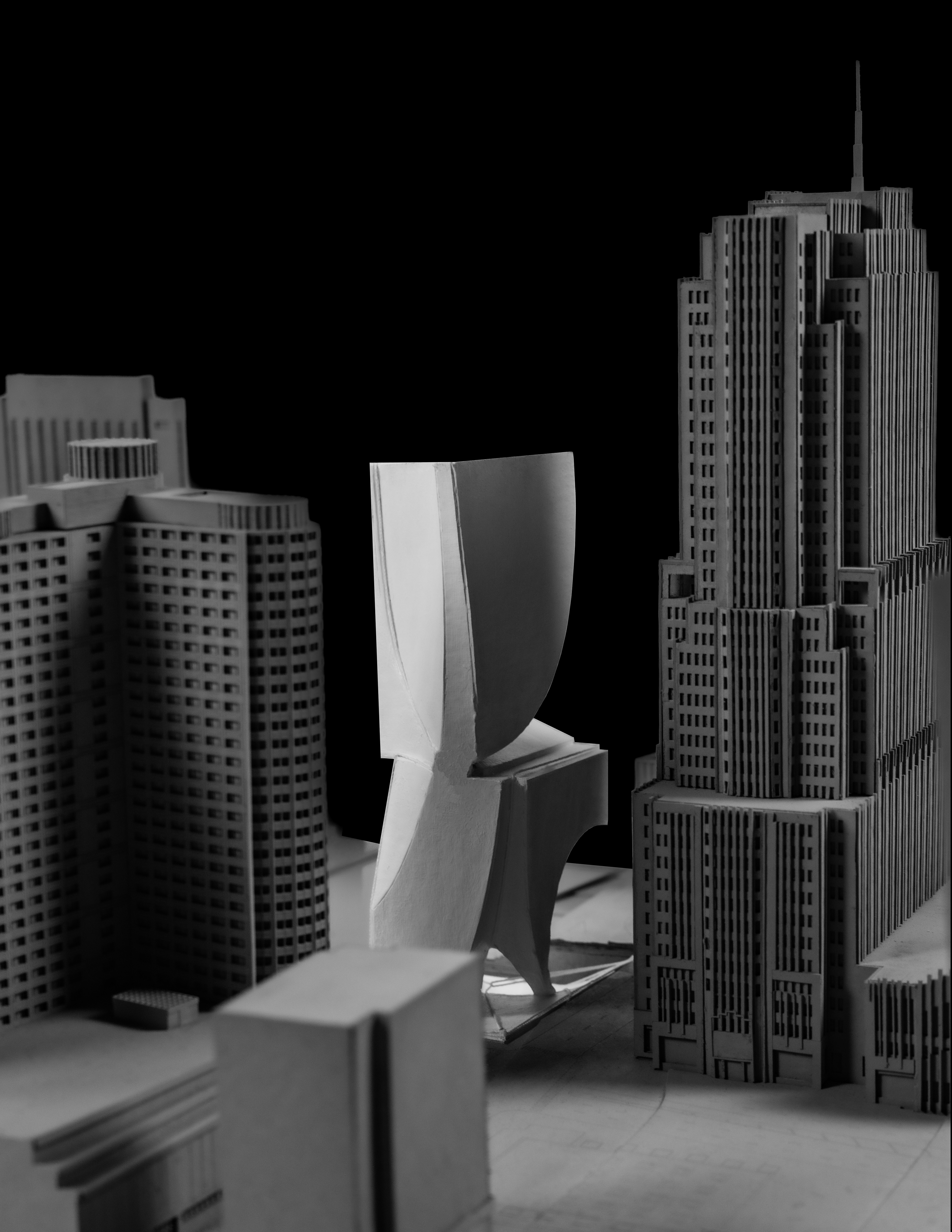
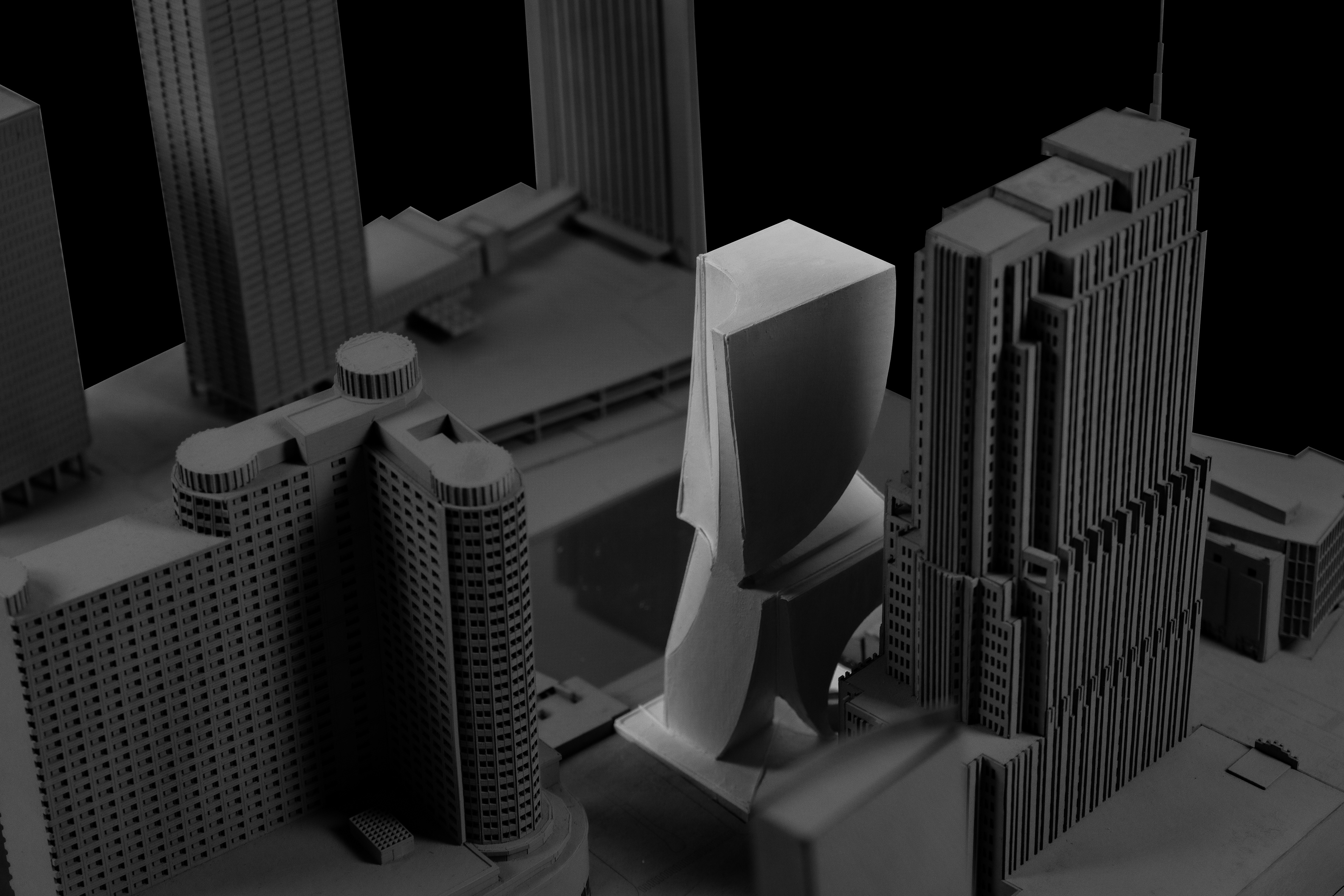
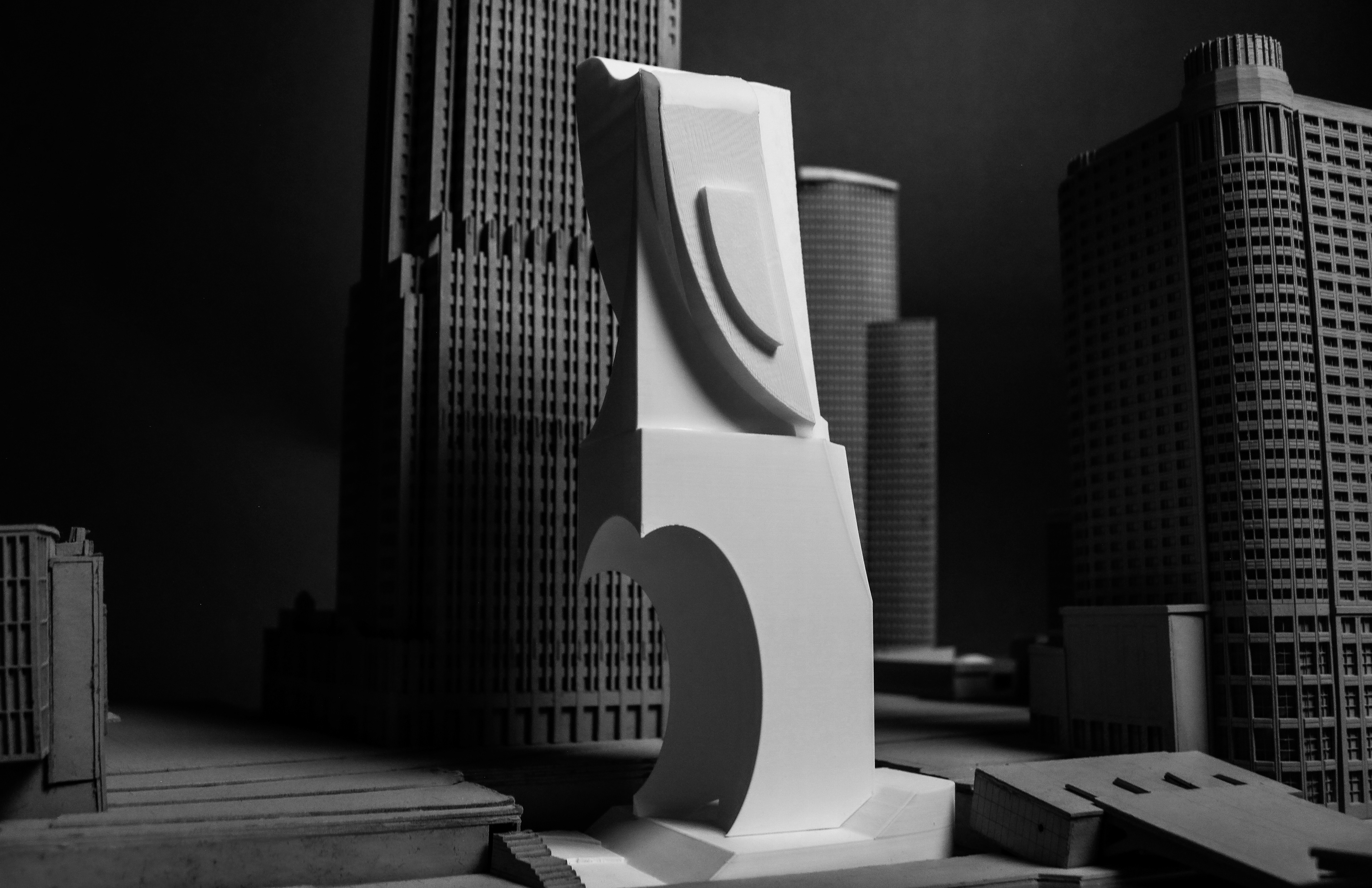
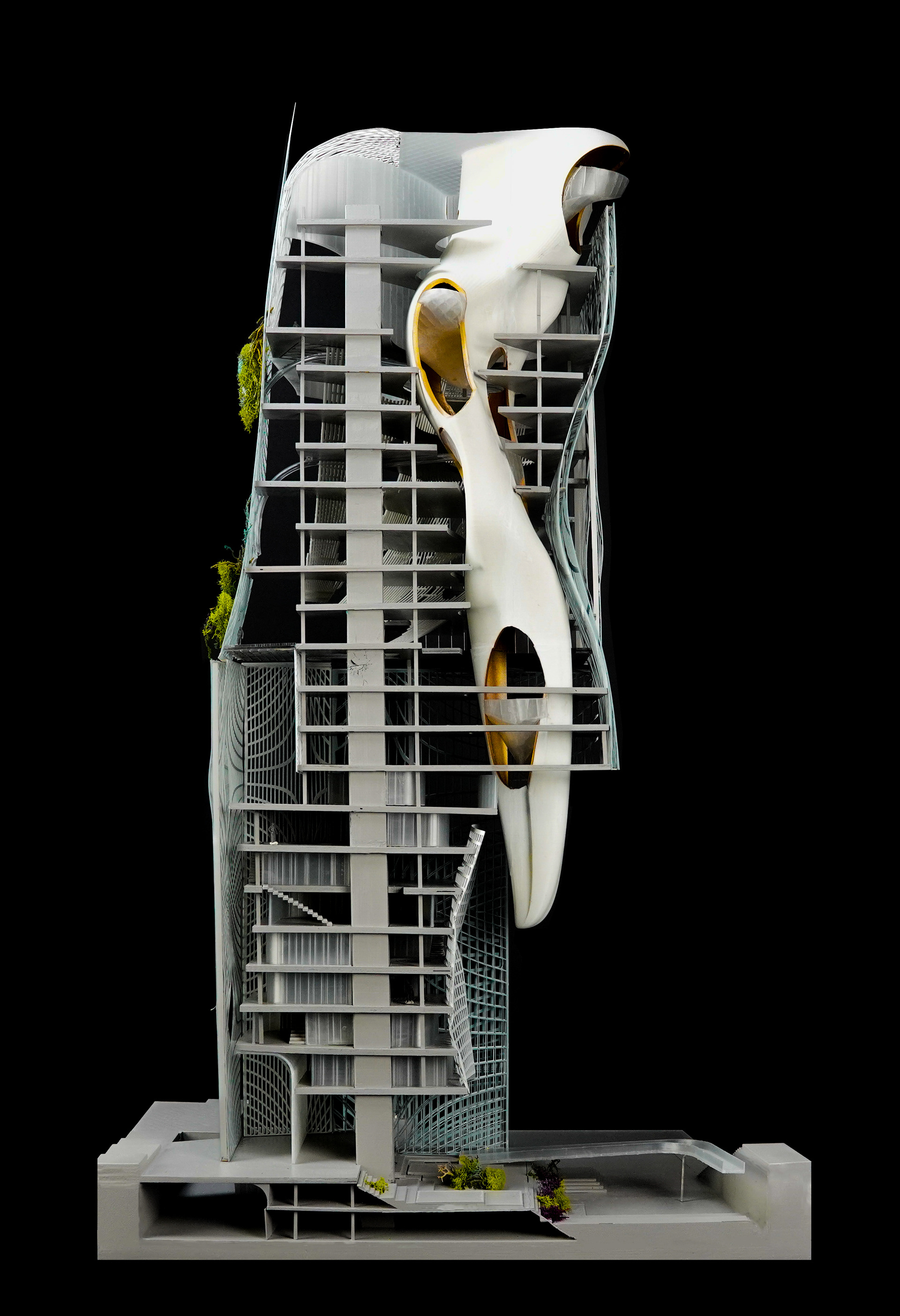
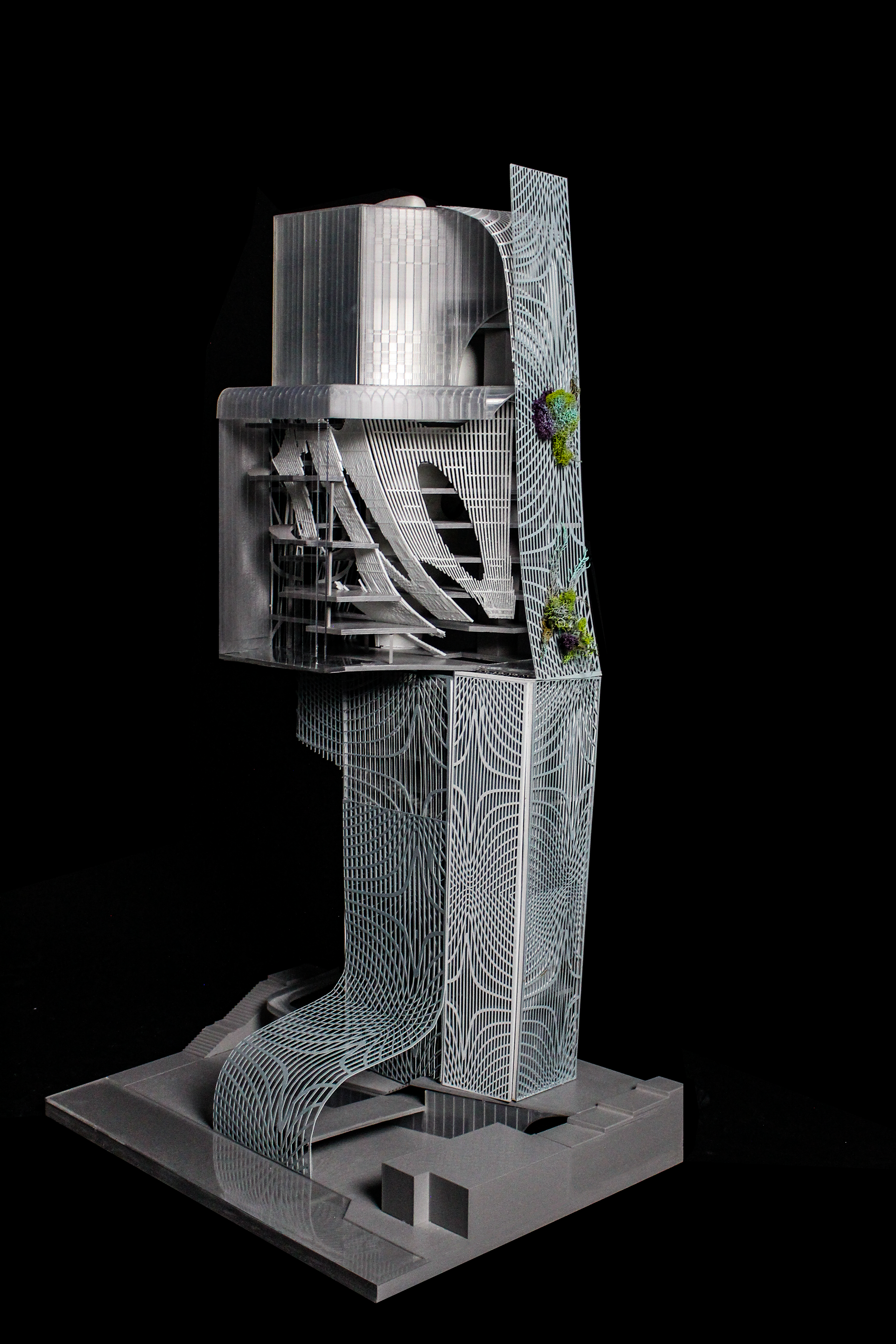
The traditional American commercial skyscraper, dating back to Mies and Louis Sullivan, while innovative at their time, now lacks technological optimism and agency, particularly as work from home deems many towers underutilized and in need of renewal. The proposed new building type begins with the methodical fragmentation of the Miesian space-frame, grid, and corner, creating unique, yet useful, spatial and geometric conditions; large gestures seamlessly blend plinth and vertical volume and relate the street to the Riverwalk below while the entire building acts as a shifted object within Chicago’s rigid urban grid, acknowledging a broader urban vision in which many traditional office buildings undergo similar changes and become reflections of the shared hobbies, lifestyles, and professions of their inhabitants, forming a far richer urban culture and architectural tapestry.
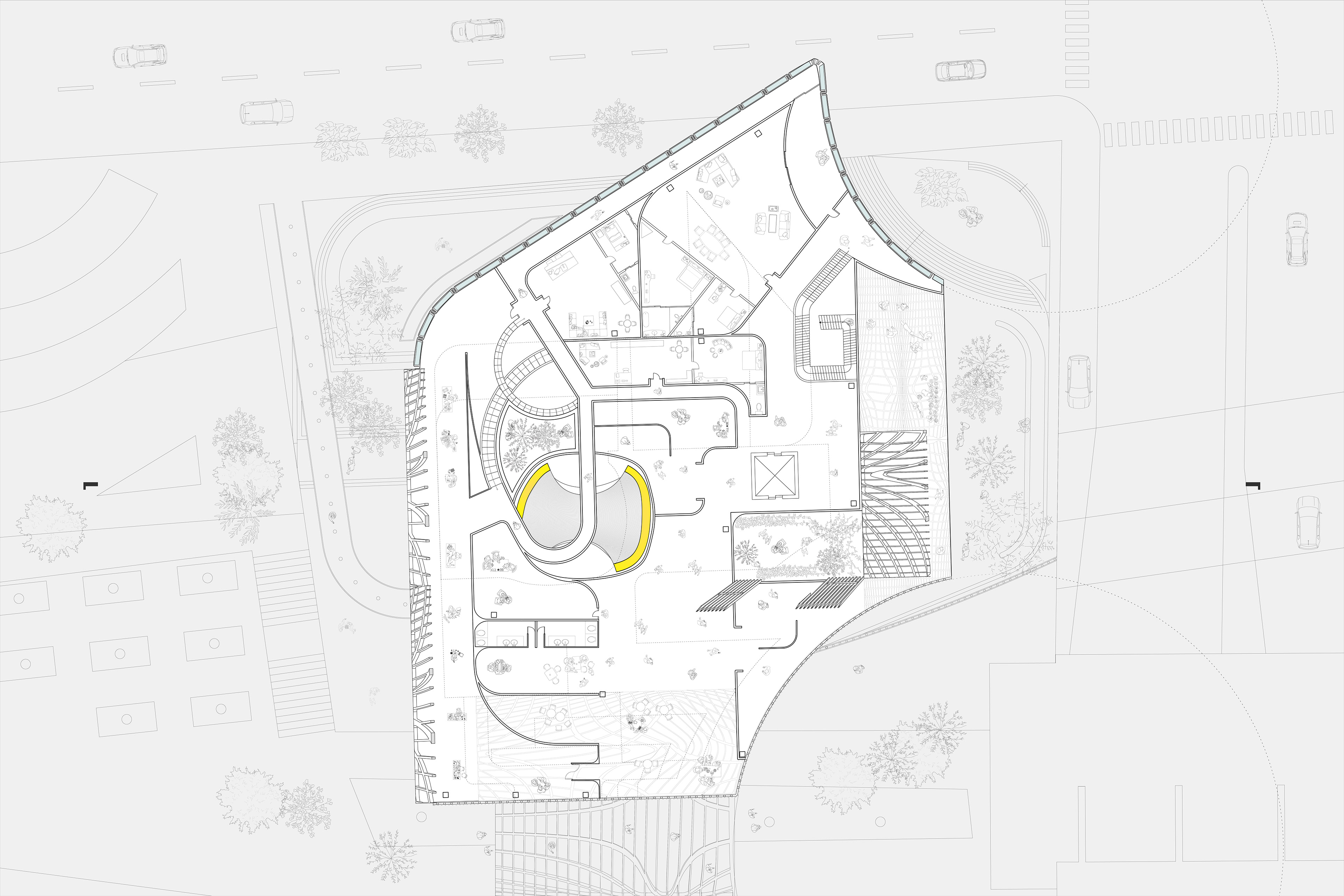
12th Floor Plan - Finding Common Ground (Above, Top)
Unlike any other floor in the building, the 12th floor encompasses a variety of programs for artists and the public to cohesively live, work and experience the functions of the building. Each space has a unique geometrical makeup and loose function (with the exception of the residences) encouraging inhabitants of the building to themselves, collectively decide each spaces’ use(s).
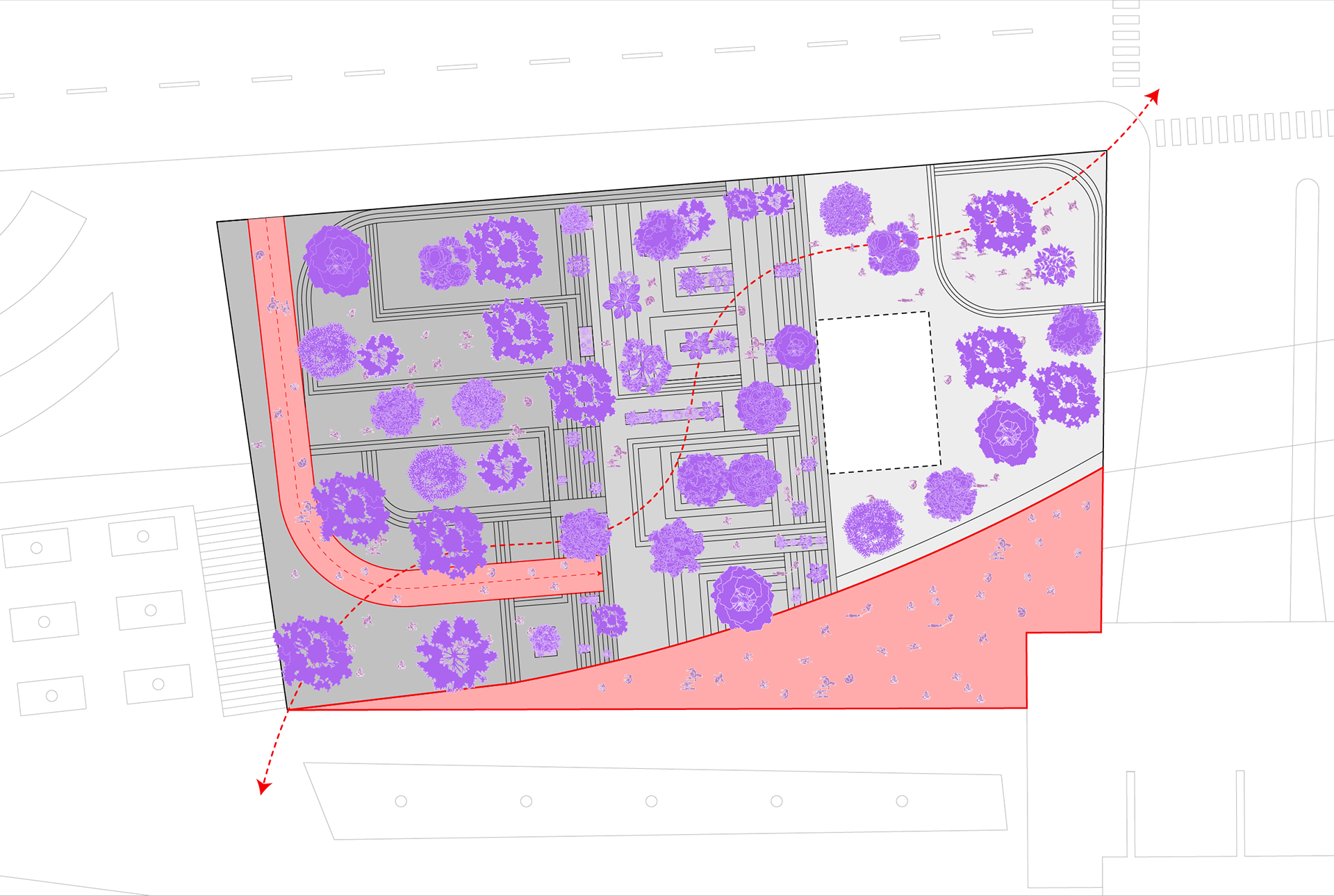
Ground Level Plan (Above, Bottom)
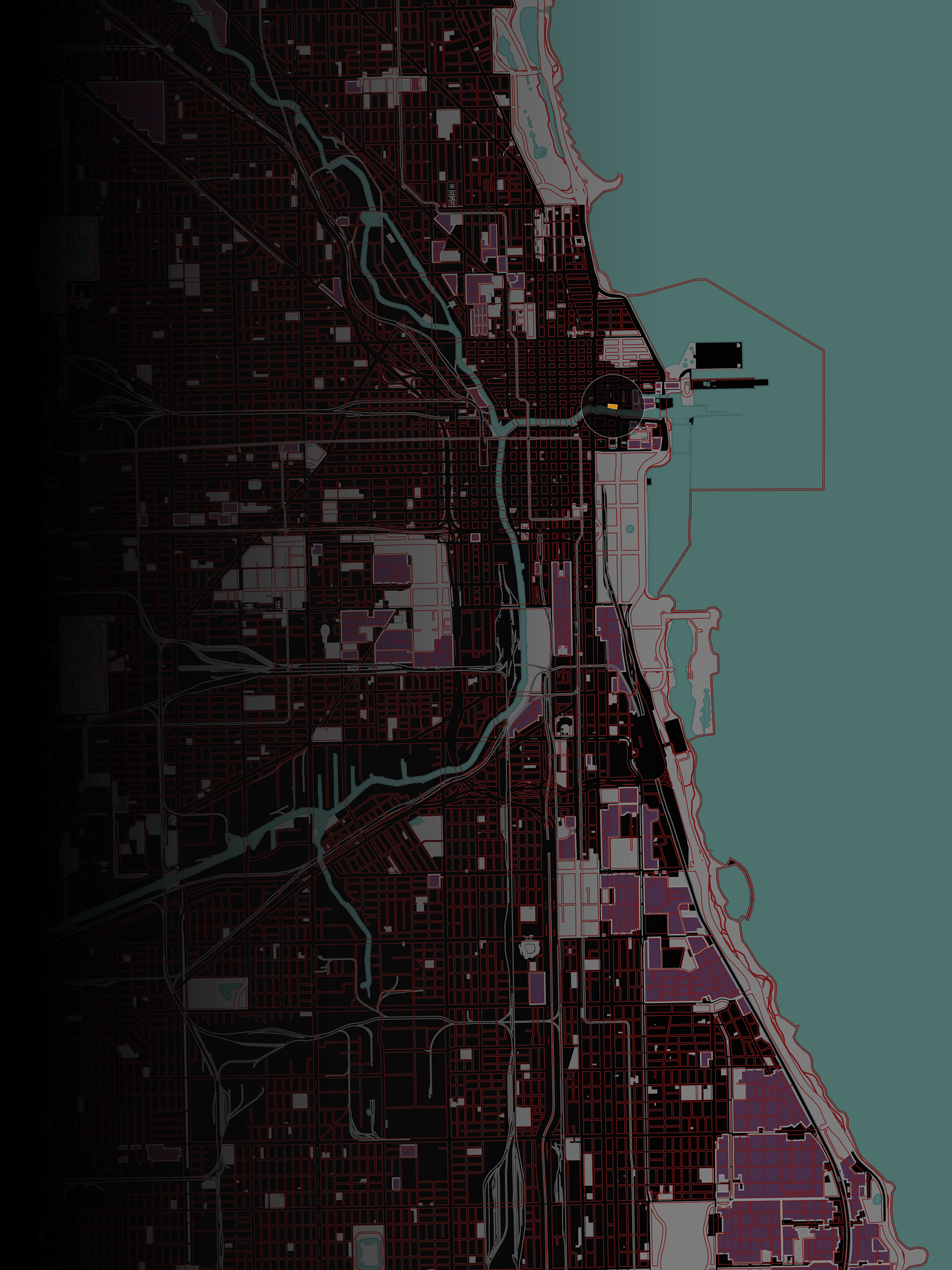
The ground level is designed as a public plaza and extension of the urban condition, connecting the street 30 feet above to the Riverwallk below. 3 urban scale gestures: the thread (through the grid), the peel (away from the Riverwalk), and the step (down/up) acknowledge but push back against Chicago’s rigid urban form.
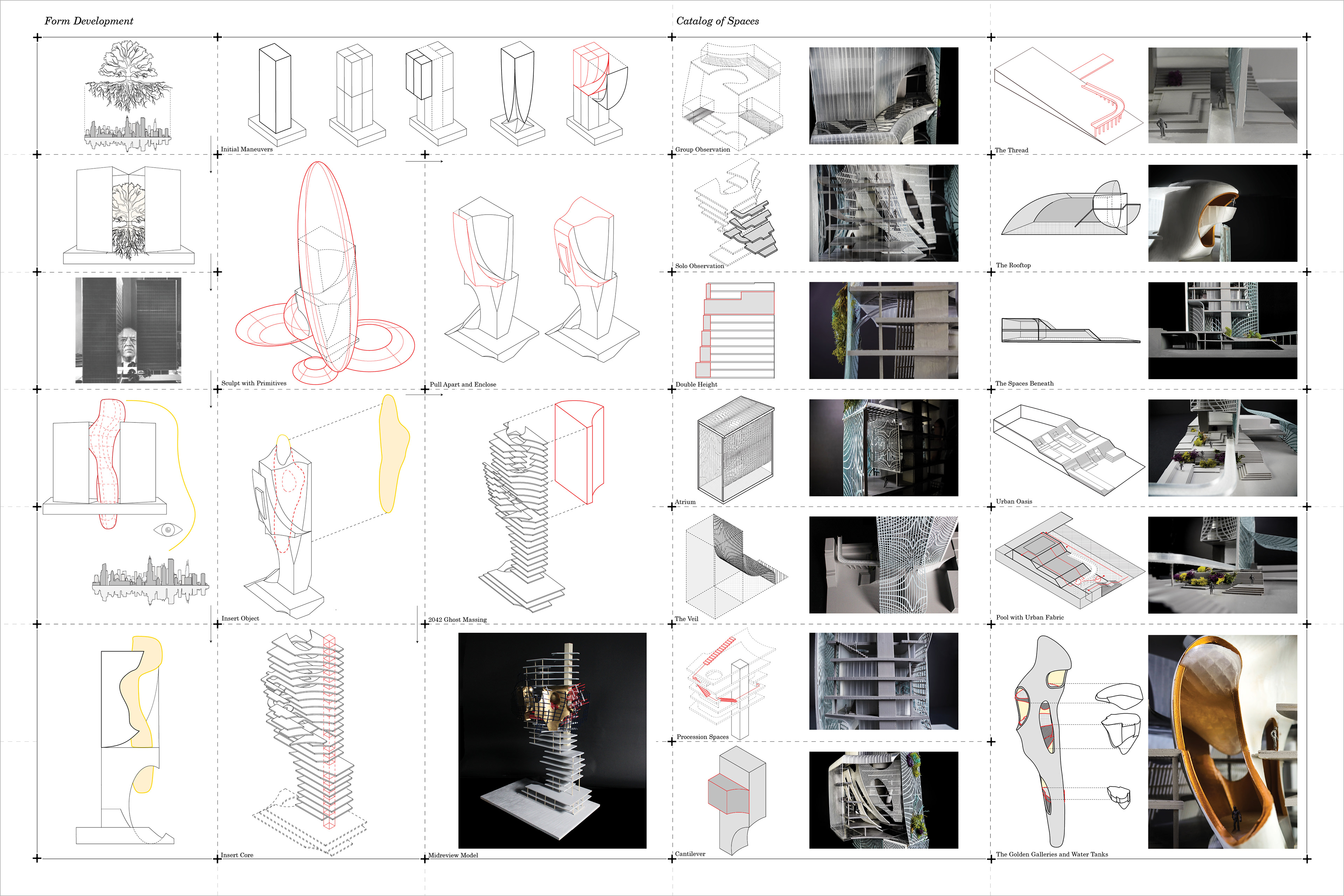
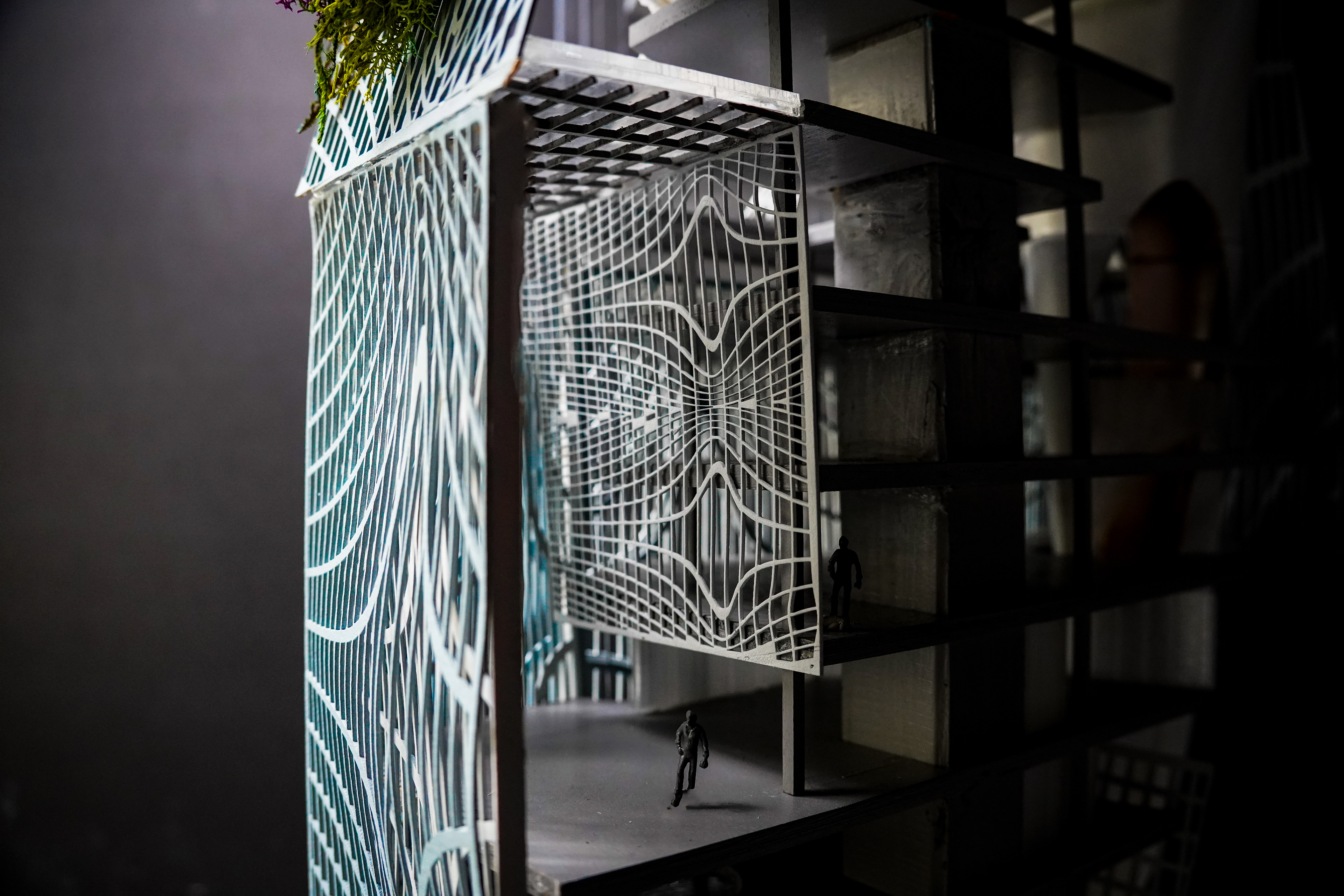
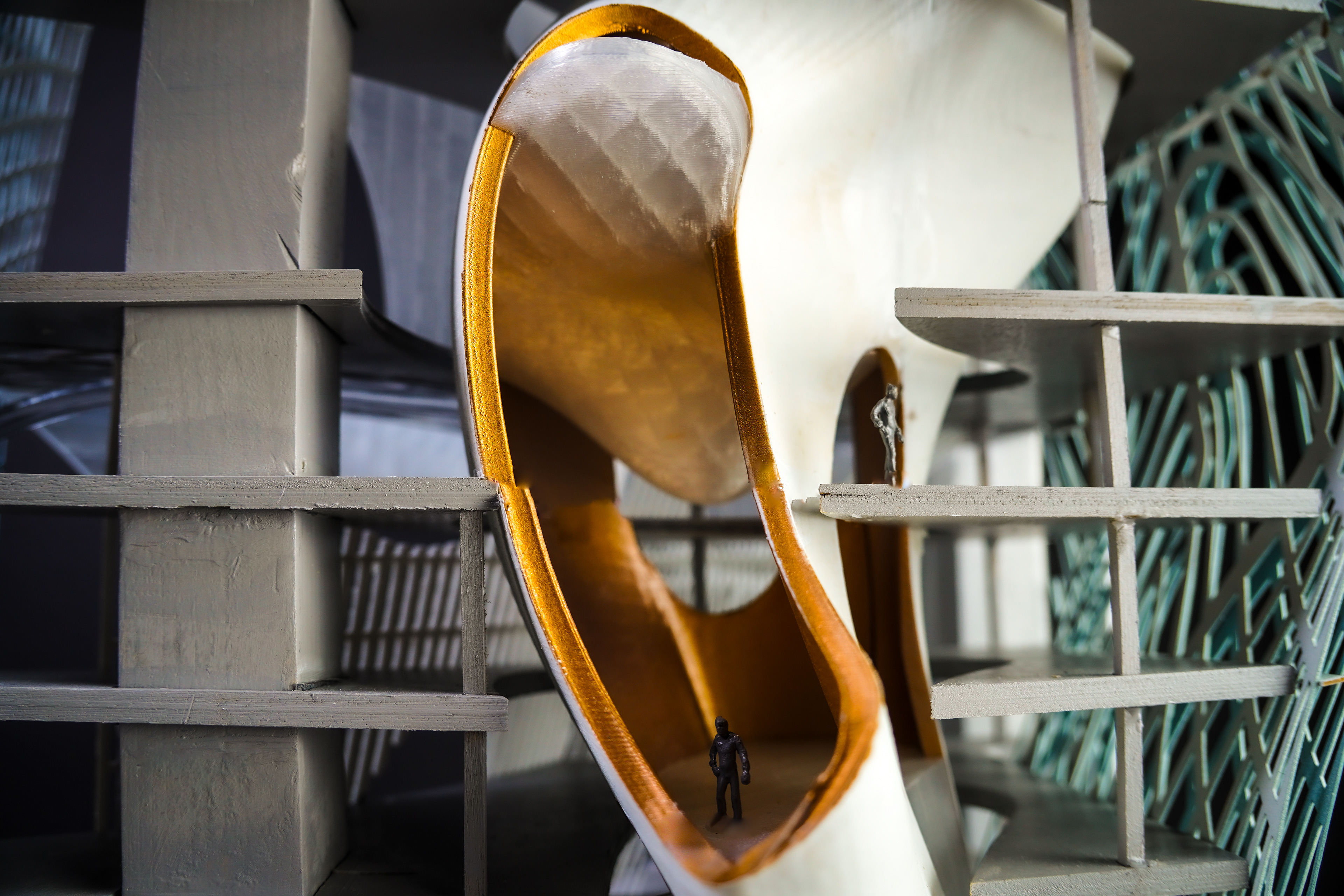
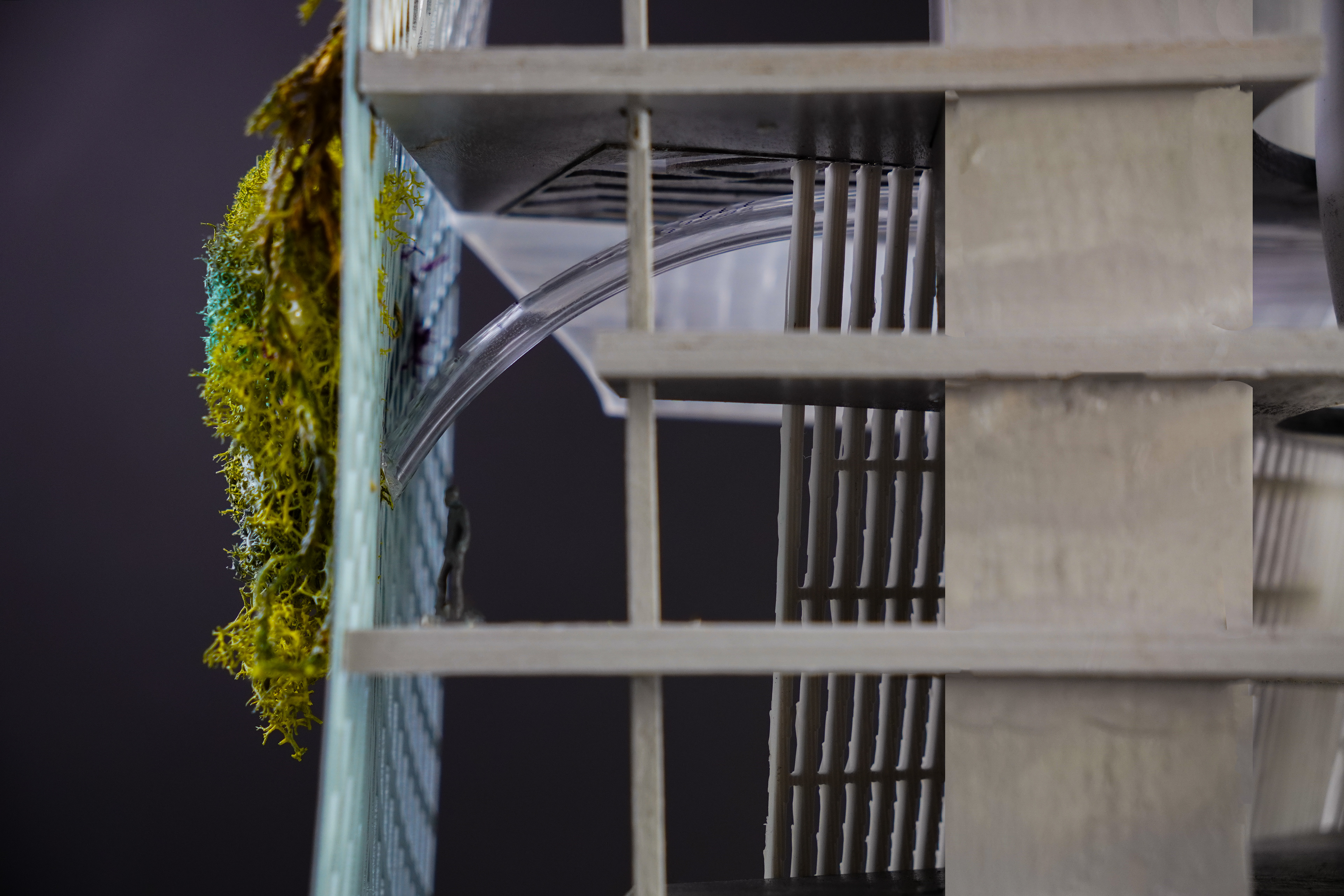
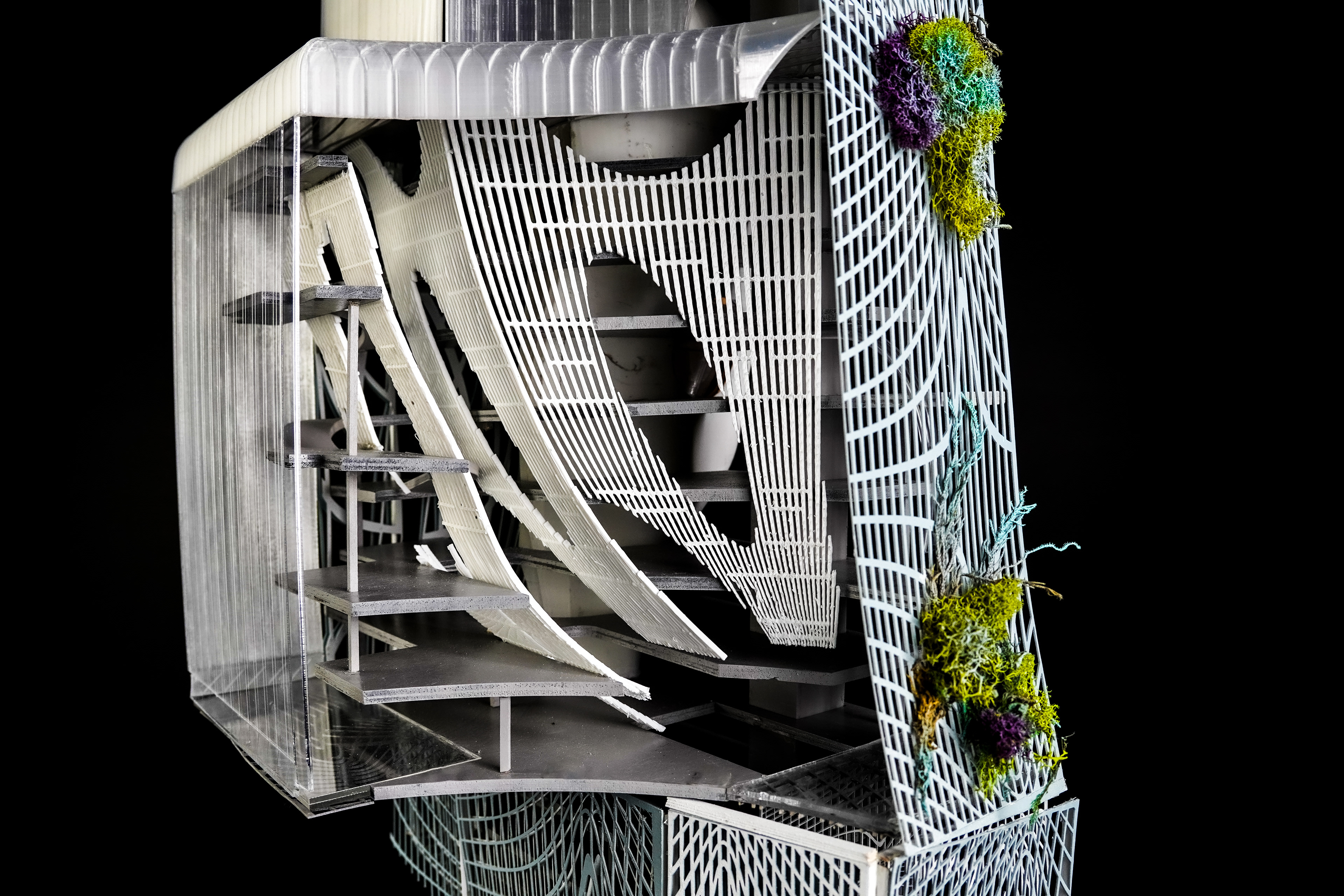
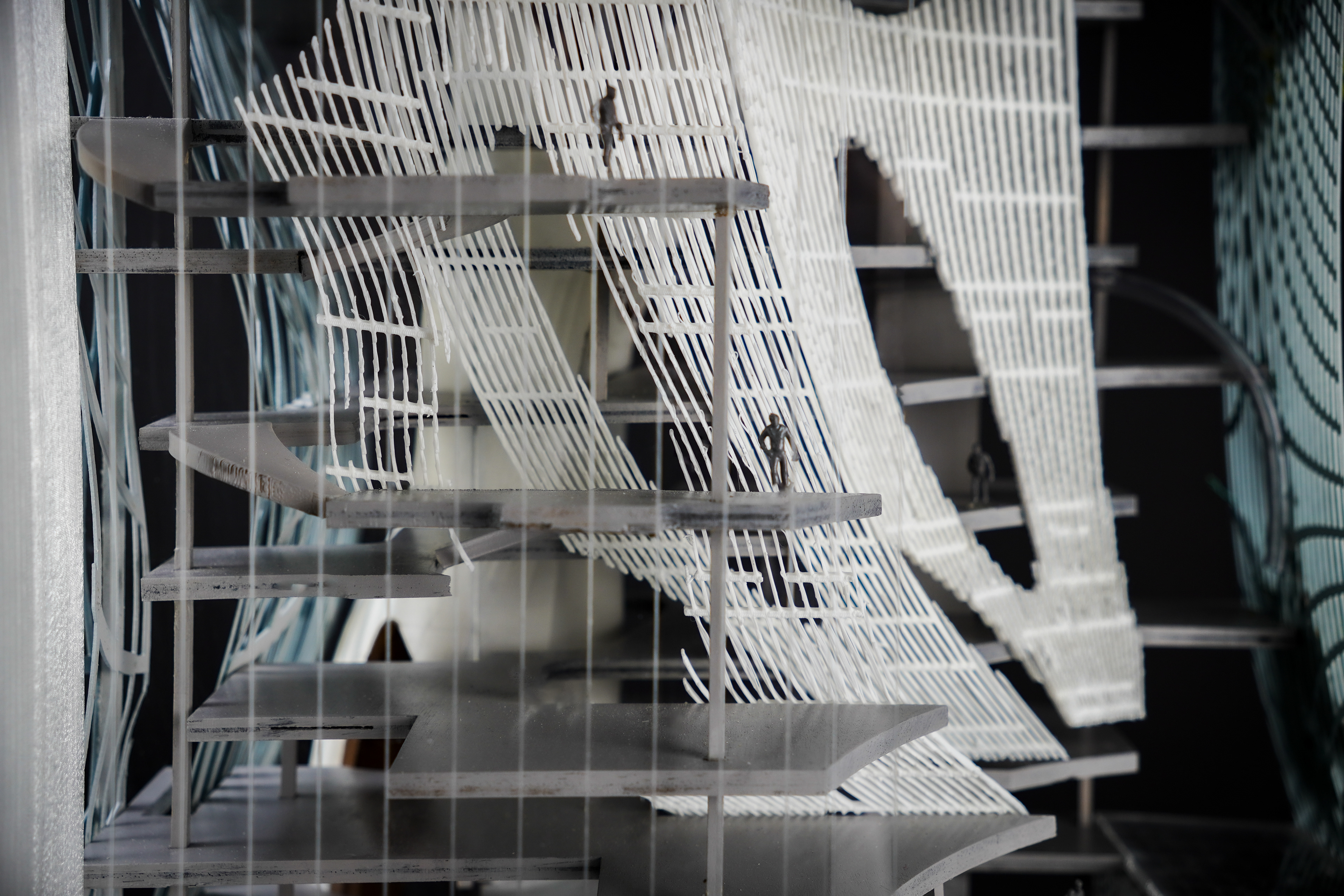
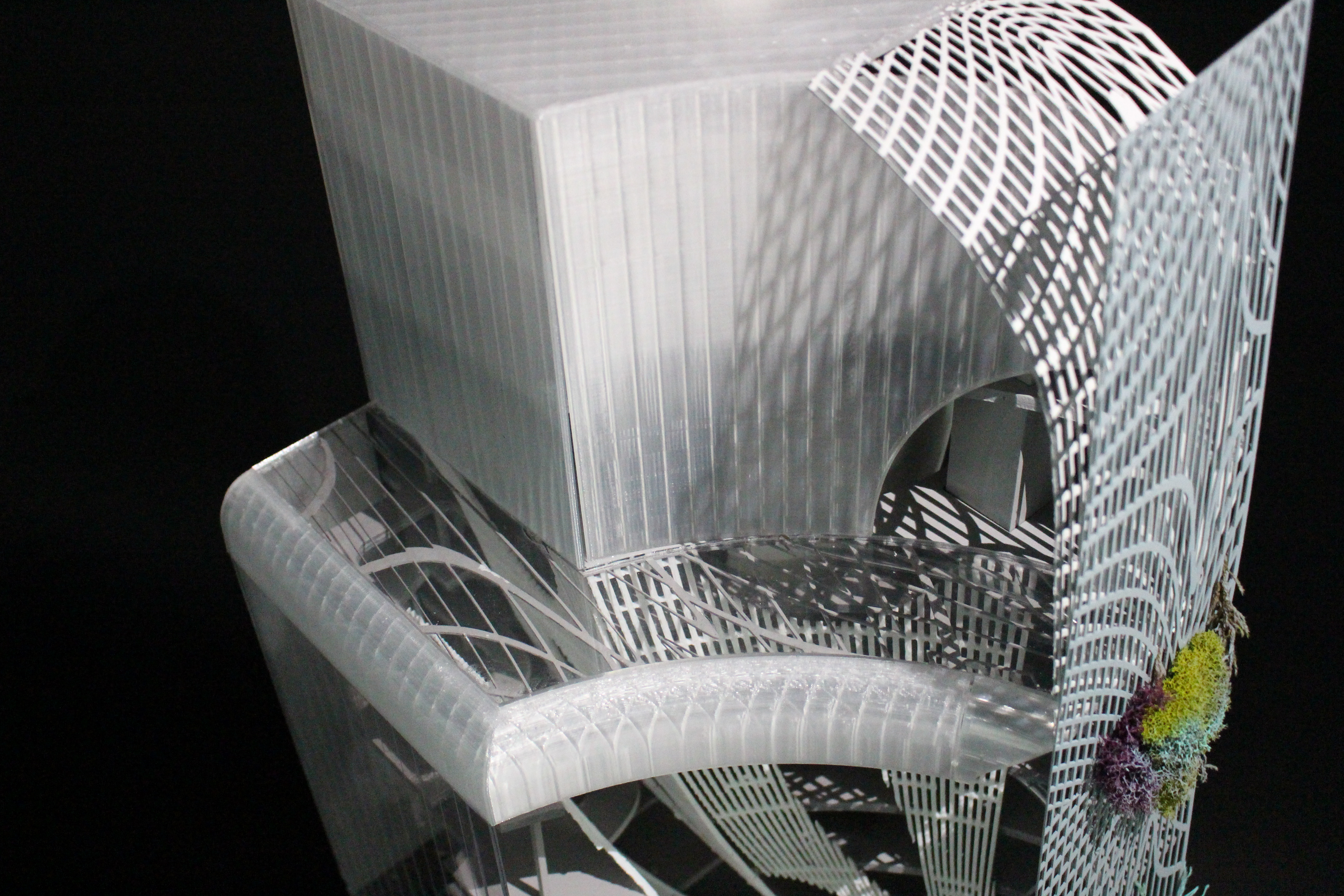
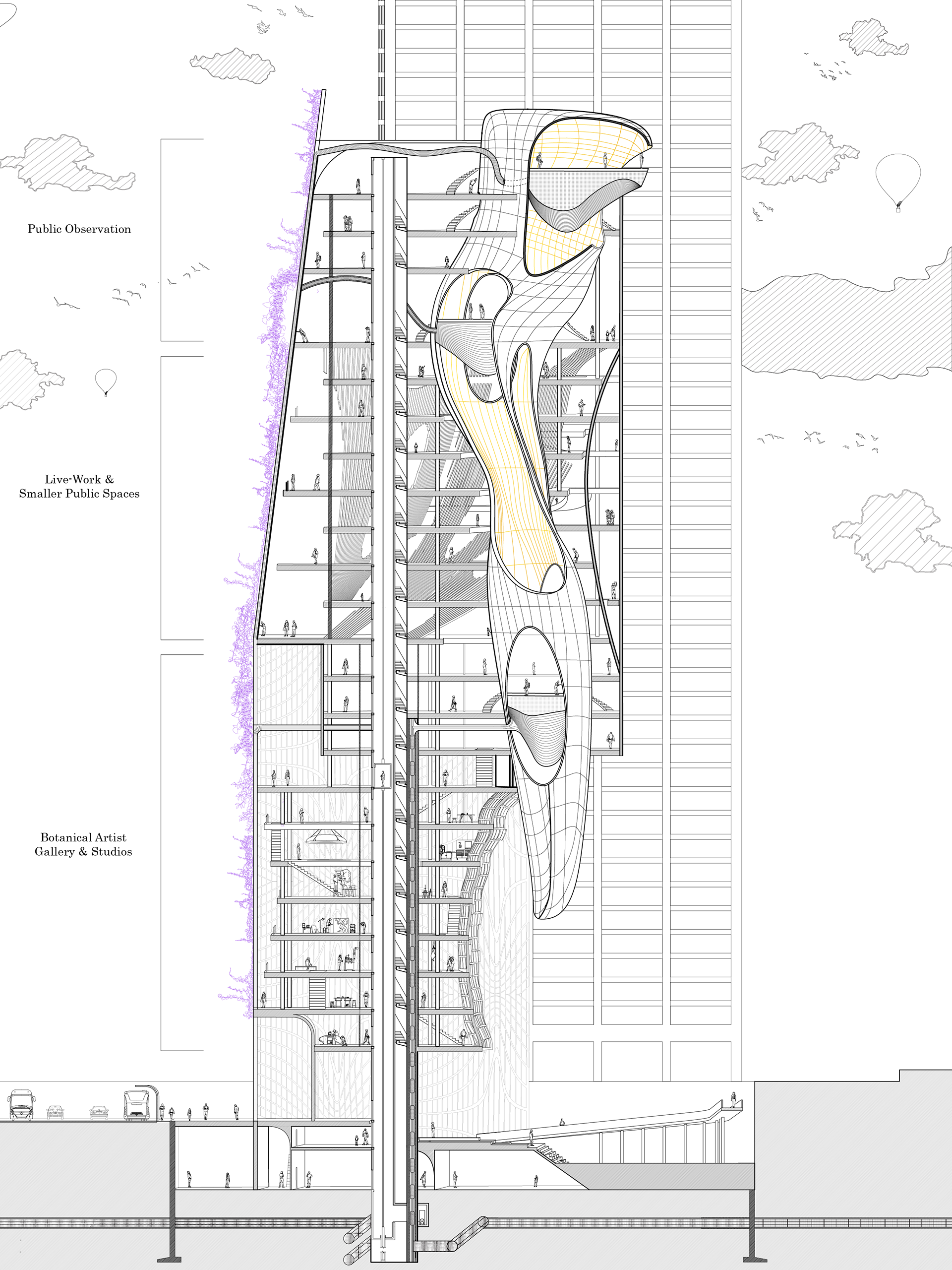
The facade reengages the urban scale of the city as a stretched, warped grids encloses the building, functioning as a cascading green-wall, whose flora serves as inspiration for the botanical artists in residence. Massive water tanks within the central, organic volume fuel the exterior environmental system and power the building but also serve as a gallery space, facilitating a feedback loop between form, program, and ecology. Holistically, the tower is an agent of change, inviting the artists, local residents and public to interact with the building as a part of, admittedly optimistic, 21st century urbanism.