What does it mean to be a part of an institution and act as a public interface?
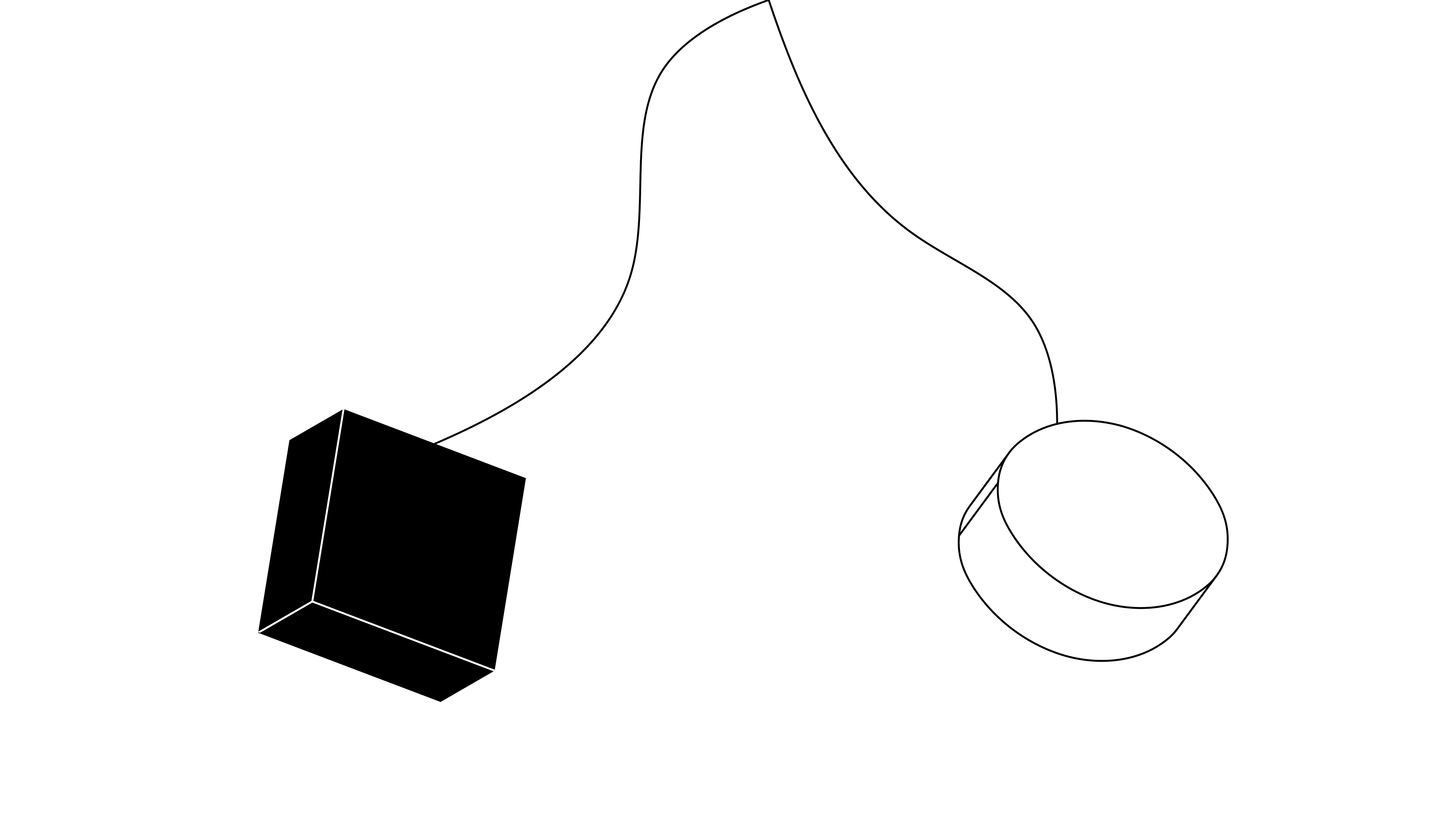
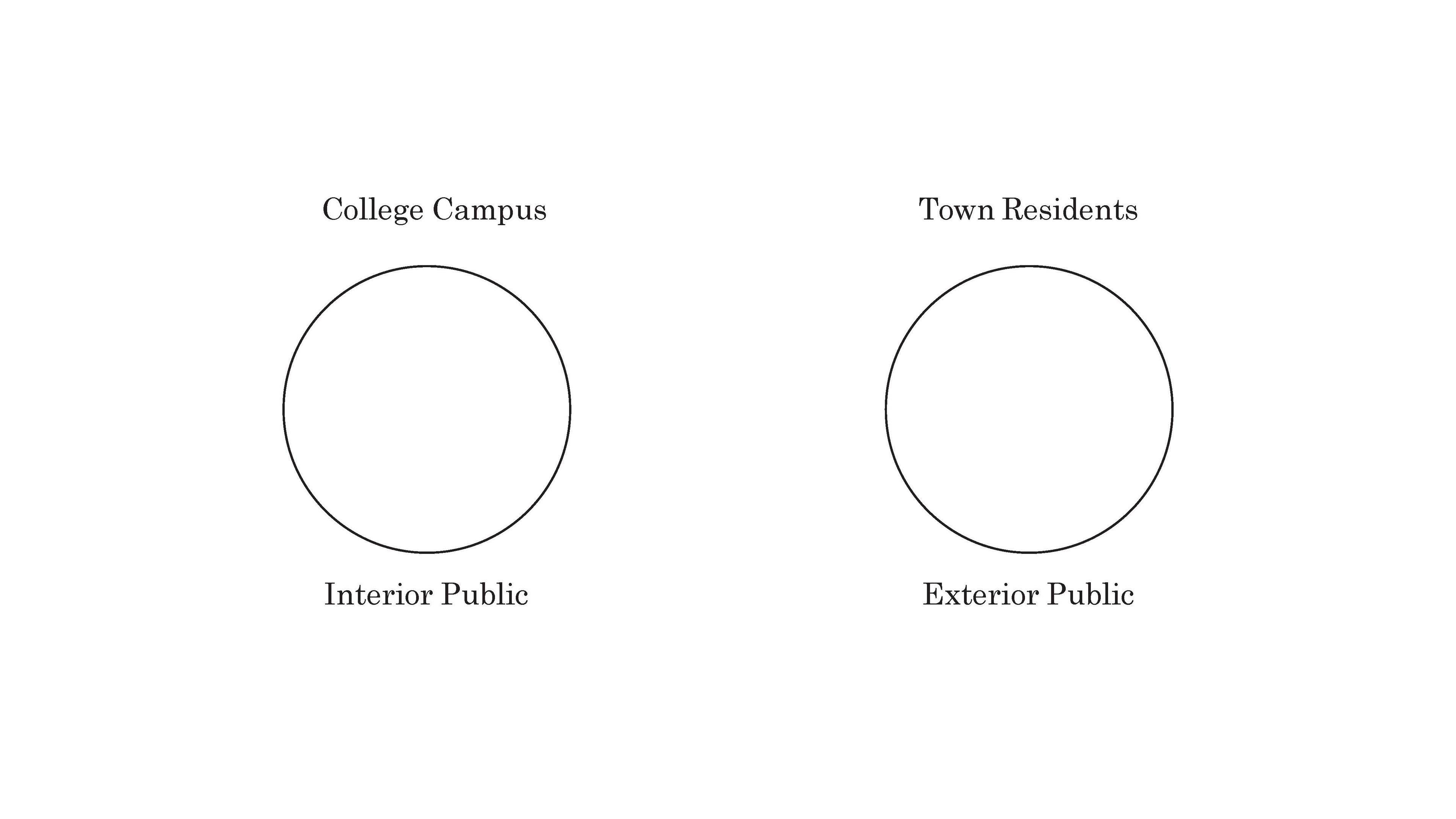
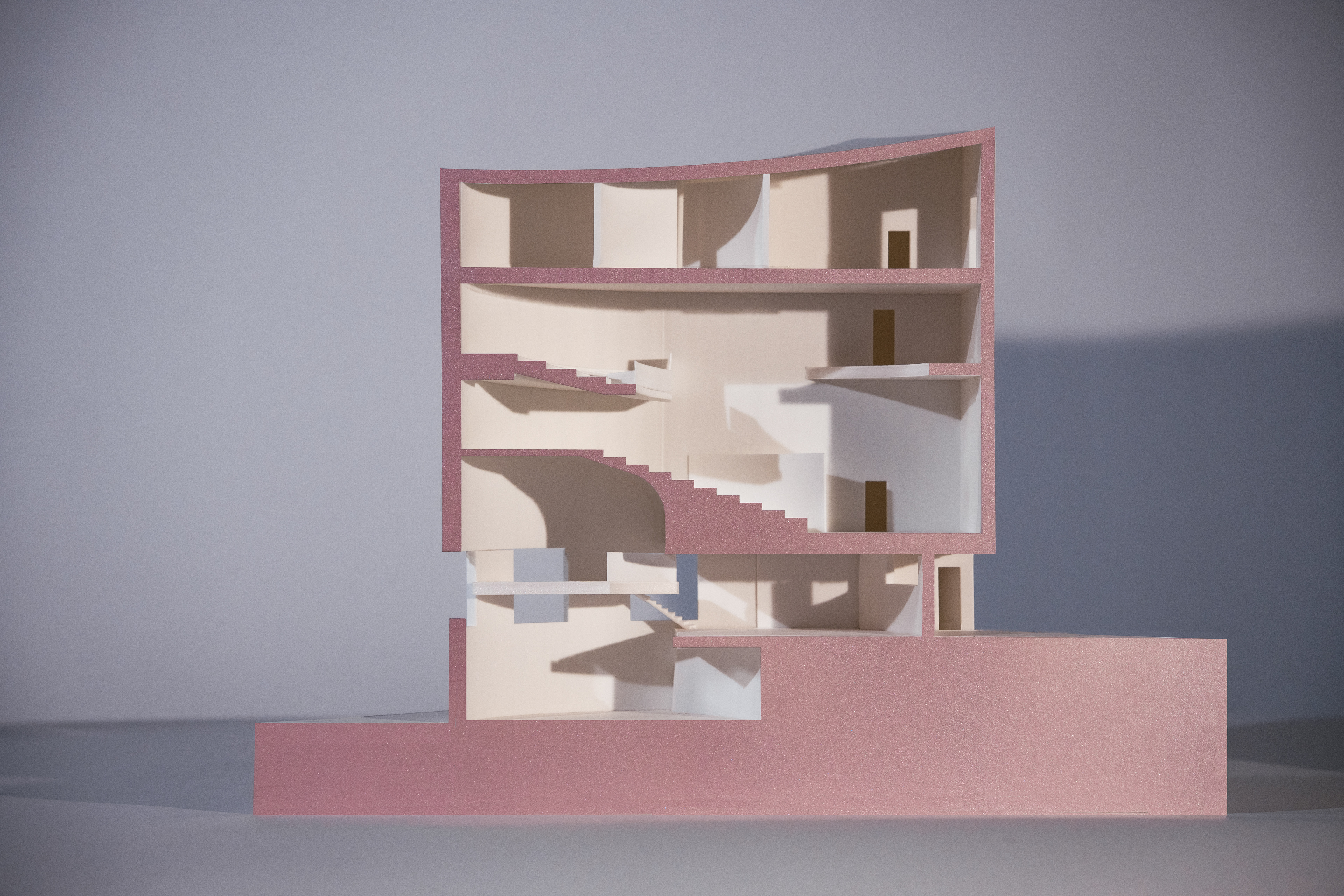
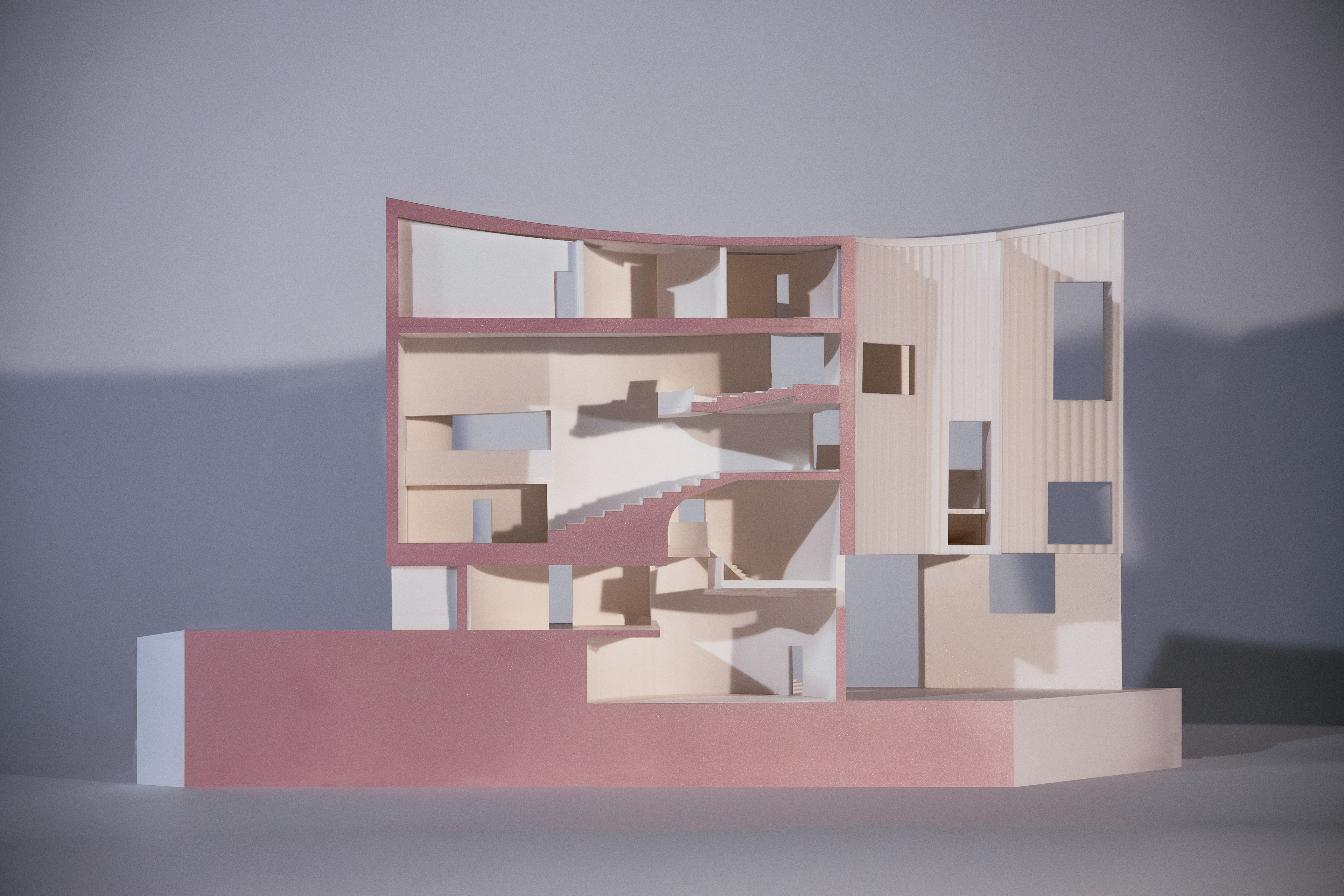
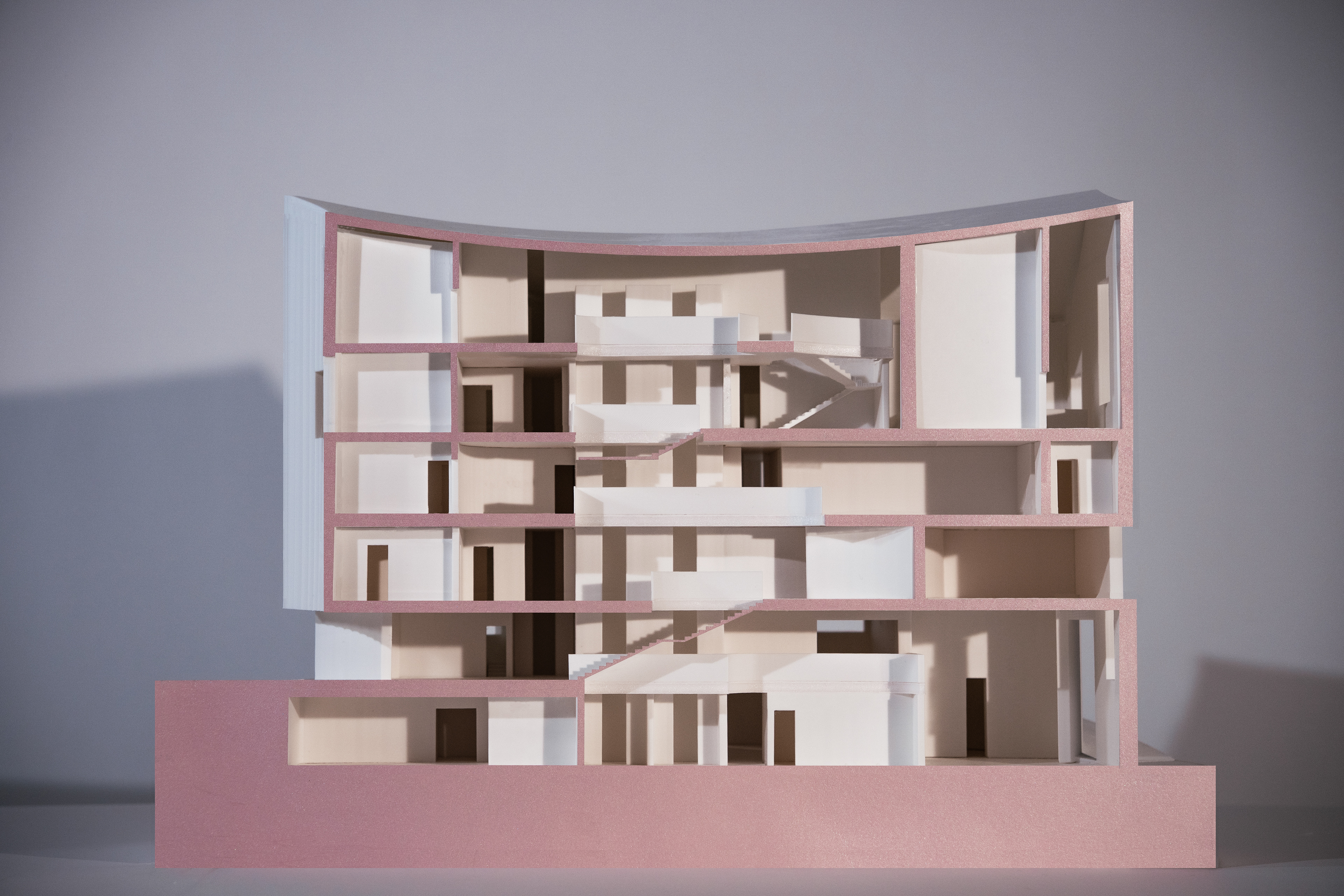
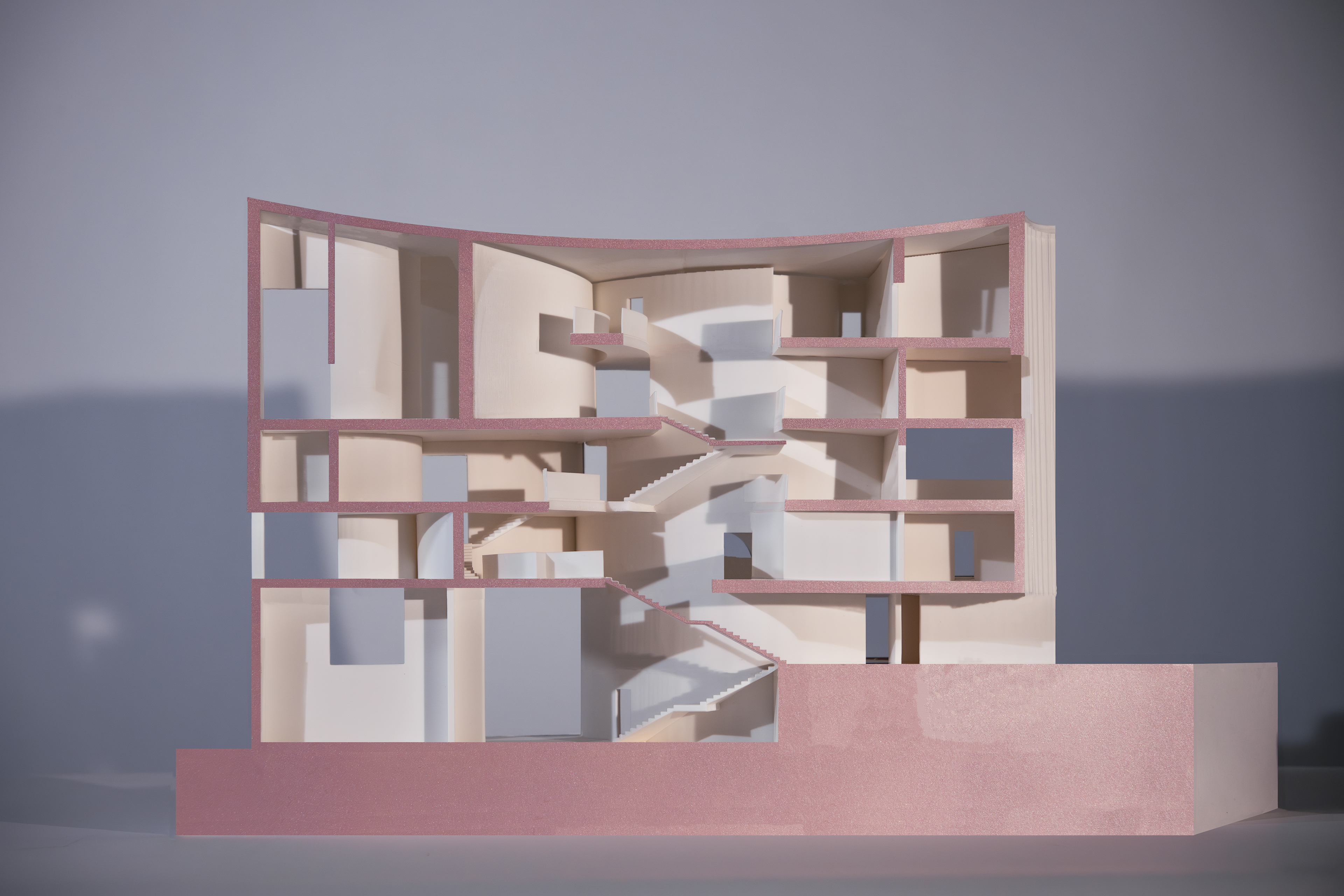
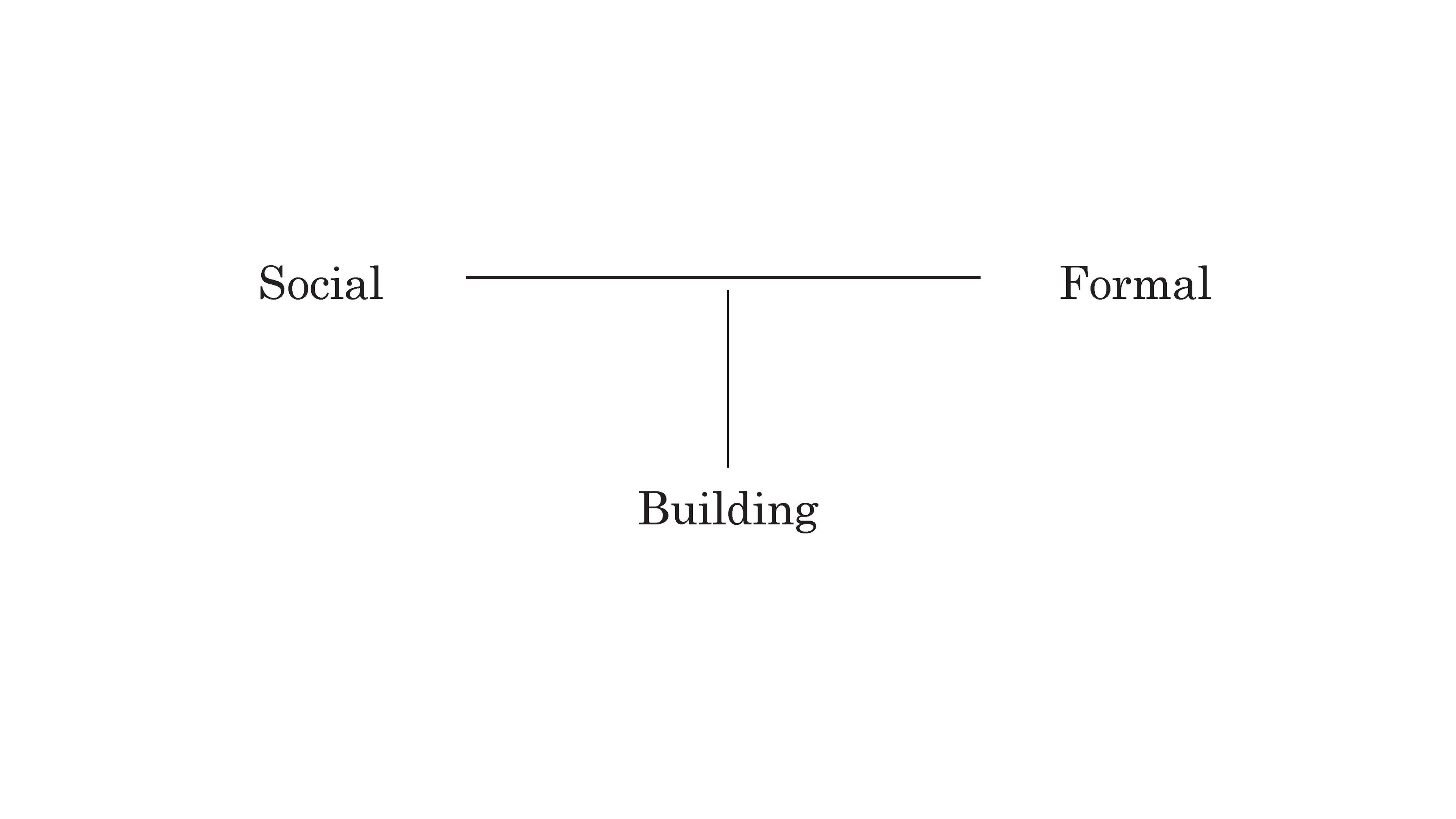
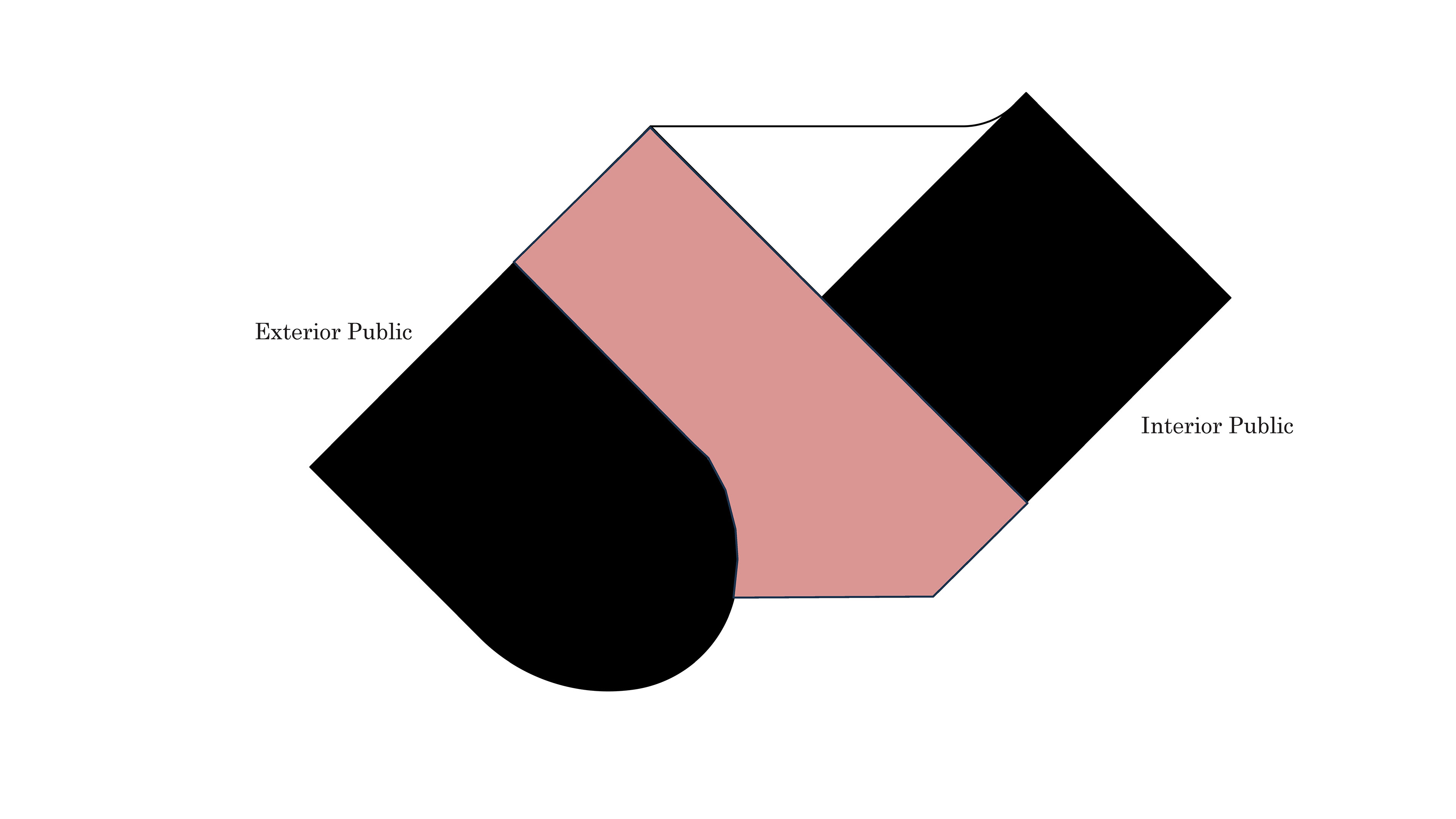
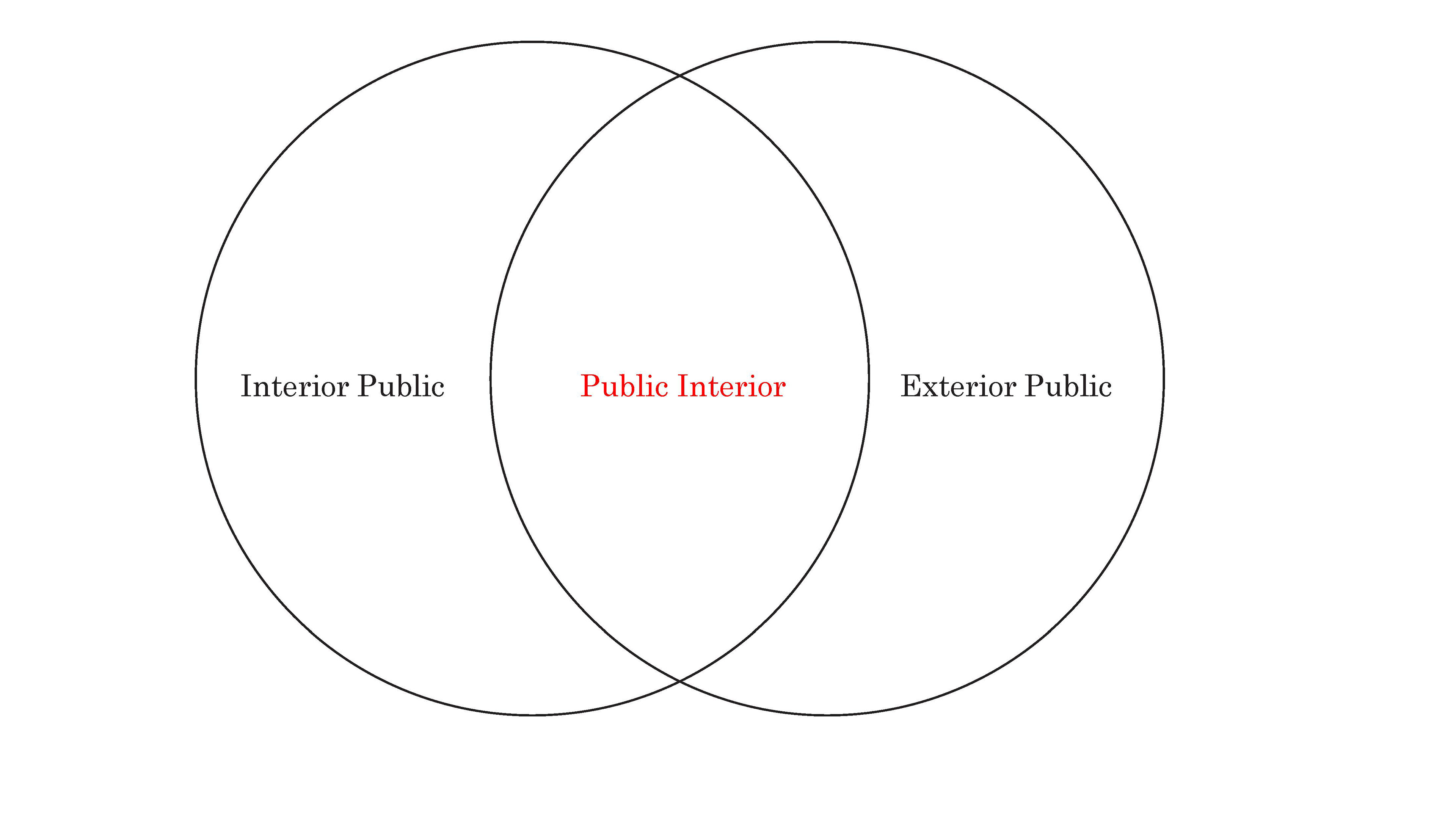
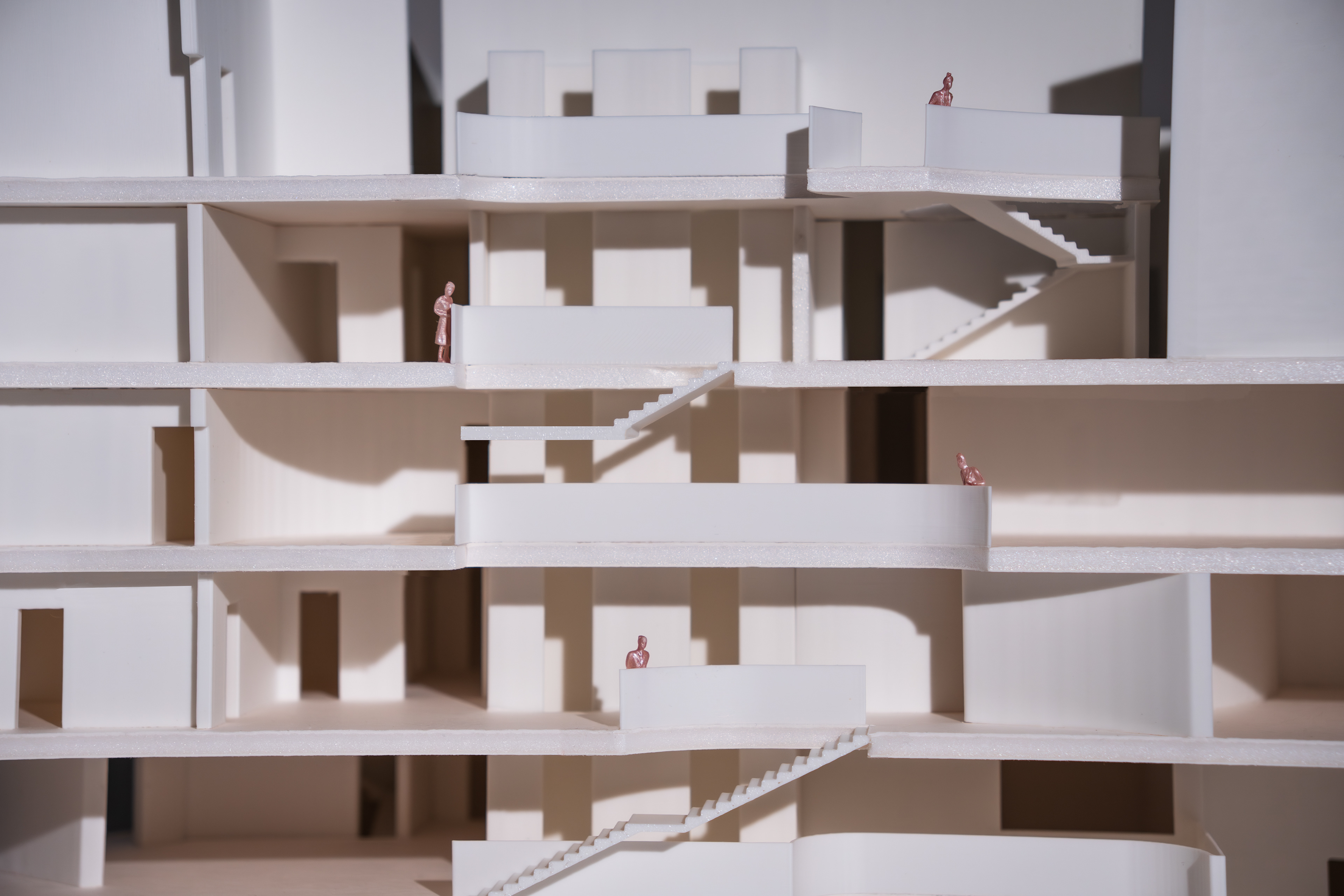
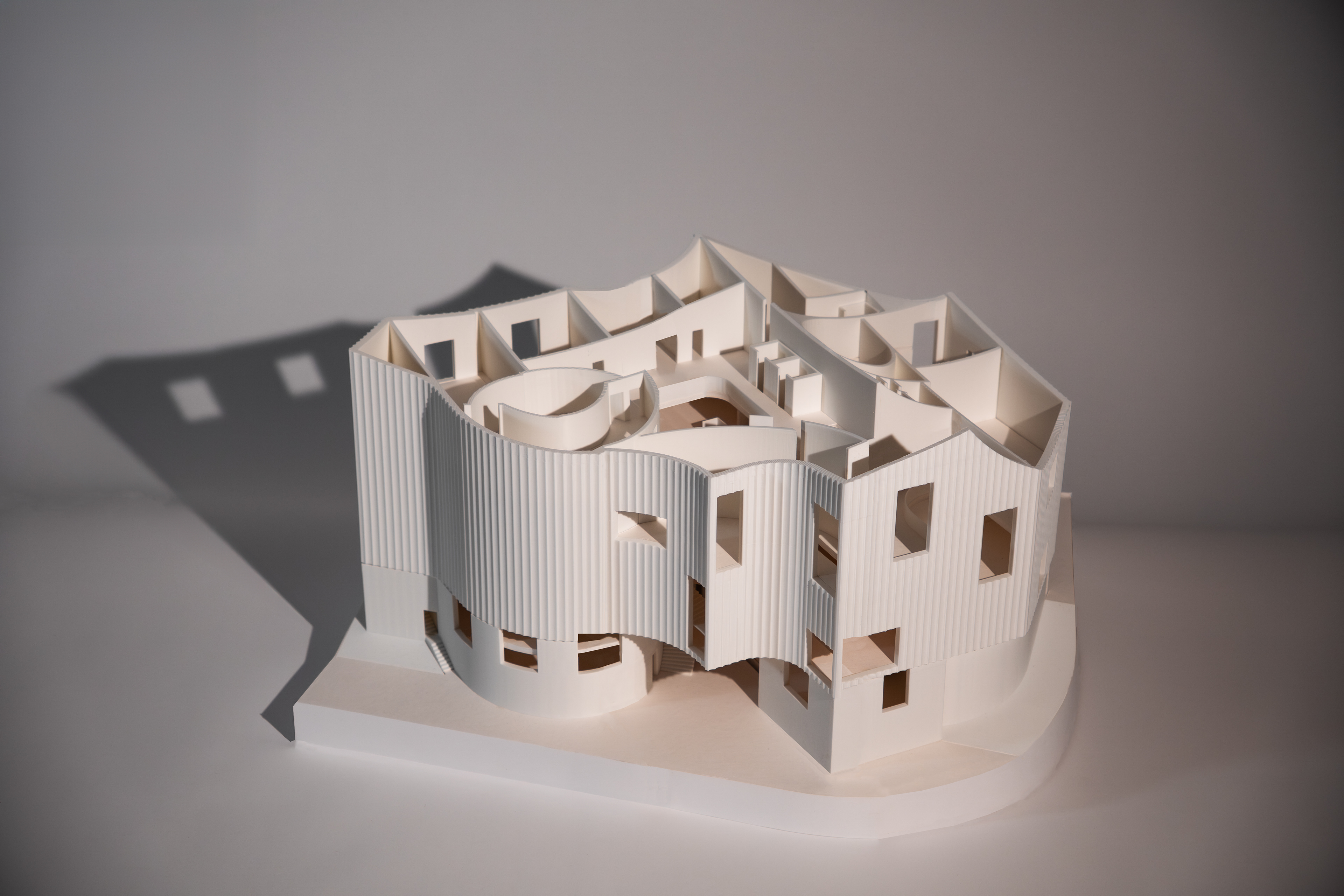
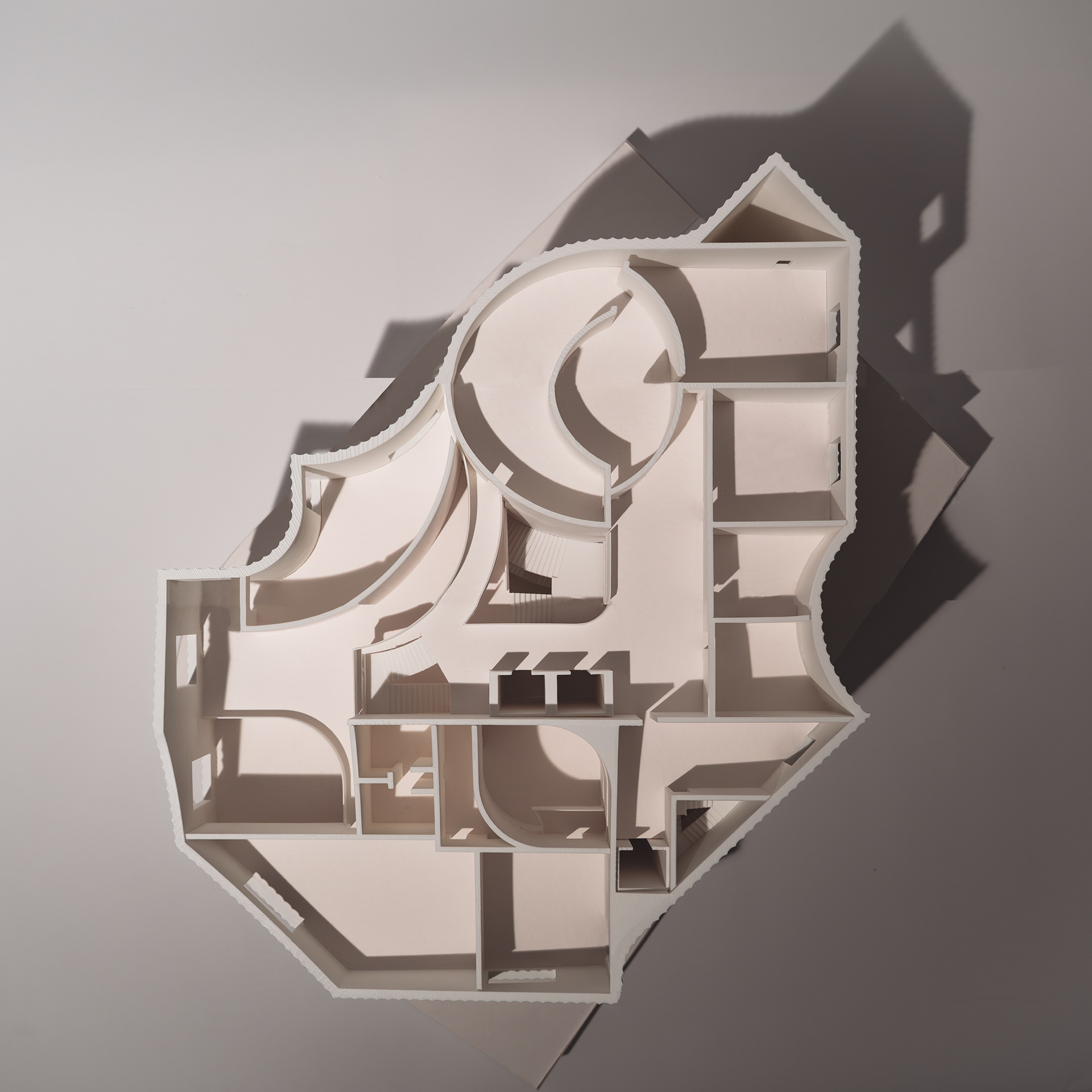
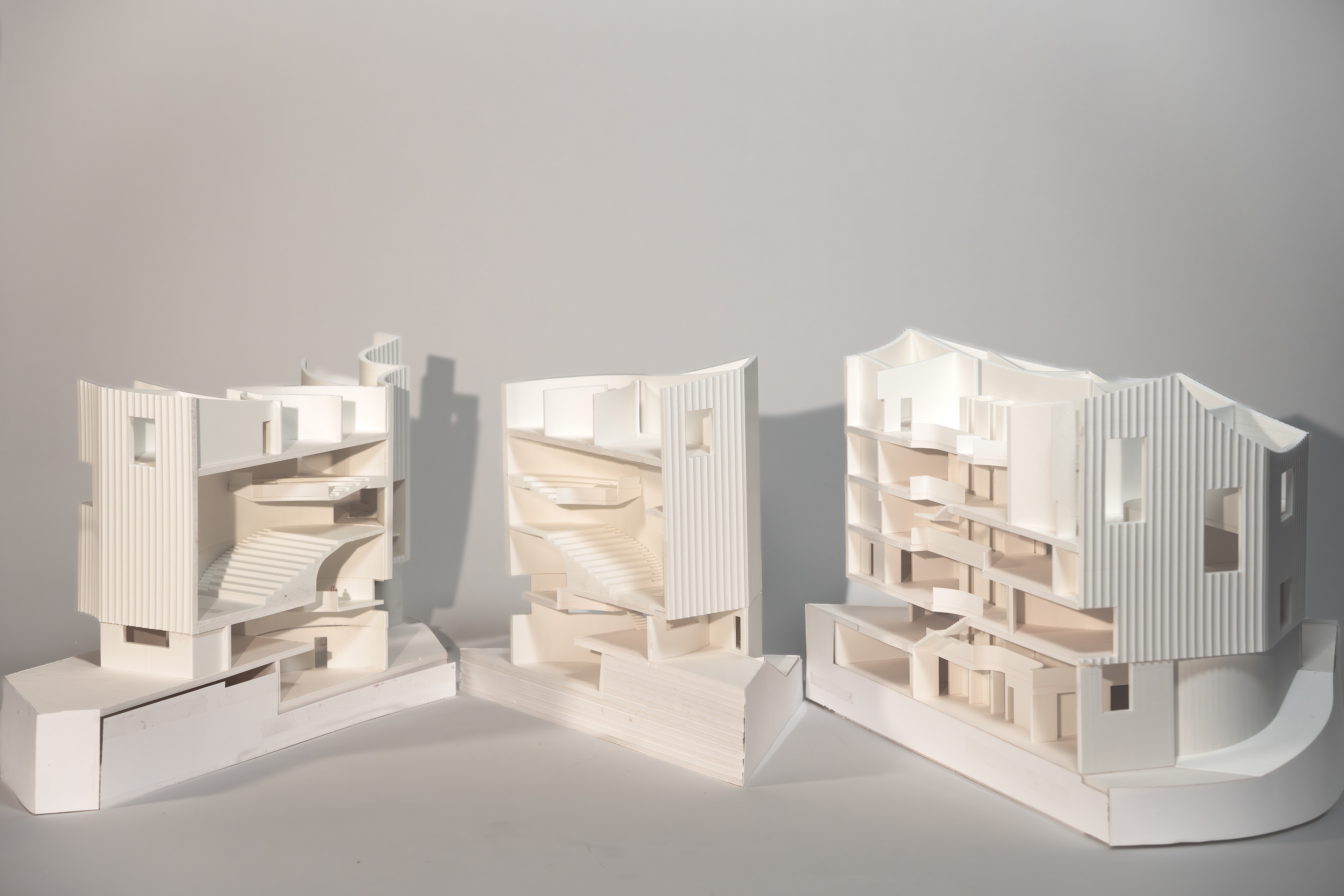
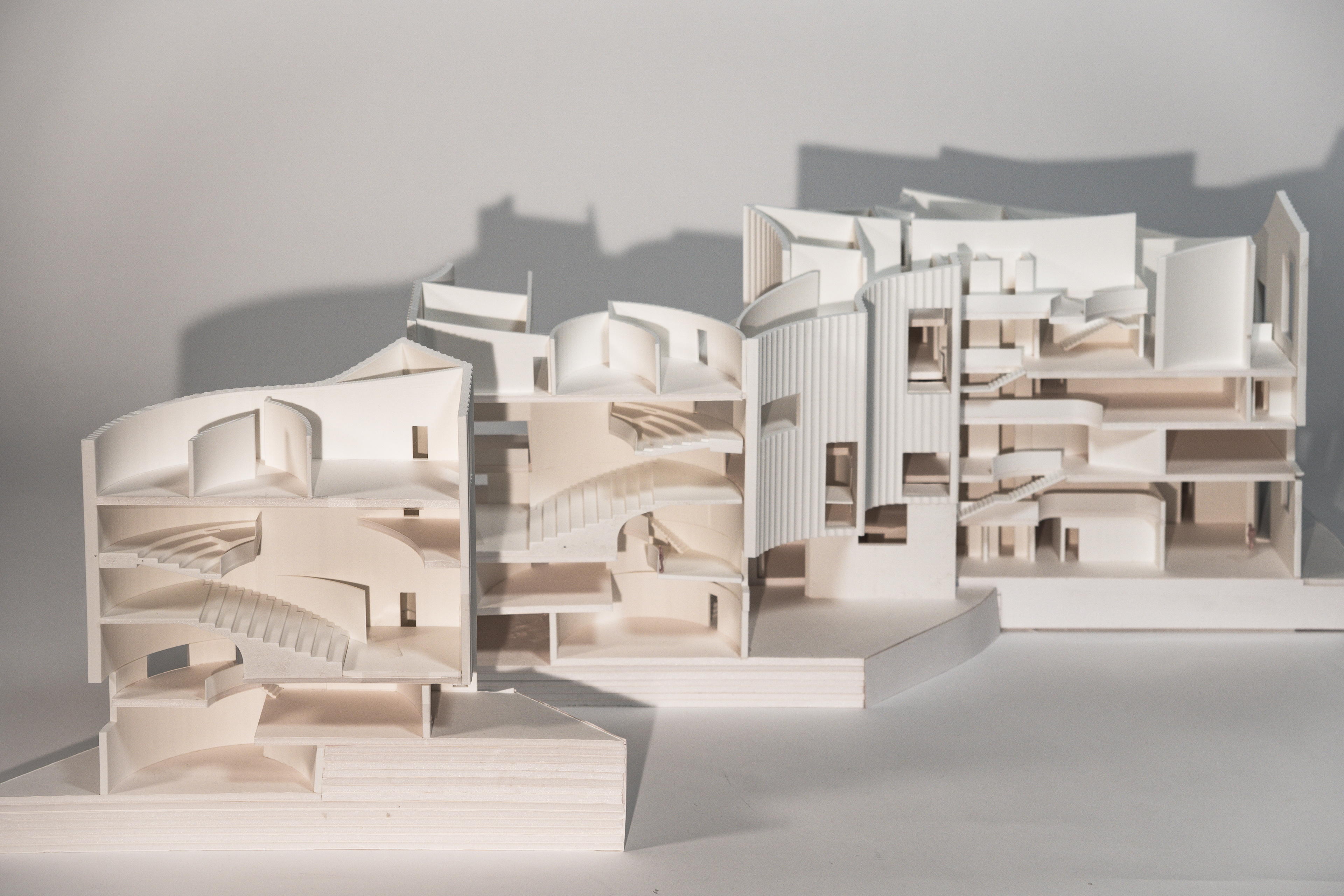
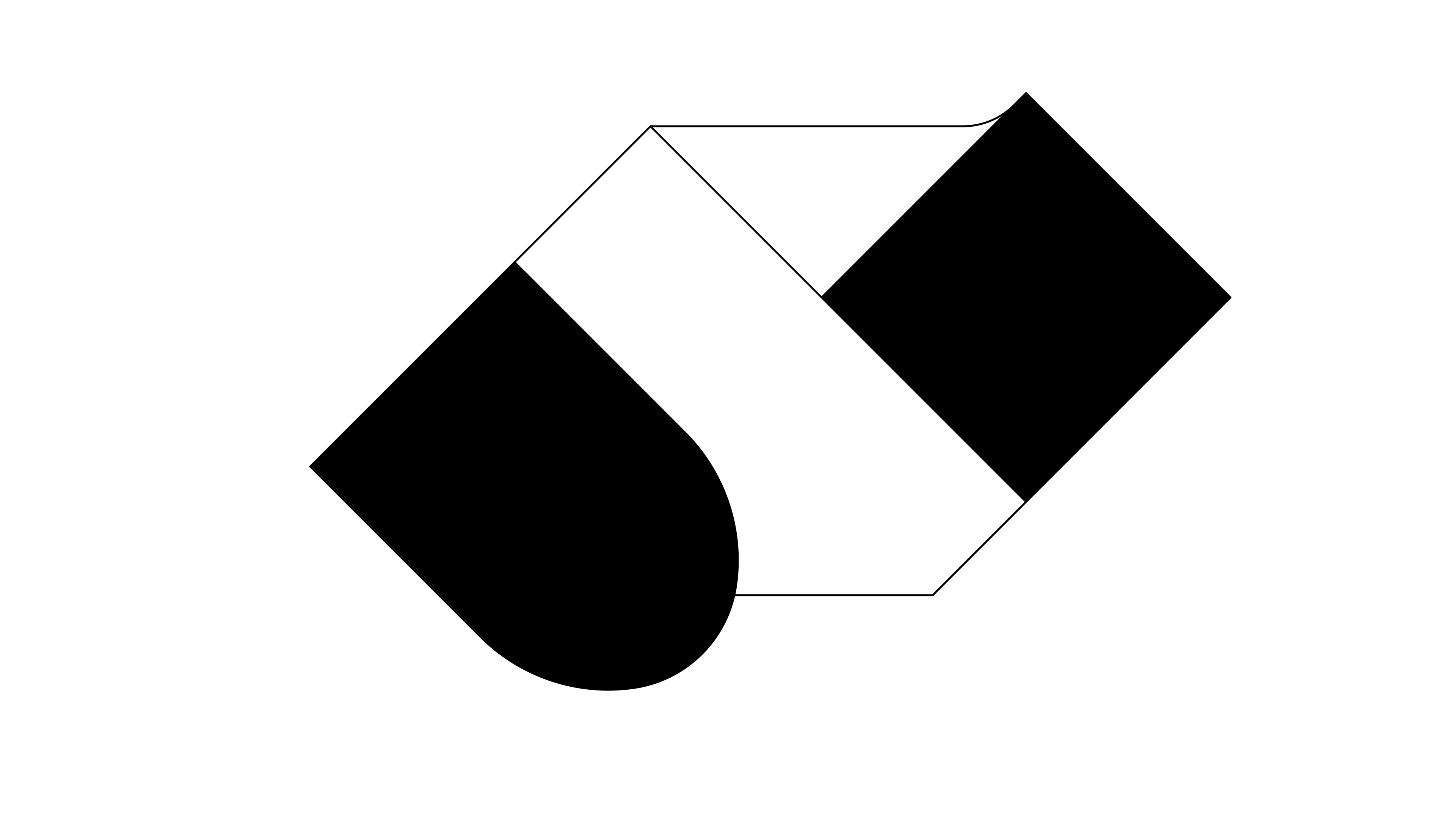
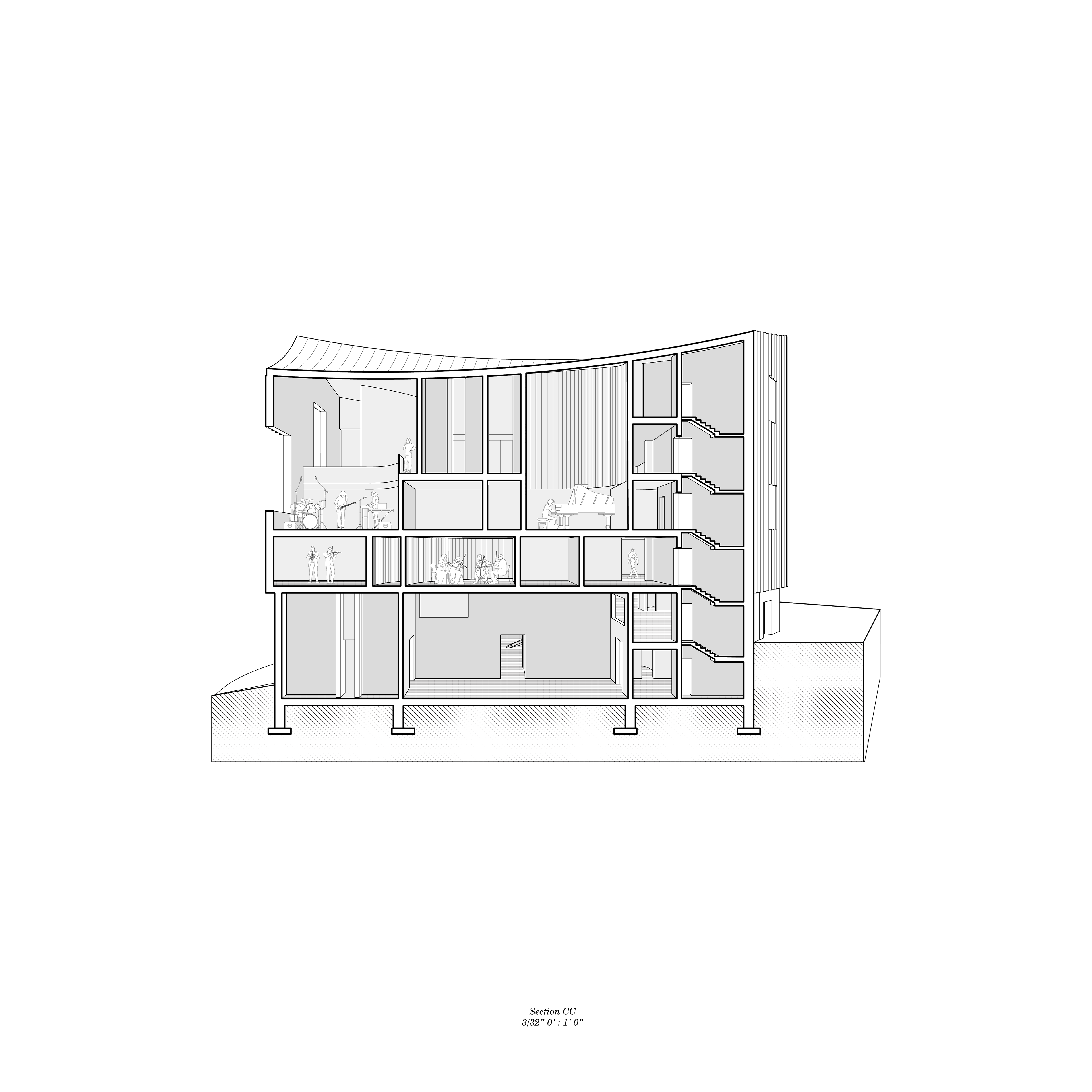
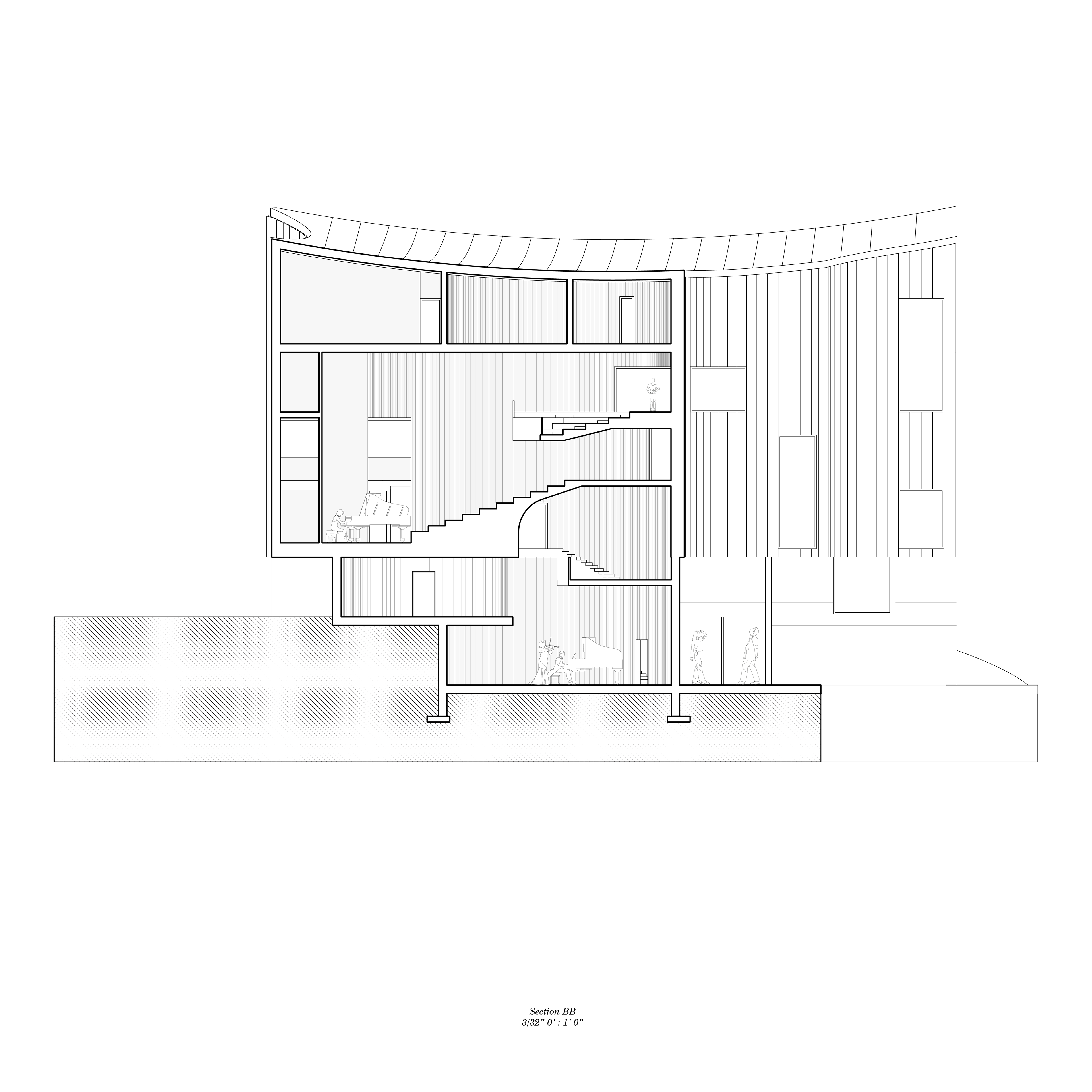
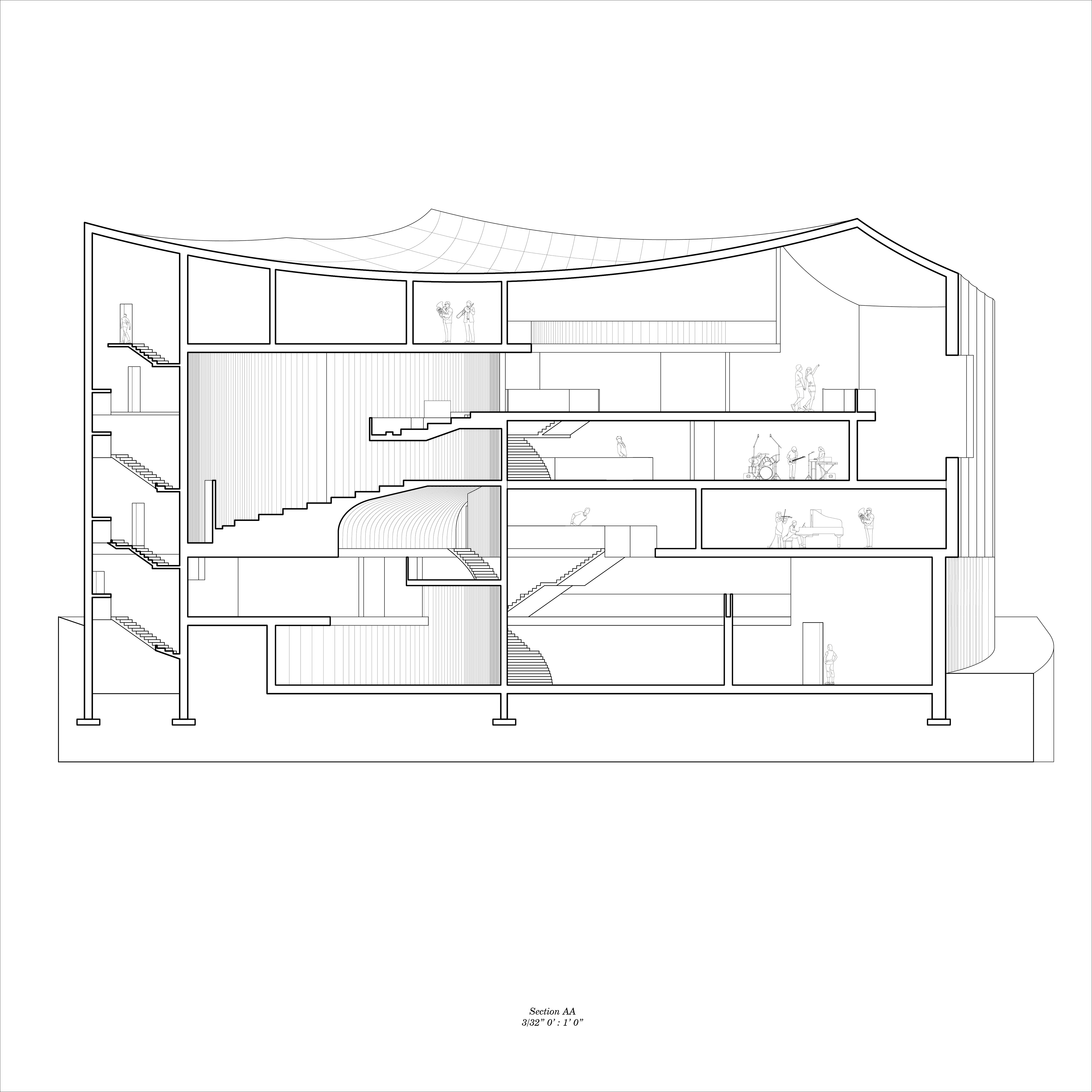
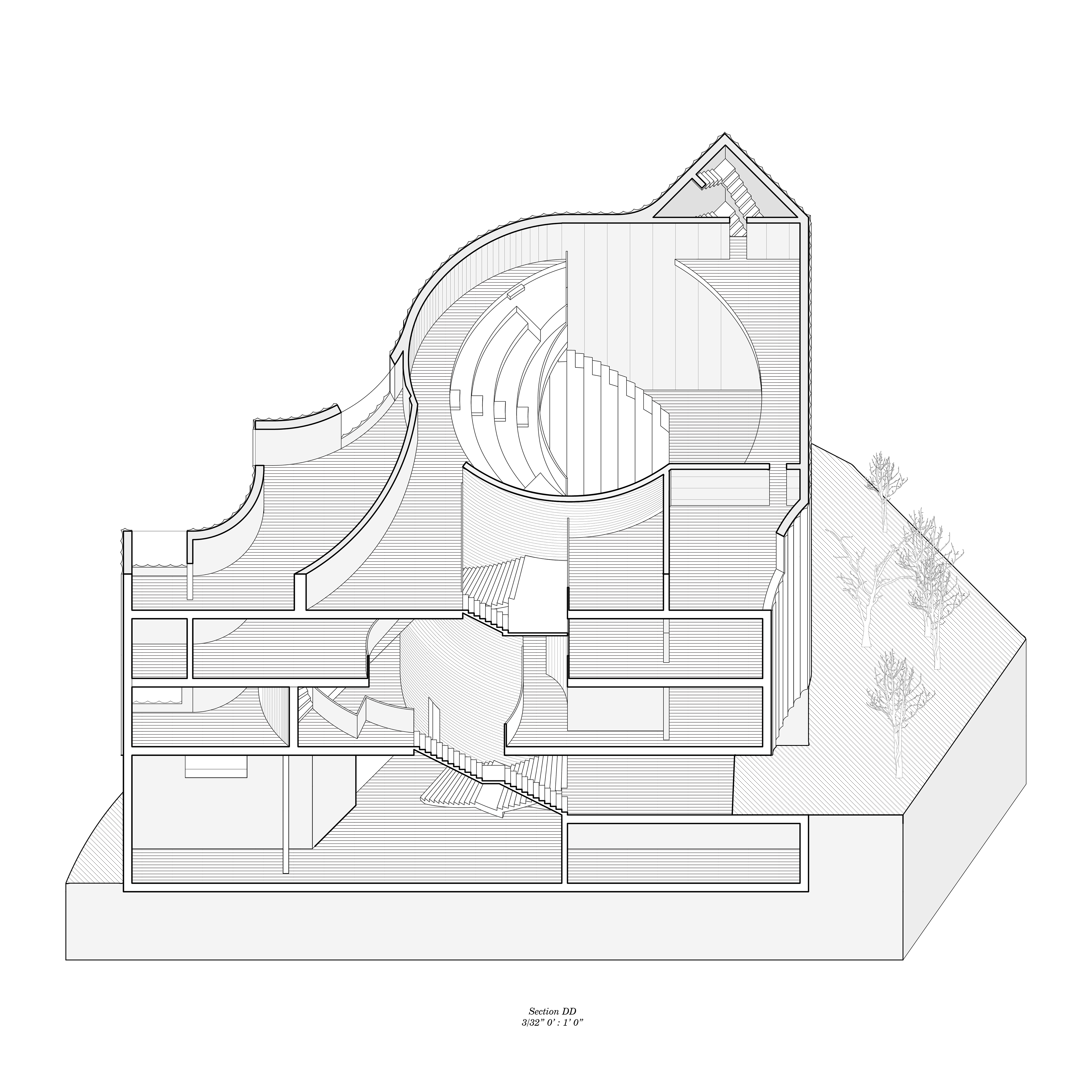
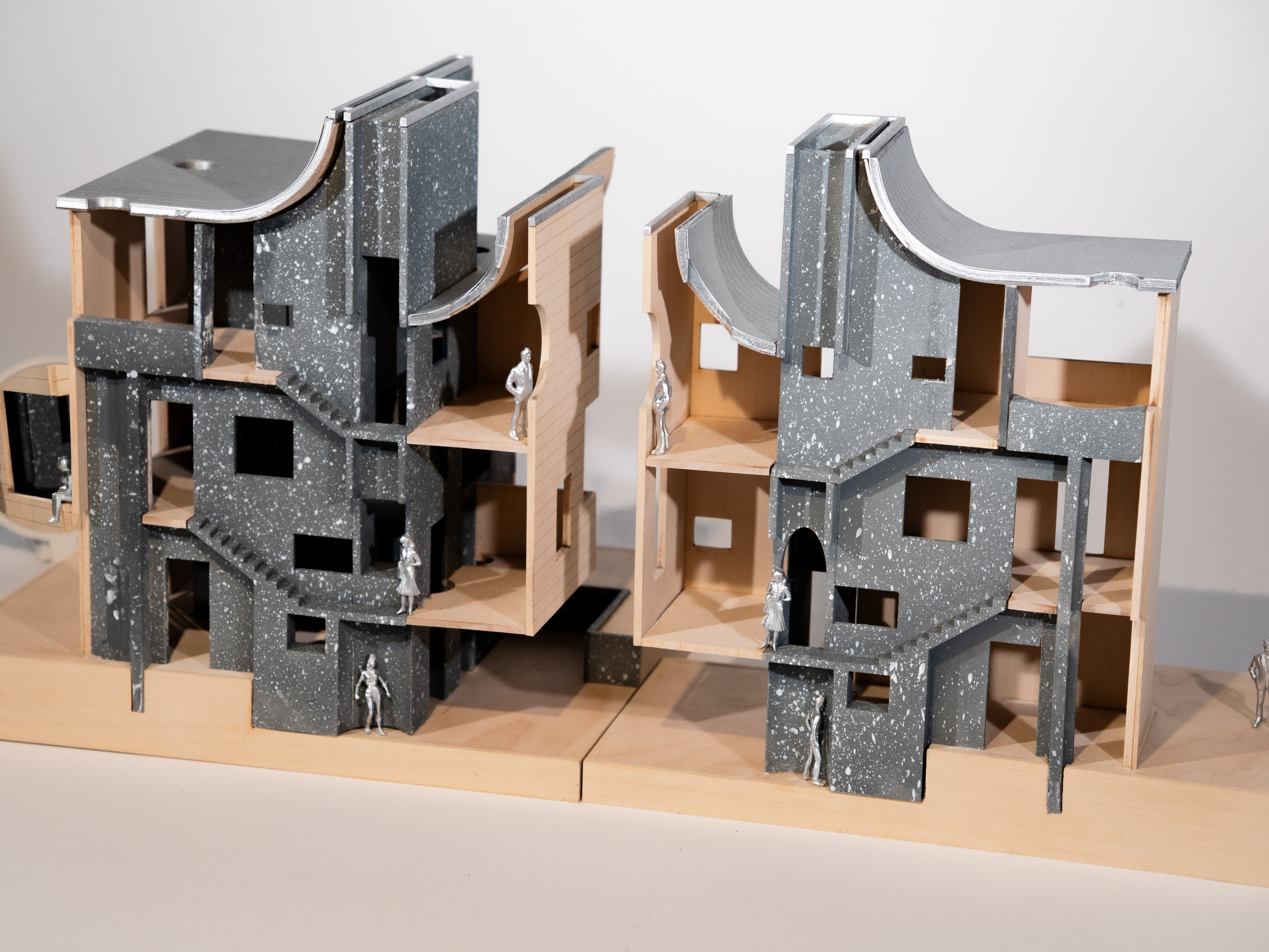
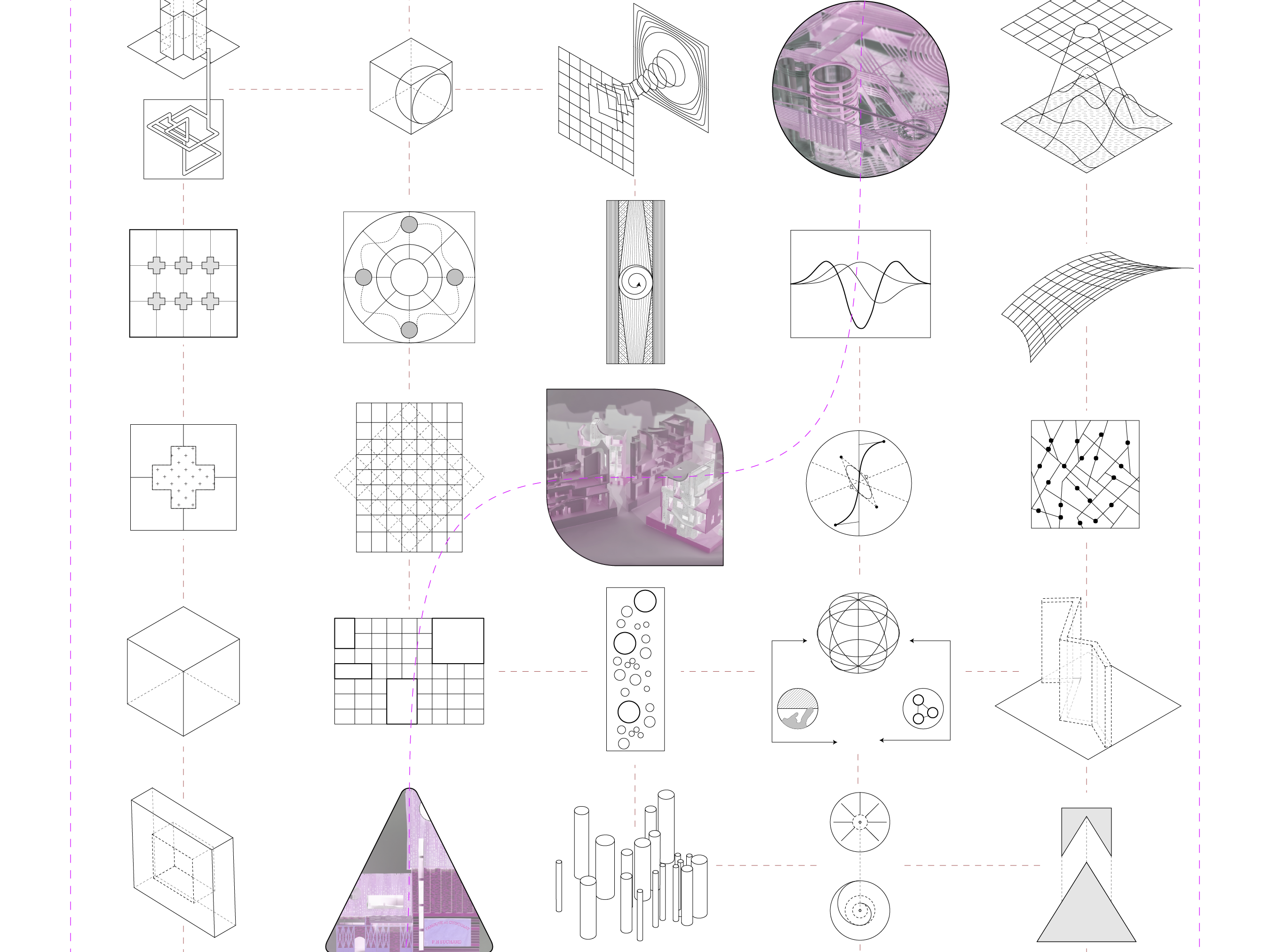
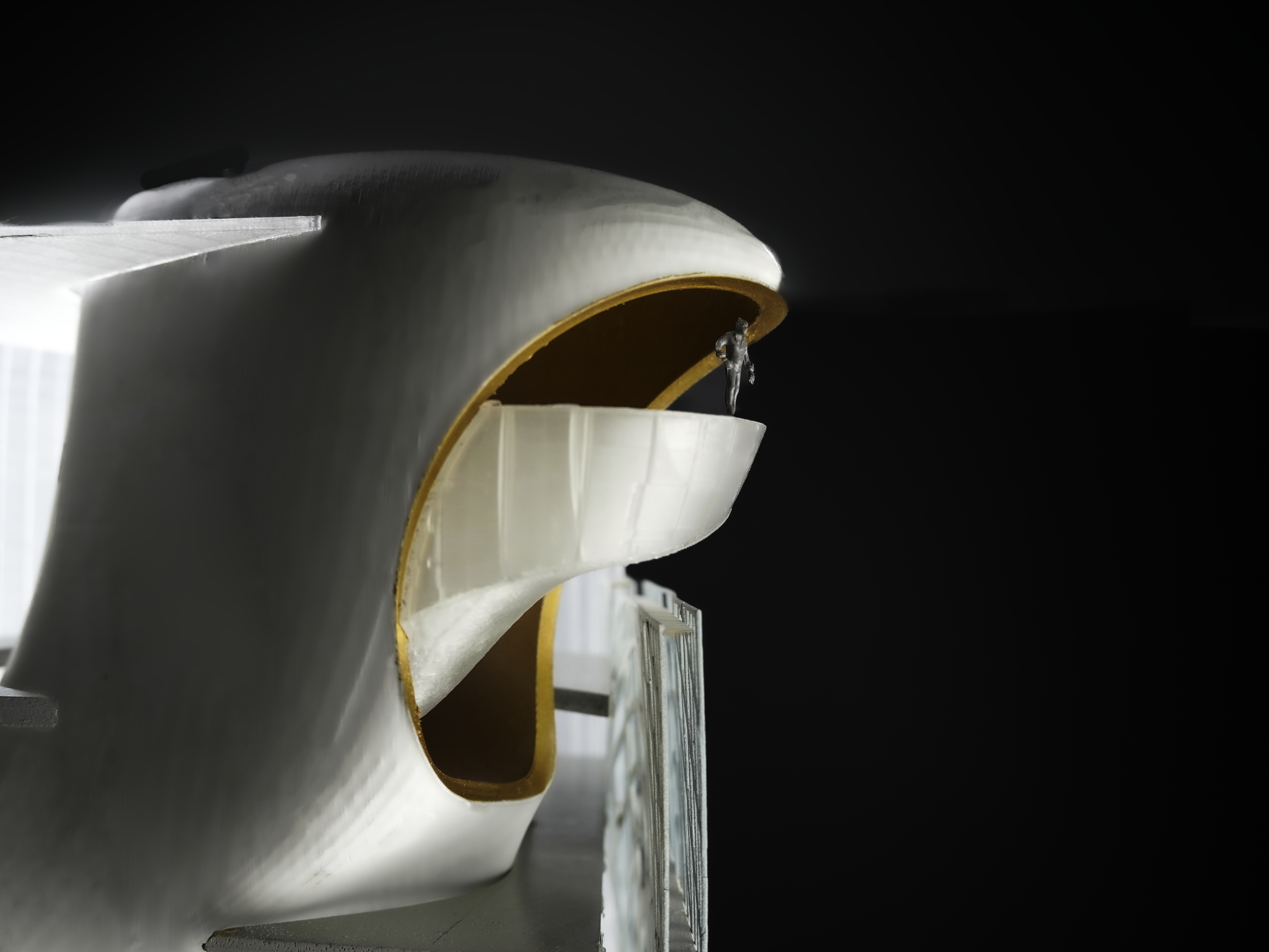
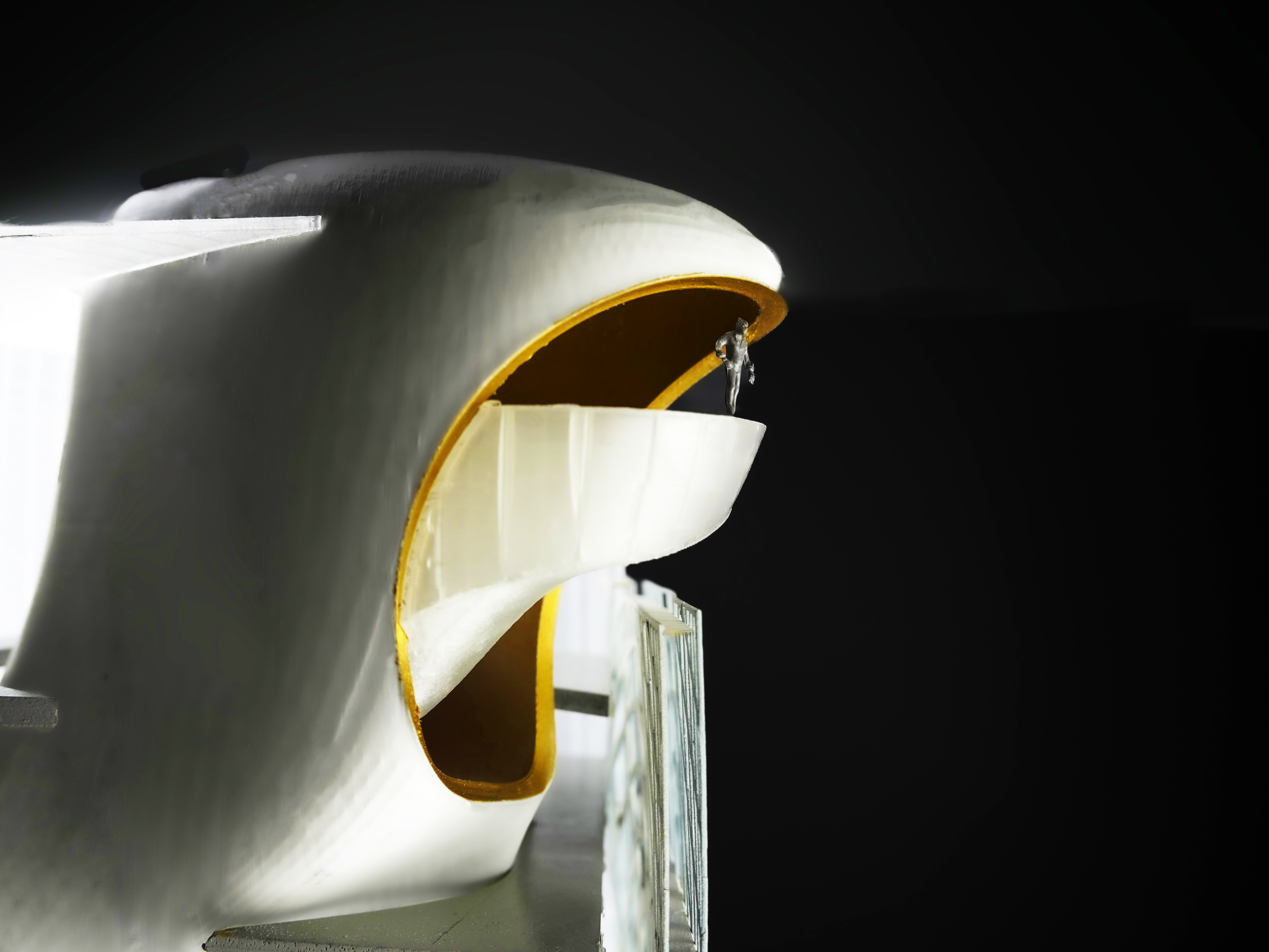
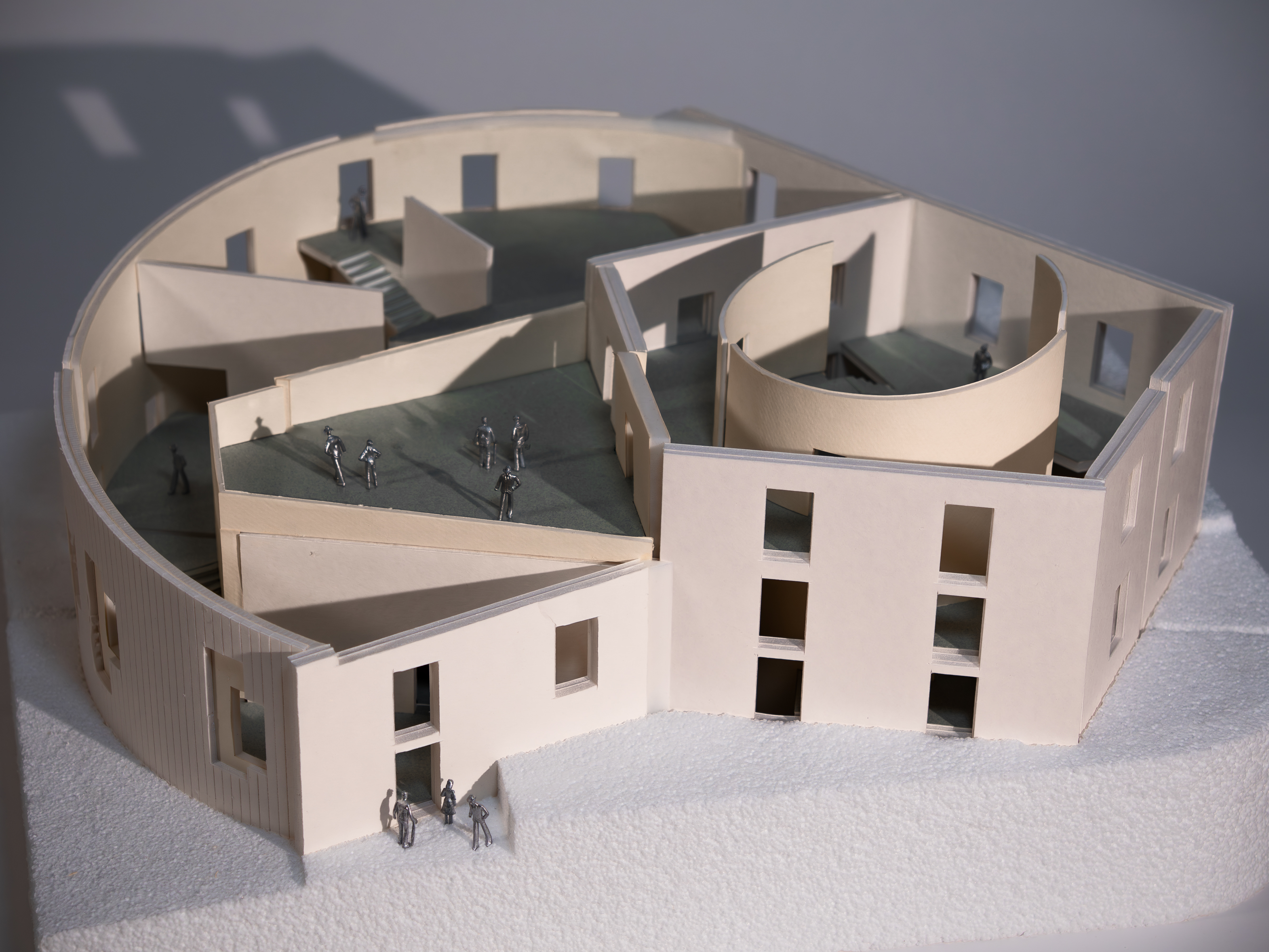
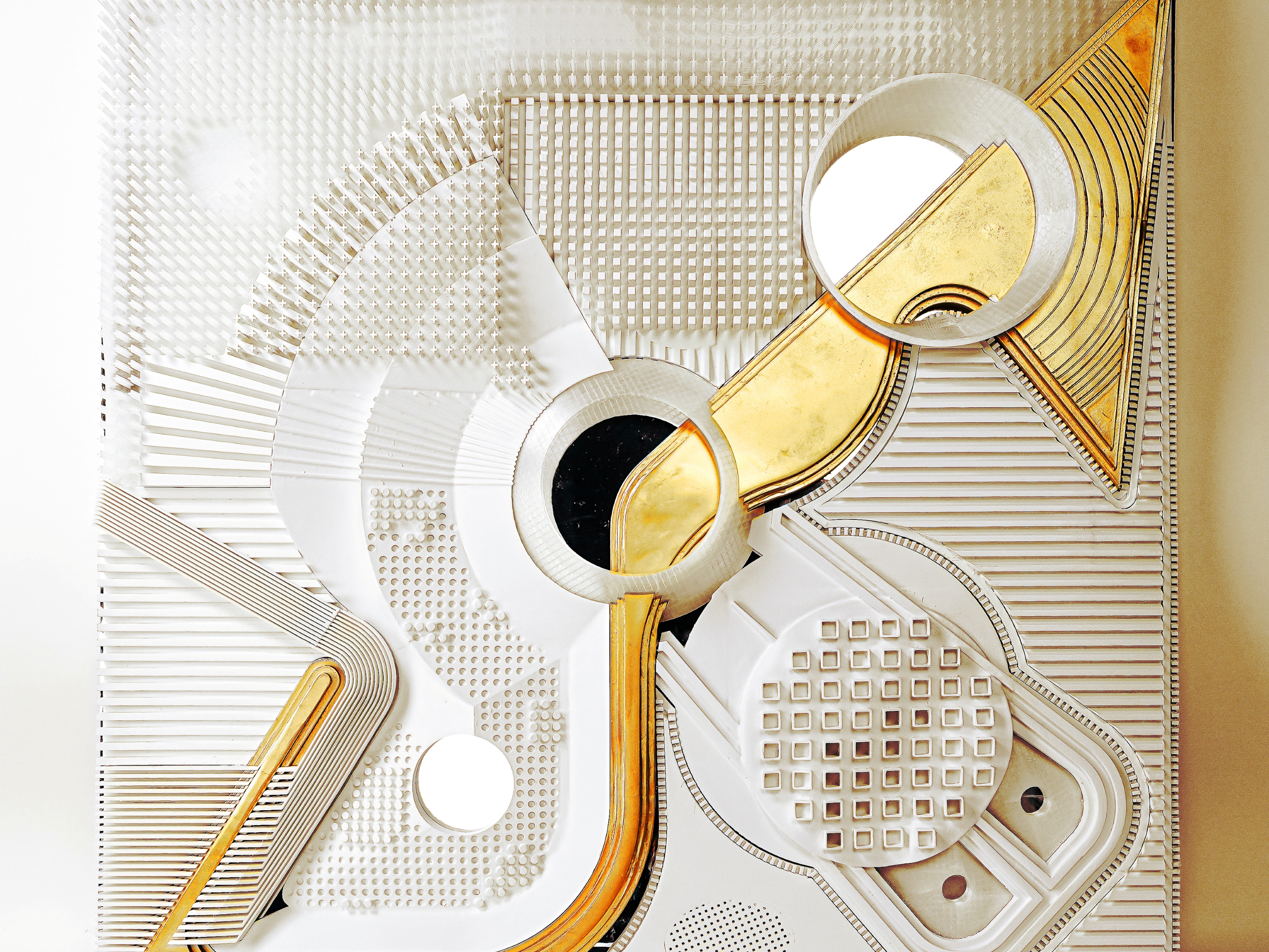
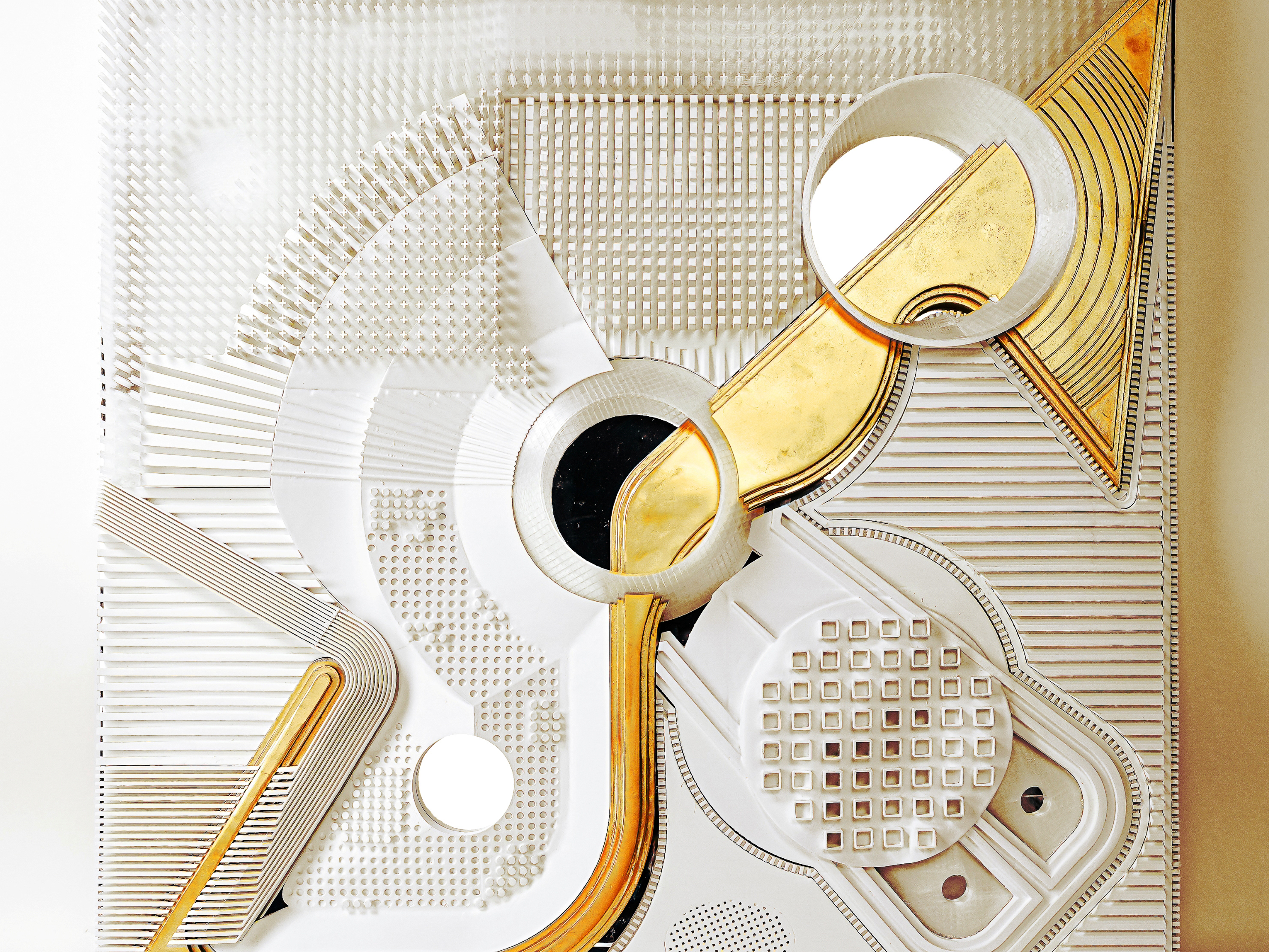
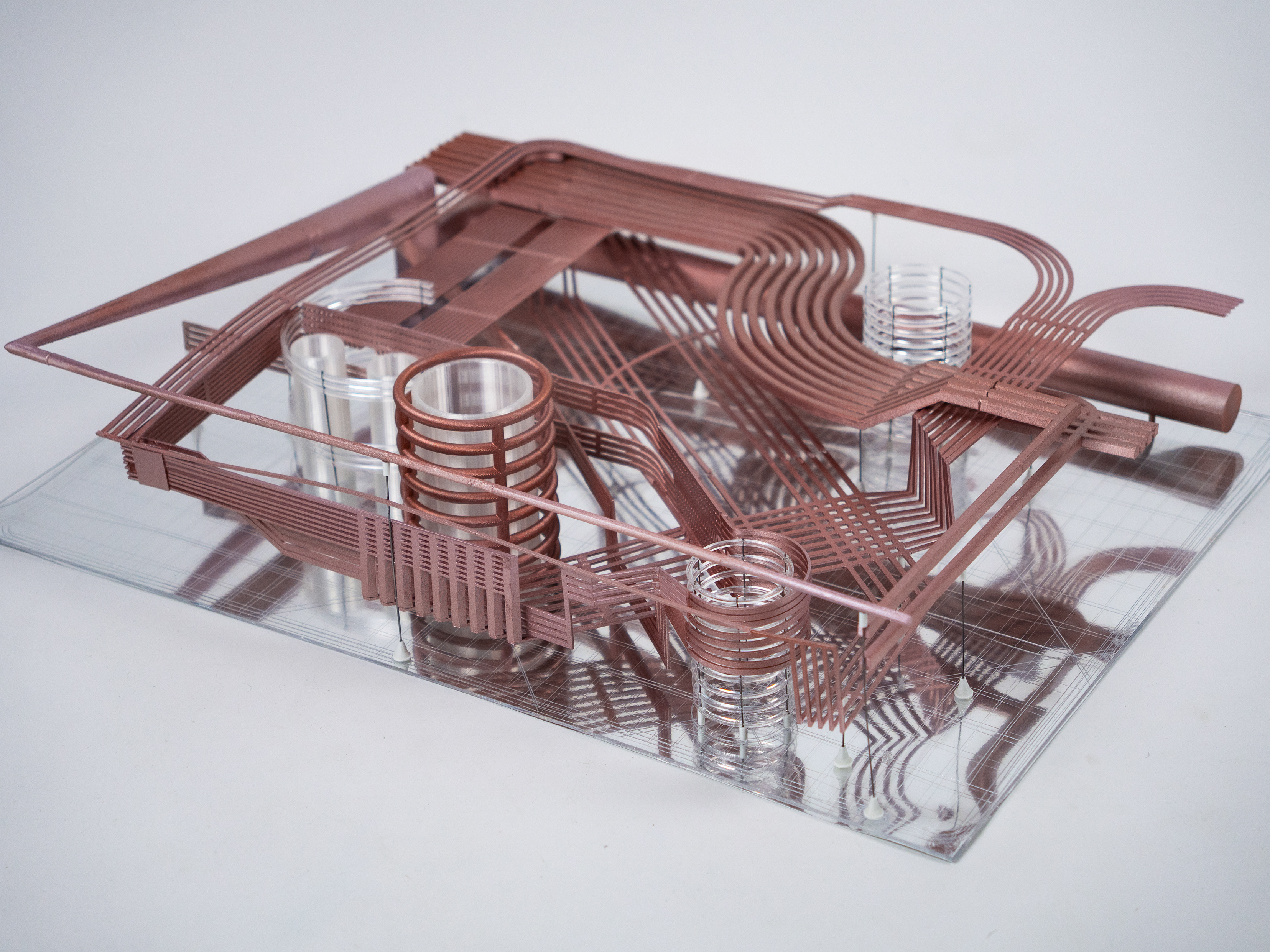
This exploration of duality, or perhaps reciprocal tension, manifests in the projective logic of the sections, whereby projecting at a forty-five-degree angle and in the round generates a pair of autonomous and distinct figures: the rotated prism and the oval. These become the black box and the raked theatre, each primarily serving one of the publics while beginning to press against one another and the exterior envelope, just as these publics might mix and mingle while still retaining their own identities.
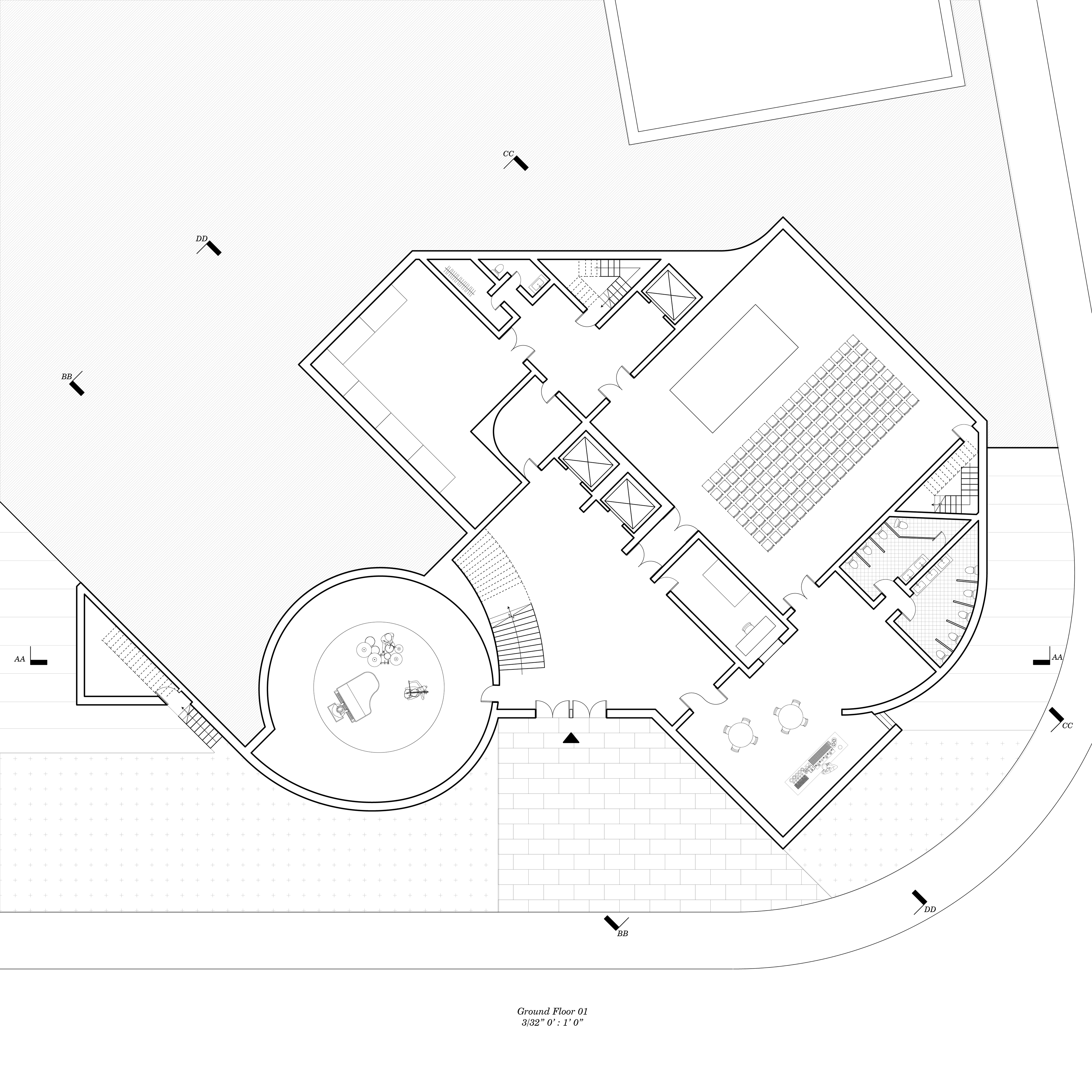
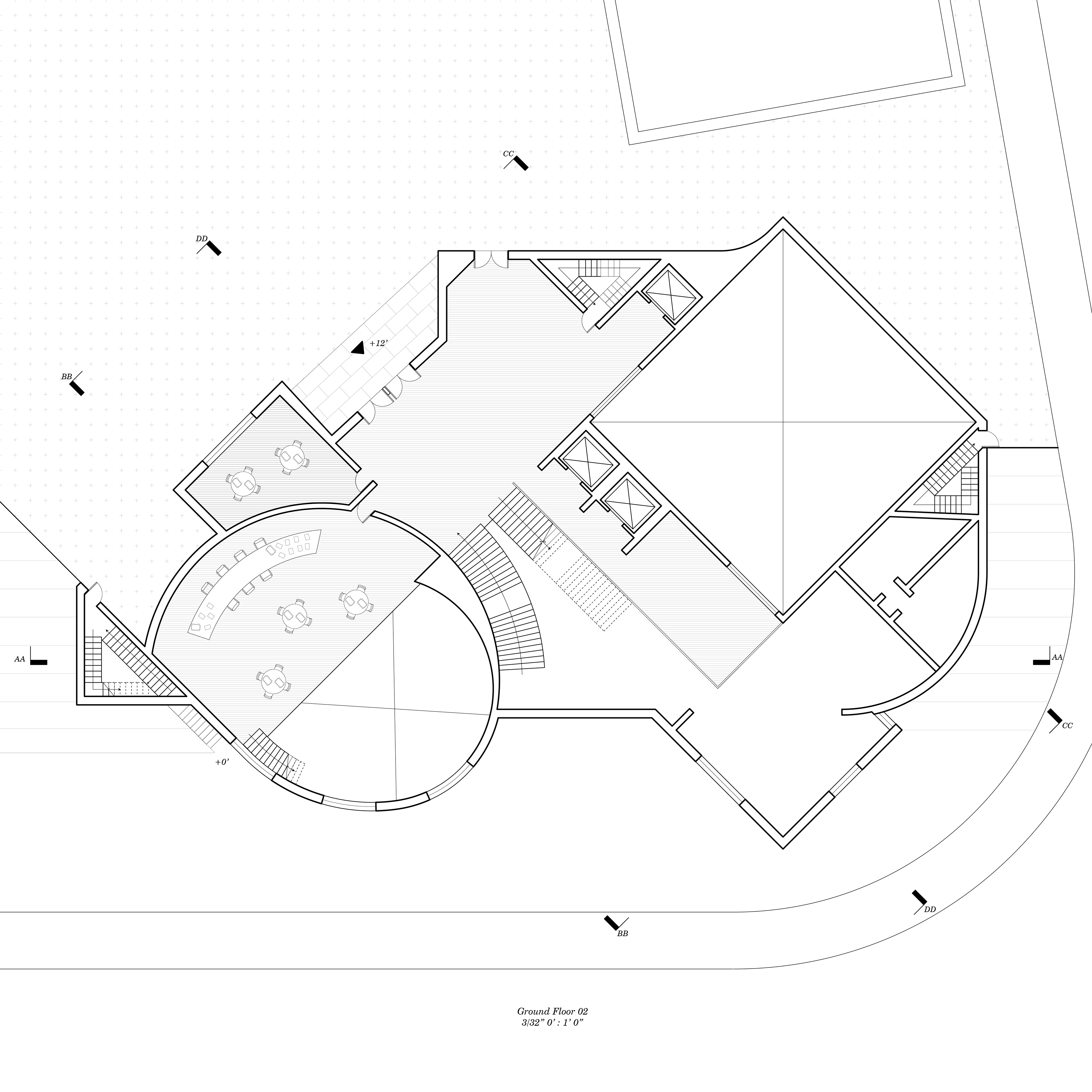
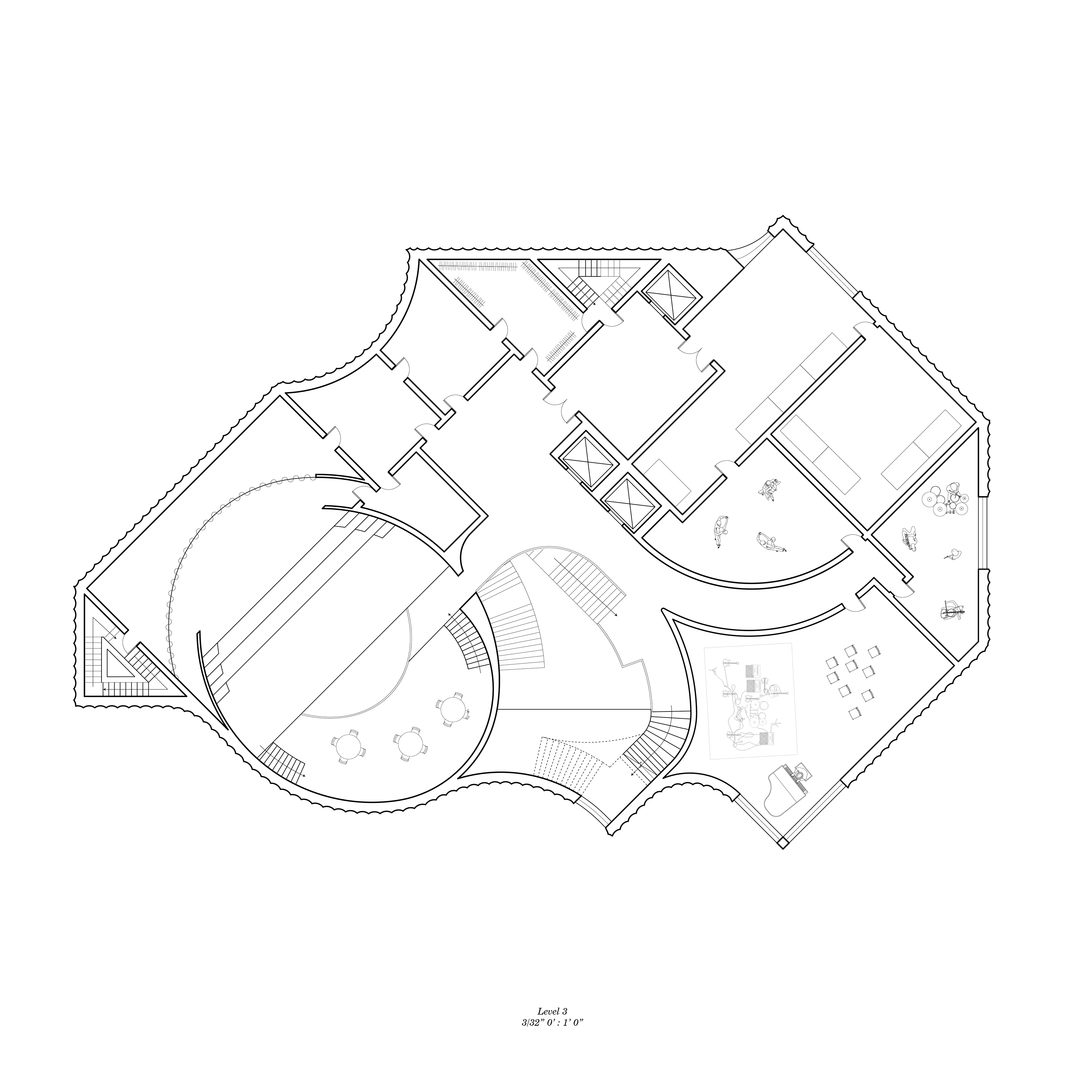
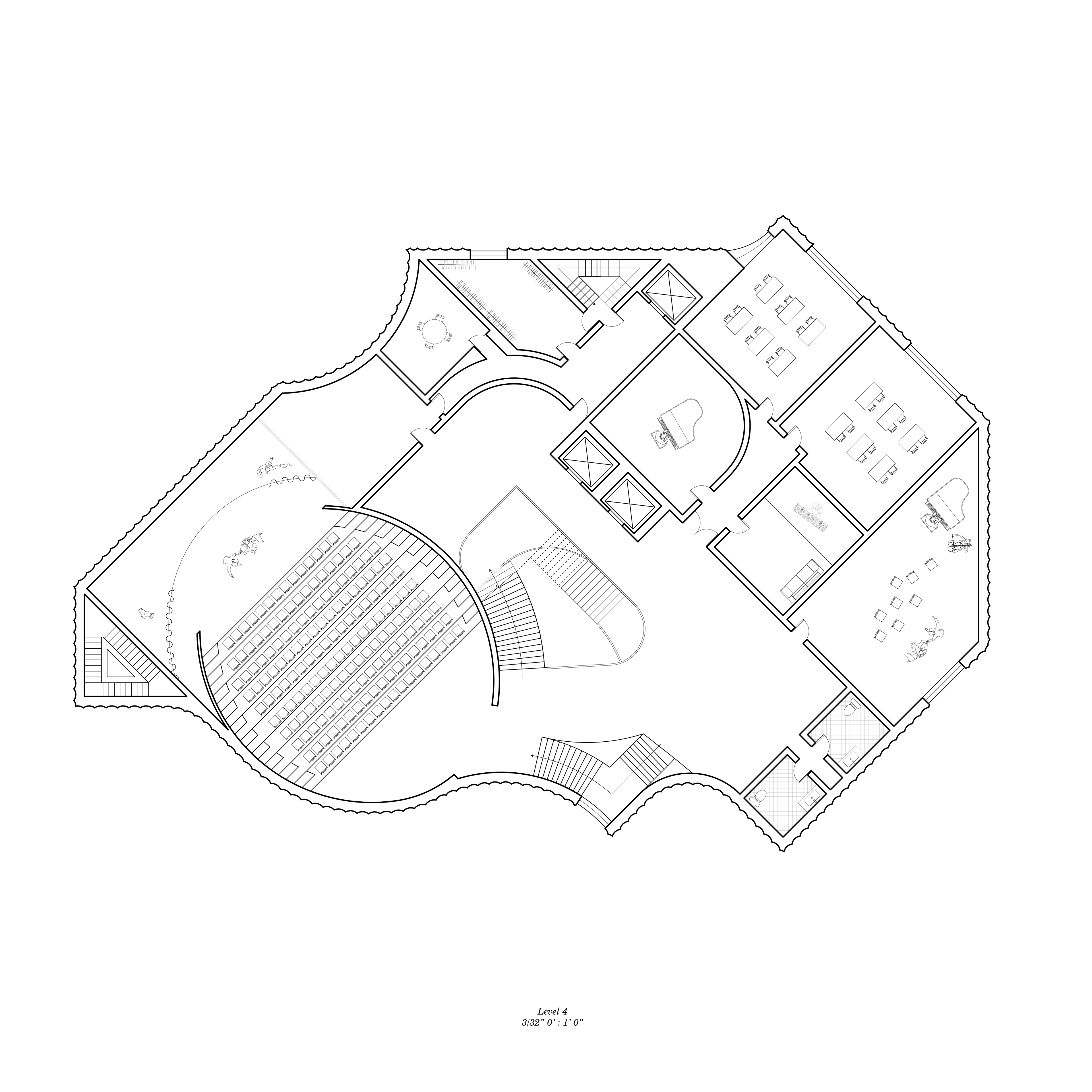
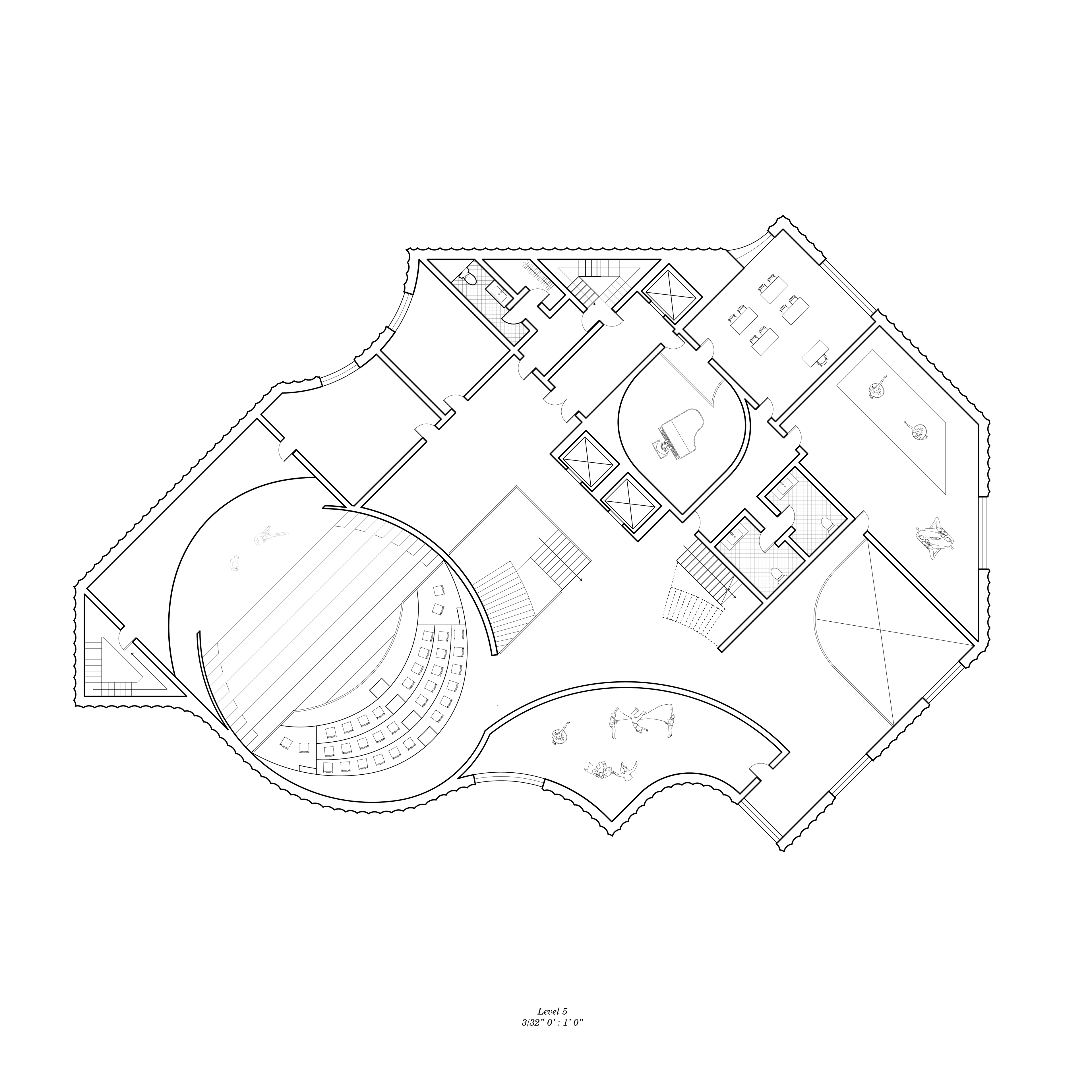
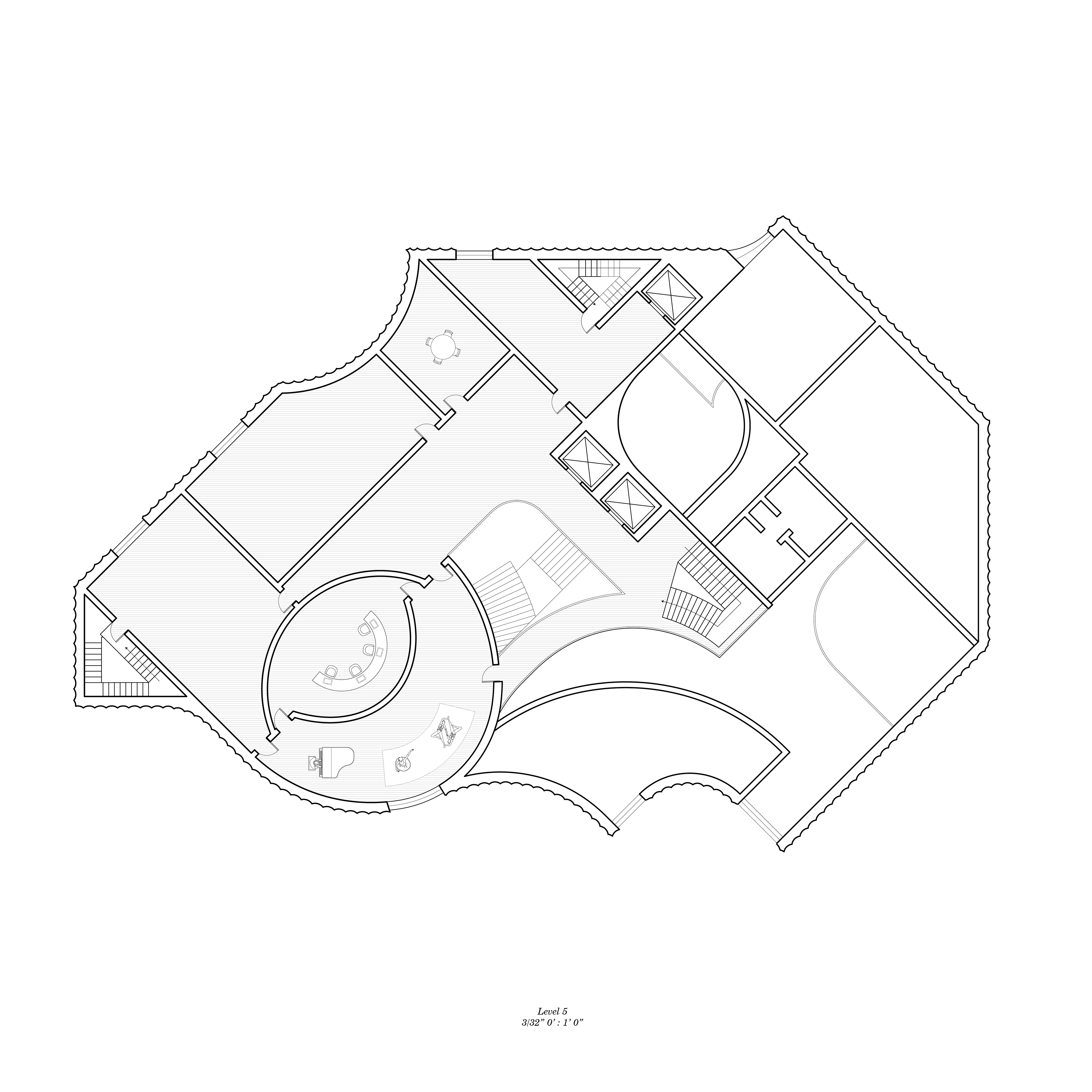
The plan became a crucial mechanism for working out this connective tissue, because while each figure remains autonomous, an interstitial formal language begins to emerge, small moves and accumulated differences that form, or attempt to form, a coherent whole. Yet at certain moments this second-order form overtakes the original figures, becoming the dominant formal and perhaps social workhorse of the building, as a stair traverses the void and draws both publics upward through the section. This in turn frees the ground plane, allowing for a far more generous thoroughfare in which the mass appears almost to float above the plinth below.